

Table of Contents
- Why Multi-Sport Participation Matters for Youth Athletes
- Reduced Risk of Overuse Injuries Through Cross-Training
- How to Prevent Youth Sports Burnout With Variety
- Building a Well-Rounded Athlete: Motor Skills and Physical Literacy
- Social, Emotional, and Leadership Development Across Sports
- Understanding the Risks of Early Sports Specialization
- Practical Scheduling and Financial Strategies for Multi-Sport Families
- Age-Specific Guidelines for Youth Multi-Sport Participation
Last Updated: August 26, 2026
Why Multi-Sport Participation Matters for Youth Athletes
Young athletes who sample different sports build stronger bodies, sharper minds, and more resilient spirits than single-sport peers. Kids who play multiple sports develop better motor skills, avoid burnout, reduce overuse injuries, and build stronger social bonds (the NIH). They're also more likely to maintain active, healthy lifestyles into adulthood.
This guide breaks down why multi-sport participation matters, how to navigate real challenges, and what the science says about early specialization.
Reduced Risk of Overuse Injuries Through Cross-Training
One of the clearest benefits of multi-sport participation is injury prevention. Young athletes who specialize repeat the same movements, stress the same joints, and load identical muscle groups year-round, creating a perfect storm for overuse injuries.
Cross-training through different sports distributes physical stress across varied movement patterns. A child who plays baseball in spring, soccer in summer, and basketball in fall uses different muscle groups, different joint angles, and different energy systems in each sport. This variation allows muscles, tendons, and bones to recover from sport-specific stress while remaining active.
The orthopedic benefits extend to musculoskeletal development itself. Different sports demand different strength patterns and coordination challenges. Multi-sport participation builds balanced strength, better proprioception, and more resilient tissues than specialization.
How to Prevent Youth Sports Burnout With Variety
Youth sports burnout is real. Kids who specialize early often lose joy in their sport by age 14, experiencing psychological stress, anxiety, and resentment. The pressure to excel, repetitive training, and identity collapse create a fragile foundation.
Multi-sport participation prevents burnout naturally. When a child plays three different sports, each sport stays fresh. The social environment, coaching style, and competitive pressure all shift. This variety maintains intrinsic motivation, kids play because they love it, not because they're locked into a single identity.
Different sports also activate different cognitive demands. Soccer requires constant spatial awareness and decision-making. Baseball demands focus and patience. Basketball builds quick reaction time. This cognitive variety keeps young athletes engaged.
Multi-sport kids don't collapse when they struggle in one sport. If they're having a rough season in soccer, they still have baseball and basketball where they feel competent. This prevents the identity crisis that single-sport athletes face when performance dips.
Building a Well-Rounded Athlete: Motor Skills and Physical Literacy
Physical literacy, the foundation of athletic ability, develops through exposure to varied movement patterns. Each sport demands unique motor skills and coordination challenges. Baseball requires hand-eye coordination and explosive rotational power. Soccer builds lateral quickness and spatial awareness. Basketball develops vertical explosiveness and change-of-direction ability. Swimming adds cardiovascular capacity and upper-body strength.
A child who samples multiple sports develops a richer toolkit of athletic abilities than a specialist. Their nervous system learns to execute movement patterns across different contexts.
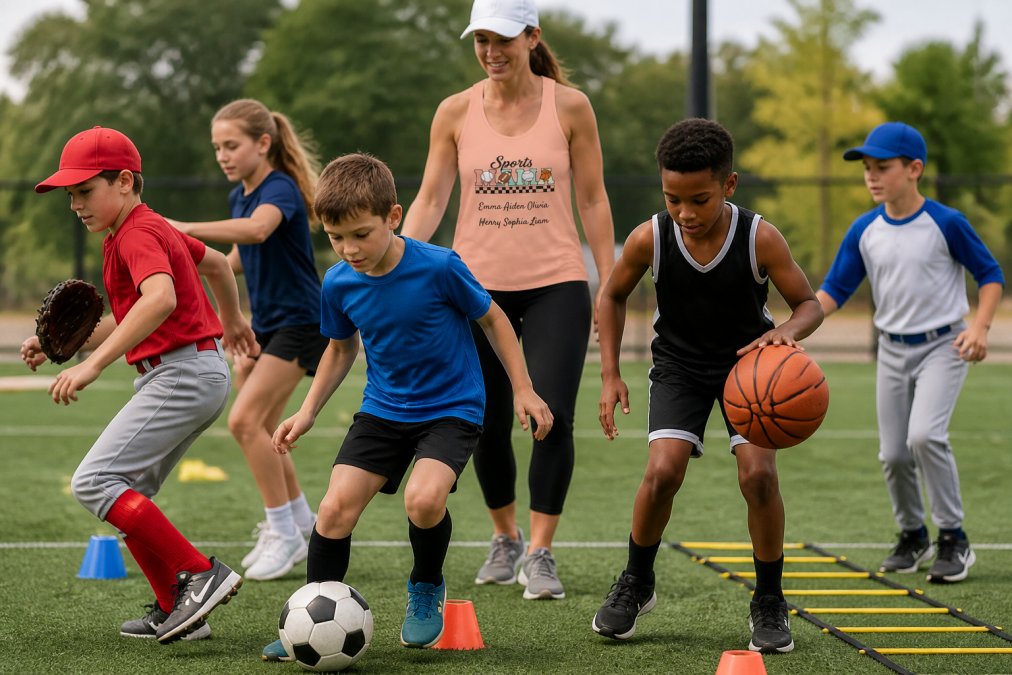
Motor skill development peaks during childhood and early adolescence. The window for building broad athletic competence is narrow. Kids who specialize miss the chance to develop skills they'll need later.
Physical literacy also means understanding your body, knowing how to move efficiently, and how to adapt to new demands. Multi-sport kids develop this self-awareness because they're constantly learning new skills. The long-term payoff is significant: athletes with broad physical literacy stay active longer, transition more easily between sports, and maintain better orthopedic health into adulthood.
Social, Emotional, and Leadership Development Across Sports
Different sports create different social ecosystems. Your child's teammates on the soccer team are different from the basketball team. The coaching style and team culture shift. This diversity builds social flexibility and helps kids navigate different social hierarchies and communication styles.
Leadership development accelerates through multi-sport participation. In one sport, a child might be a role player. In another, they might be a team captain. This variation builds authentic leadership and adaptability.
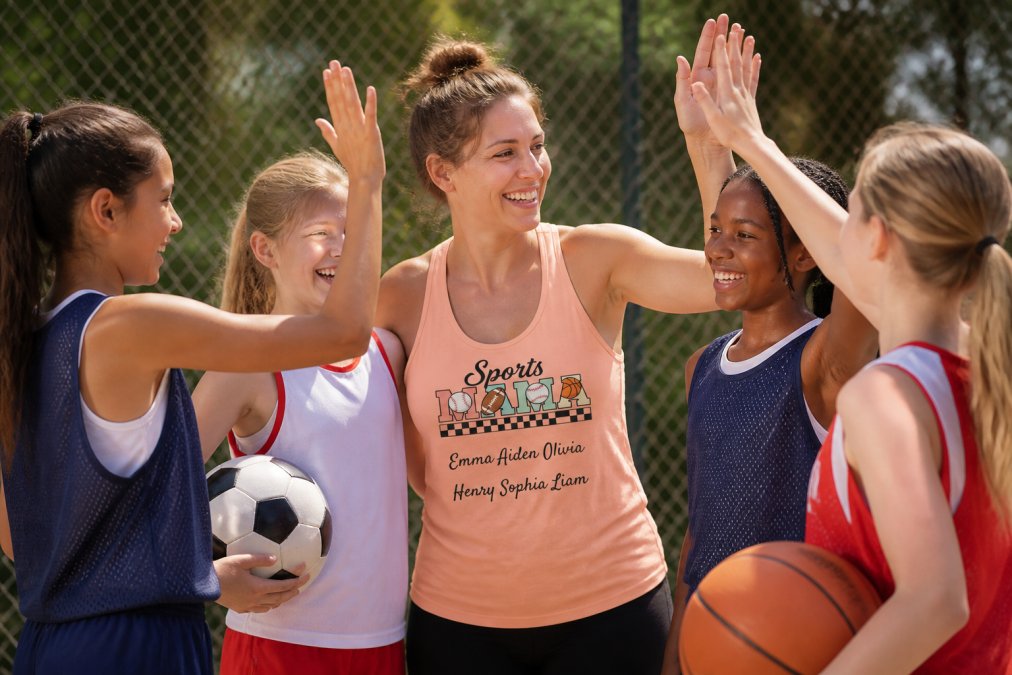
The emotional resilience that develops through multi-sport participation is significant. Failure in one sport doesn't define a child's athletic identity. A kid who strikes out in baseball goes to soccer practice and feels competent again. This cycle builds genuine confidence.
Psychological stress decreases when kids aren't carrying the weight of a single athletic identity. Research consistently shows that kids involved in multiple team sports develop better social behaviors, stronger individual identity, and better mental health outcomes than single-sport specialists (peer-reviewed research).
Understanding the Risks of Early Sports Specialization
Early specialization sounds logical, but the evidence shows the opposite. Kids who specialize before age 12 have higher injury rates, higher burnout rates, and lower long-term athletic achievement than those who sample multiple sports.
The risks of early sports specialization include:
- Overuse injuries: Repetitive stress on immature tissues causes stress fractures, tendonitis, and joint damage
- Burnout and dropout: Kids who specialize early often quit sports entirely by age 15-16
- Psychological stress: The pressure to excel in a single sport creates anxiety and perfectionism
- Limited skill development: Specialists lack the broad motor skills and adaptability that multi-sport kids develop
- Reduced college recruiting advantage: Most college athletes played multiple sports in high school
The stimulus for athletic development is novelty and variety. Multi-sport participation provides continuous new stimulus that drives continued development.
Practical Scheduling and Financial Strategies for Multi-Sport Families
Start by mapping your local sports calendar. Most communities have seasonal structure: baseball/softball in spring, soccer/track in summer, football/volleyball in fall, basketball/hockey in winter. Working within these natural seasons minimizes conflicts.
Set a realistic budget. Youth sports costs add up fast. Registration fees, equipment, travel, and coaching fees can exceed several thousand dollars annually. Prioritize the sports your child loves most. Use hand-me-downs and shared equipment. Look for community programs and rec leagues.
Travel logistics matter significantly. If teams practice far apart or have overlapping times, you're managing impossible schedules. Be honest about what your family can handle.
| Challenge | Strategy | Impact |
|---|---|---|
| Schedule conflicts | Prioritize seasonal sports; avoid overlapping practice times | Reduces stress; maintains quality participation |
| Equipment costs | Buy used gear; share equipment across siblings | Saves 30-50% annually |
| Travel time | Choose teams within 15-20 minute drive | Reduces parental burden; increases family time |
| Financial pressure | Set annual budget; focus on 2-3 sports max | Prevents overspending; maintains sustainability |
| Burnout risk | Build 4-6 week breaks between seasons | Allows genuine recovery; maintains enthusiasm |
Recovery time matters as much as training time. A child who plays soccer in summer, takes a 4-week break in August, then starts fall baseball is recovering. Build genuine rest into the schedule.
As a multi-sport parent, the right gear makes logistics easier. Check out Merch by Mary Ellen's Best Sellers and Shop for Women for apparel designed to celebrate the multi-sport lifestyle. Whether you're cheering from the sidelines or managing back-to-back games, having gear that speaks to your experience makes the journey feel less overwhelming.

Age-Specific Guidelines for Youth Multi-Sport Participation
The ideal approach to multi-sport participation changes with age.
Ages 6-9: Sampling Stage
Kids should try different sports, learn basic movement skills, and discover what they enjoy. Specialization at this age is premature. Organized practice should be light (1-2 sessions per week per sport). The goal is physical literacy and fun.
Ages 10-12: Exploration Stage
Children can handle more structured training while maintaining variety. This is the optimal window for multi-sport participation. Kids might play 2-3 sports per year with 2-3 sessions per week in each. Early specialization should be avoided.
Ages 13-15: Selection Stage
Teenagers can focus more deeply on 1-2 sports while maintaining some variety. Early specialization pressures should be resisted. Many elite athletes played 3+ sports through age 15.
Ages 16+: Specialization (if desired)
Athletes can specialize if they choose. But even elite athletes benefit from cross-training and variety.
| Age Group | Recommended Approach | Focus | Red Flags |
|---|---|---|---|
| 6-9 | 3+ sports; light practice | Fun, basic skills, variety | Structured training; pressure to excel |
| 10-12 | 2-3 sports; moderate practice | Skill development, enjoyment | Specialization pressure; injury |
| 13-15 | 1-2 sports; serious training | Skill refinement, competition | Burnout; overuse injury; lost joy |
| 16+ | 1-2 sports; elite training | Competitive excellence | Lack of recovery; isolation |
The benefits of multi-sport participation for kids are clear: better health, fewer injuries, more resilience, broader skills, and stronger social development. For families navigating multi-sport schedules, the right mindset matters most. You're giving your kids the gift of athletic variety. Your children will benefit from the variety. You'll survive on coffee and community.

Frequently Asked Questions
Q: Why is multi-sport participation better than specializing in one sport early?
Multi-sport participation prevents overuse injuries by distributing physical demands across different muscle groups and movement patterns. It also reduces psychological stress and burnout that comes from year-round focus on a single sport. Young athletes who play multiple sports develop broader motor skills, better coordination, and stronger foundational athleticism that supports long-term performance and injury prevention.
Q: At what age should kids start playing multiple sports?
Most youth development experts recommend multi-sport participation through elementary and middle school years, roughly ages 6-13. During these ages, children benefit most from sport sampling and developing physical literacy across different disciplines. Early specialization before age 12-14 increases injury risk and burnout rates. Once teenagers reach high school, they can make informed decisions about specialization based on genuine interest and physical readiness.
Q: How does playing multiple sports prevent youth sports burnout?
Burnout occurs when kids experience repetitive stress, loss of enjoyment, and psychological fatigue from one sport. Multi-sport participation breaks this cycle by introducing new coaches, teammates, environments, and skill challenges. This variety maintains excitement and prevents mental staleness. Different sports also provide natural rest periods for specific muscle groups, allowing kids to stay active while recovering from the demands of their primary sport.
Q: What are the physical benefits of multi-sport participation for kids?
Multi-sport athletes develop superior coordination, agility, and motor control by learning different movement patterns and techniques. Cross-training strengthens diverse muscle groups and improves cardiovascular fitness. Kids who play multiple sports show better injury resilience, reduced overuse injury rates, and enhanced musculoskeletal development. They also build stronger foundational athletic skills that transfer across sports, supporting long-term health habits and lifetime participation in physical activity.
Q: How can parents manage the logistics and costs of multiple sports?
Create a calendar showing all practice and game schedules months in advance to identify conflicts early. Look for sports with overlapping seasons to consolidate transportation. Consider carpooling with other families to split driving. Budget for uniforms, equipment, and registration fees by prioritizing your child's top 2-3 sports rather than spreading resources thin. Many communities offer seasonal sports that naturally rotate, reducing the need for year-round commitments.
This article was written using GrandRanker