

Table of Contents
- Understanding Signs of Sports Performance Anxiety in Youth
- How to Talk to Your Child About Sports Pressure
- Breathing Exercises for Young Athletes
- Mental Imagery and Visualization Techniques
- Building a Pre-Game Ritual That Reduces Anxiety
- When to See a Therapist for Sports Anxiety
- Your Role as a Parent in Managing Child Sports Anxiety
Last Updated: August 11, 2026
Understanding Signs of Sports Performance Anxiety in Youth
Sports performance anxiety is more common than most parents realize. While normal pre-game jitters are healthy, anxiety that interferes with performance or enjoyment of the sport requires attention.
Physical symptoms often appear first: stomach pain, headaches, nausea, muscle tension, shaky hands, or sleep disruption before games. You may notice rapid breathing or racing heart even during warm-ups.
Behavioral changes matter too. A child with sports anxiety might become irritable, withdraw from teammates, lose interest in a previously loved sport, or obsess over mistakes. They may ask to skip practice or games, or express self-critical thoughts like "I'm not good enough."
Mental signs include difficulty concentrating, racing thoughts, excessive worry about outcomes, and catastrophizing. Your child might ask repetitive questions or seek constant reassurance.
The key is distinguishing normal nervousness from performance anxiety that needs intervention. Some pre-competition anxiety is healthy, but when it prevents sleeping, eating normally, or enjoying the sport, action is needed.
How to Talk to Your Child About Sports Pressure
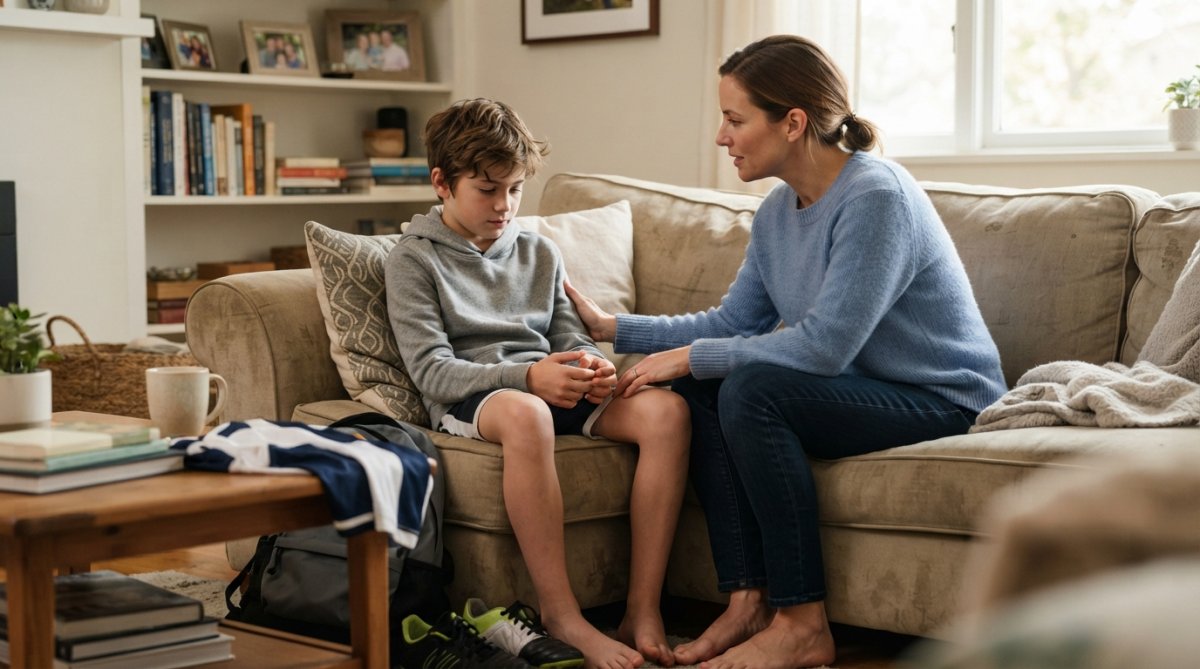
Have conversations about sports pressure away from competition, during calm moments at home. Ask open-ended questions like "How are you feeling about your upcoming tournament?" and listen without immediately offering solutions. Avoid dismissing worries with "You'll be fine", these responses can make your child feel unheard.
Help your child identify the specific pressure: Are they worried about letting down their team? Disappointing you? Being judged by peers? Once you understand the root cause, you can address it directly.
Normalize the experience by sharing that all athletes, even professionals, feel nervous before competition. Discuss effort versus outcome: your child can only control how hard they try, their attitude, and effort, not the final result. This shift toward process-oriented thinking reduces pressure significantly.
Create a safe space where your child knows you'll listen without judgment. When they develop confidence that you're on their team, they're more likely to open up about struggles before they become overwhelming.
Breathing Exercises for Young Athletes
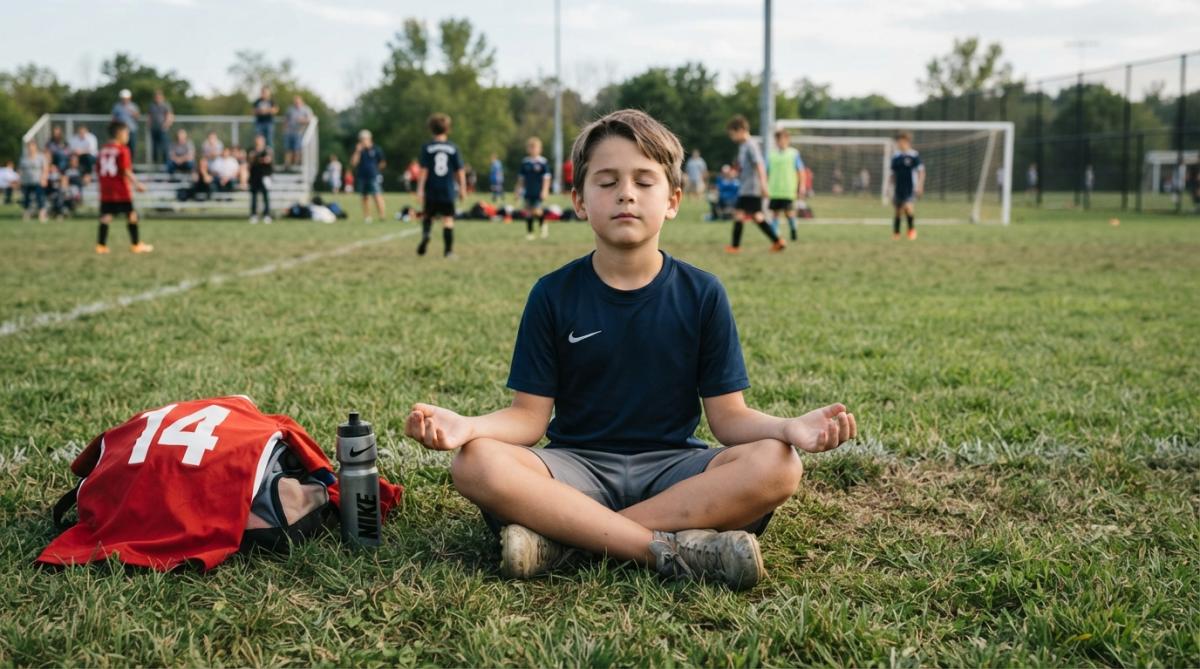
Breathing exercises calm the nervous system by interrupting the anxiety cycle. The 4-4-4 technique is simple: breathe in through the nose for four counts, hold for four, exhale for four. Repeat five to ten times. This takes less than two minutes and requires no equipment.
Box breathing works similarly: inhale for four counts, hold for four, exhale for four, pause for four. Some athletes prefer this version because the pause feels like a natural reset.
Pair breathing exercises with a positive thought. As your child exhales, they might think "I'm ready" or "I've trained for this." This combines stress reduction with mental preparation.
Practice these exercises during calm moments, not just before games. When your child practices while relaxed, they'll find it easier to use when anxiety strikes. Over time, the breathing pattern becomes automatic.
Mental Imagery and Visualization Techniques
Mental imagery involves creating detailed mental pictures of successful performance. This technique, used by elite athletes, genuinely improves performance.
Help your child create a visualization script. Have them close their eyes and imagine walking into the competition venue with vivid sensory details: sights, sounds, smells, and physical sensations. They visualize executing skills correctly and handling pressure calmly.
Visualize the night before competition or an hour before the event. Brief daily visualization is more effective than occasional long sessions. Consistency matters most.
Teach your child to visualize handling challenges too. What if they make a mistake? How will they respond? Visualizing recovery from adversity builds mental resilience and makes actual setbacks less shocking.
Visualization should feel achievable, not like fantasy. Your child should visualize performing well within their actual skill level. If visualization is difficult, try guided audio recordings designed for young athletes.
Building a Pre-Game Ritual That Reduces Anxiety
Pre-game rituals create predictability and control. When your child follows the same routine before every competition, they signal to their brain that they're prepared. This consistency reduces anxiety.
A ritual might include specific warm-up exercises, listening to a particular song, eating a certain snack, or wearing team spirit apparel. Some athletes find that wearing personalized jerseys or hoodies from Merch by Mary Ellen becomes part of their ritual and boosts confidence. The key is consistency and personal meaning.
Start the ritual well before competition, the morning of the game or even the night before. Keep it achievable and portable so it works in different situations.
Let your child design their own ritual. When they choose the elements, they're more invested in following it and more likely to believe in its power. The ritual gives your child something concrete to do when anxiety rises and creates a mental transition from preparation to performance mode.
When to See a Therapist for Sports Anxiety
Sometimes parental support and coping strategies aren't enough. If your child's anxiety is severe, persistent, or interfering with daily life beyond sports, professional help is appropriate.
Consider professional support if your child experiences panic attacks, constant worry affecting sleep or appetite, signs of depression, or thoughts of self-harm. These warrant evaluation by a mental health professional.
Look for a therapist with experience working with young athletes specifically. Ask your pediatrician for referrals or contact your state's psychological association. Many therapists offer brief initial consultations to discuss fit.
Therapy typically focuses on building coping skills, addressing unhelpful thought patterns, and developing confidence. Frame therapy as additional support, not punishment. Many young athletes benefit from having a neutral adult to talk to outside their immediate family and coaching circle.
Your Role as a Parent in Managing Child Sports Anxiety
Your influence as a parent significantly shapes how your child experiences sports. Examine your own attitudes about competition. Do you emphasize winning over effort? Do you comment more on mistakes than effort? Your child picks up on these messages.
Consistently emphasize that you're proud of them for trying hard, showing courage, and being a good teammate, regardless of the final score. Avoid pushing your child toward sports they don't genuinely enjoy. If they lack intrinsic motivation, anxiety is more likely.
Manage your own anxiety about your child's performance. Kids are perceptive, if you're visibly nervous before their games or expressing concern about their abilities, your child will absorb that anxiety.
Celebrate effort and improvement, not just wins. When your child tries hard despite being nervous, acknowledge that courage. These responses teach your child that their value isn't tied to winning.
Set realistic expectations matching your child's abilities and motivations. Create space for your child to step away from sports if needed. Sometimes a break helps an anxious young athlete rediscover joy in their sport.
Managing child sports anxiety requires patience, understanding, and consistent support. The strategies covered here, recognizing anxiety signs, building coping skills like breathing exercises and visualization, creating pre-game rituals, and knowing when to seek professional help, provide practical tools to support your child. Your role is to create an environment where your child feels safe, valued, and supported regardless of performance outcomes. When your child knows you're on their team, anxiety becomes manageable, and sports become what they should be: an opportunity for growth, fun, and connection. If you're looking for ways to boost your child's confidence and team spirit, Merch by Mary Ellen offers personalized sports apparel that helps young athletes feel proud and connected to their team. Our customizable options let you create gear that celebrates your child's sport and builds confidence on game day.
Frequently Asked Questions
What are the common physical symptoms of sports anxiety in children?
Sports anxiety in children often shows up as a racing heart, stomach butterflies, tight muscles, or difficulty breathing before or during competition. Some kids also experience headaches, sweating, or shaky hands. These physical symptoms are your body's natural stress response. Recognizing them early helps you address anxiety before it affects performance. Not all nervousness is anxiety, some pre-game jitters are normal. But if symptoms persist or interfere with your child's ability to play, it's worth addressing.
How can I tell if my child has normal pre-game jitters or clinical anxiety?
Normal jitters fade once the game starts and don't prevent your child from playing. Clinical anxiety lingers, gets worse over time, or causes avoidance, your child might make excuses to skip practice or games. If anxiety is affecting sleep, eating, schoolwork, or causing emotional distress outside of sports, that's a sign to seek professional help. Trust your instinct: you know your child best. If something feels off, talking to a sports psychologist or therapist can clarify whether intervention is needed.
Can social media pressure make sports anxiety worse in kids?
Yes. Social media amplifies performance pressure through highlight reels, comments, and comparison with peers. Kids see curated versions of others' success and internalize unrealistic expectations. If your child is anxious about sports, limiting social media exposure during competitive seasons can help. Encourage them to focus on their own progress rather than online validation. Having honest conversations about how social media distorts reality reduces the mental load and lets them focus on the actual game.
What should I do if my child wants to quit sports because of anxiety?
Don't immediately agree or refuse. Instead, explore what's driving the desire to quit. Is it the anxiety itself, pressure from you or coaches, or a loss of enjoyment? Sometimes stepping back temporarily helps. Other times, learning coping skills makes staying worthwhile. Work with your child to identify what would make the experience better, whether that's a conversation with the coach, switching teams, or working with a sports psychologist. The goal is helping them develop resilience, not avoiding challenges entirely.
This article was written using GrandRanker