

Table of Contents
- What a Healthy Sports Parent Mindset Actually Means
- Focus on Effort and Growth, Not Wins and Outcomes
- How to Talk to Your Child After a Bad Game
- Signs of Overbearing Sports Parents and How to Avoid Them
- Youth Sports Burnout Symptoms and Prevention
- Managing the 'Sports Parent' Identity Crisis
- Your Role in the Coach-Athlete-Parent Triangle
- Conclusion
Last Updated: August 15, 2026
What a Healthy Sports Parent Mindset Actually Means
A healthy sports parent mindset prioritizes your child's long-term development, well-being, and love of the game over short-term wins. It means showing up with genuine support, managing your own emotions during competition, and understanding that your role is to encourage growth, not to live vicariously through your child's achievements.
These small choices, how you talk after losses, what you celebrate after wins, how you respond when your child wants to quit, compound over years and shape whether a young athlete develops resilience and intrinsic motivation or burns out by age 14.
At Merch by Mary Ellen, we've noticed that families who embrace a healthy sports parent mindset often extend that same supportive energy to how they celebrate their kids' participation through team spirit apparel, game day gear, and rituals that make youth sports feel meaningful without unhealthy pressure on performance.
The foundation rests on three core beliefs: (1) effort matters more than outcomes, (2) your child's safety and happiness come before winning, and (3) you are a supporting player in their athletic journey, not the lead actor. Your job is to show up consistently, ask good questions, and let them experience both success and failure in an environment where their worth isn't tied to their stats.
Focus on Effort and Growth, Not Wins and Outcomes
Process-oriented thinking is the cornerstone of a healthy sports parent mindset. Celebrate the effort your child put in, the improvements they made, and the challenges they tackled, regardless of whether they won or lost. Research on youth athlete development is clear: kids praised for effort develop greater resilience, take on harder challenges, and maintain intrinsic motivation longer. Kids praised for outcomes become outcome-dependent, anxious before competition, and more likely to quit when results don't come immediately.
In practice, this means noticing and naming specific efforts. Instead of "Great game!" try "I saw how hard you fought for that loose ball in the second half" or "You didn't give up when you were down 10 points." Be specific about what you observed.
The long-term athlete development model prioritizes participation and skill-building in early years, competitive development in middle years, and elite performance only if the athlete chooses it. An eight-year-old in their first season doesn't need to be trained like a high school recruit. They need to fall in love with the sport.
How to Talk to Your Child After a Bad Game
The post-game conversation is where most parents derail their healthy sports parent mindset. Your child has just experienced disappointment, frustration, or embarrassment. They're watching your face for clues about whether this loss means they've failed you.
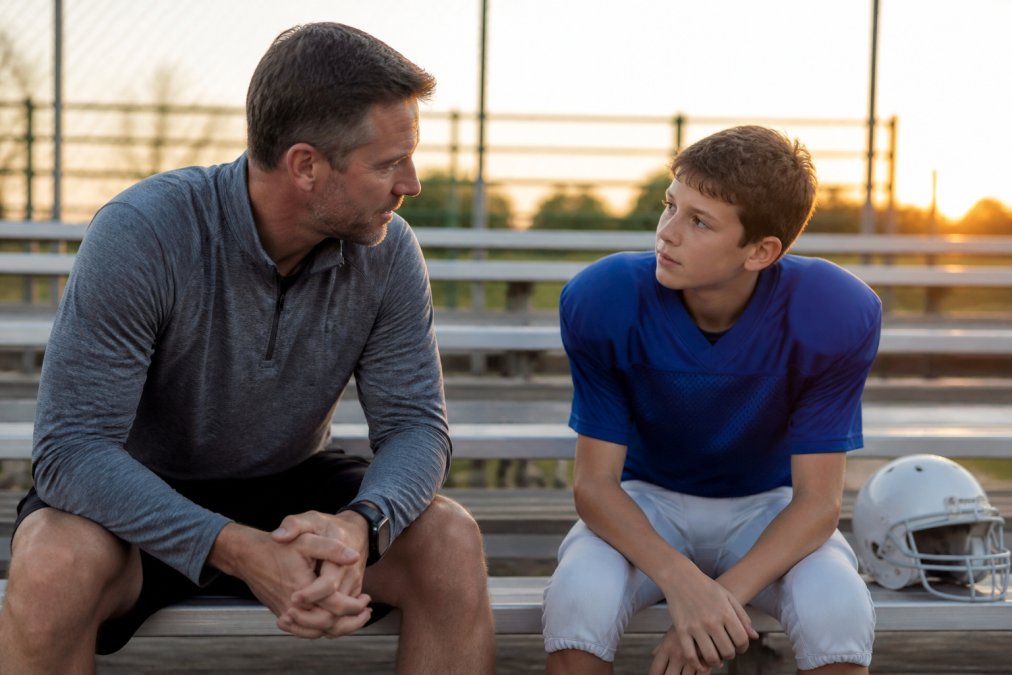
The worst approach is immediate analysis: "You should have passed more," "Your defense was sloppy." Even delivered kindly, this communicates that you're evaluating their performance and found it lacking.
A better framework: wait 20-30 minutes before discussing specifics. Then ask open-ended questions that invite reflection. "What do you think happened out there?" "What was the hardest moment for you?" "What would you do differently next time?" These questions teach self-awareness instead of making your child feel scrutinized.
Listen more than you speak. Resist the urge to fix their feelings or reframe the loss as "a learning opportunity." Validation comes before solutions. "That was a tough one. I could see how much you wanted to win."
Only after your child has processed should you ask whether they want to talk about what happened. If they say "I don't want to talk about it," respect that boundary.
Never blame the referee, the coach, or their teammates. Your child needs to learn that they can only control their own effort and attitude. Blaming external factors teaches them to avoid responsibility.
Signs of Overbearing Sports Parents and How to Avoid Them
An overbearing sports parent often doesn't recognize themselves in that description. But there's a line between healthy involvement and unhealthy control.
Common signs: you talk about your child's sport more than they do; you've had conversations with the coach about playing time or strategy; you critique your child's performance during or after games; you're frustrated when your child doesn't seem as invested in improvement as you are; you've compared your child's abilities to other kids; you feel personally disappointed by your child's losses.
Each signals that you've shifted from supporting your child to managing their athletic identity. Your child internalizes that their worth is tied to performance and that your approval is conditional on results.
The antidote is clear role definition. You are the unconditional supporter. You show up, provide transportation and equipment, and celebrate effort. The coach is the strategist and skill developer. Your child is the decision-maker about their own participation and goals. When you stay in your lane, everything works better.
Youth Sports Burnout Symptoms and Prevention
Youth sports burnout is real and increasingly common. It's not just quitting the sport, it's emotional exhaustion, cynicism about competition, and a drop in athletic performance despite increased effort.
Early warning signs include: decreased enthusiasm about practice or games; complaints of fatigue that don't match their actual training load; irritability around sports; physical complaints before competitions; loss of interest in talking about the sport; resistance to trying new skills.
Burnout typically stems from too much competition too early, excessive pressure to perform, lack of autonomy in participation, overemphasis on winning, or training that doesn't match the child's developmental stage. The common thread is that the child has lost control over their own athletic experience.
Prevention starts with the fundamentals: emphasizing enjoyment over outcomes, allowing adequate rest and recovery, supporting your child's choices about which sports to play and at what level, and keeping competition in perspective. A 10-year-old doesn't need a year-round travel team. A 13-year-old benefits from playing multiple sports. A 15-year-old should be choosing their own level of commitment.
One practical prevention strategy: build in mandatory breaks. Every athlete benefits from periods of reduced training or complete rest from their primary sport. This prevents both physical overuse injuries and the psychological fatigue that leads to burnout.
Managing the 'Sports Parent' Identity Crisis
When your child plays competitive sports, you don't just become a parent. You become a "sports parent." This identity can be helpful, but it becomes problematic when your own sense of self-worth becomes dependent on your child's athletic success.
The identity crisis emerges when your child no longer wants what you've invested so much in. They want to quit. They want to play a different sport. They want to be less competitive. Suddenly, you're grieving not just their loss of opportunity, but the loss of the role you've built around being their sports parent.
Managing this requires honest self-reflection. Ask yourself: Would I be disappointed if my child quit this sport? If the answer is yes, that's a signal that you've wrapped too much of your identity into their athletic performance. Your job is to support their choices, not to live through their achievements.
One practical boundary: don't talk about your child's sport with people outside your immediate family unless your child brings it up first. This creates natural limits on how much mental and emotional energy you're investing.
Your Role in the Coach-Athlete-Parent Triangle
The most functional youth sports environments have clear roles and good communication between three parties: the coach, the athlete, and the parent. When any of these three groups overstep their boundaries, tension increases and the athlete's experience suffers.
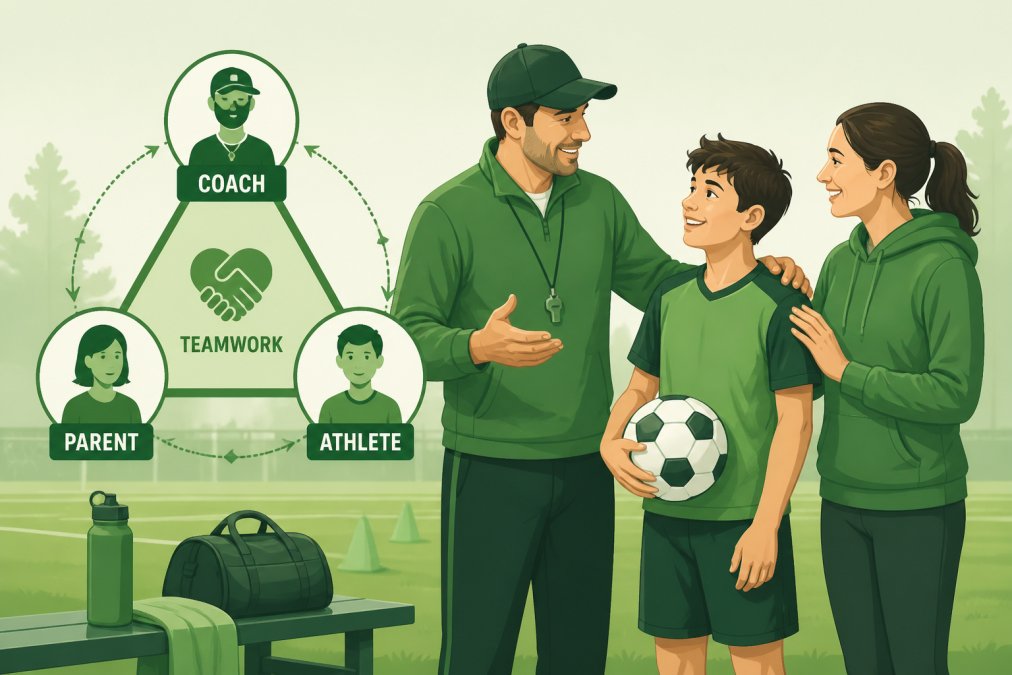
The coach's role is to teach skills, design training, make strategic decisions, and provide feedback on performance. The athlete's role is to show effort, follow the coach's direction, and take responsibility for their own improvement. Your role as a parent is to support both of them without interfering with either relationship.
Where most parents go wrong: they try to be a second coach. They offer unsolicited advice about technique or strategy. They question playing time or lineup choices. They undermine the coach's authority by disagreeing with them in front of their child.
If you have genuine concerns about coaching quality, safety, or treatment of your child, address them privately with the coach in a respectful way. "Can you help me understand why my child isn't getting playing time?" invites dialogue. "You're not giving my child a fair chance" puts the coach on defense.
The coach-athlete-parent triangle works best when each party trusts the others to do their job. The coach trusts that parents will support their coaching without interference. The athlete trusts that the coach has their best interests in mind and that their parent has their back regardless of outcomes. The parent trusts that the coach is qualified.
Conclusion
Building a healthy sports parent mindset doesn't happen overnight. It requires catching yourself mid-thought when you're about to ask about the win instead of the effort. It means sitting with your own disappointment when your child loses, without transferring that disappointment onto them. It demands that you stay in your lane and trust the coach and your child to do theirs.
The payoff is worth the work. Kids raised with this mindset develop genuine resilience, intrinsic motivation, and a healthier relationship with competition and failure. They're more likely to stay active in sports because they enjoy them, not because they're chasing your approval.
At Merch by Mary Ellen, we've seen families use game day rituals, custom team apparel, personalized gear, and celebratory traditions as a way to mark the importance of participation and effort, not just outcomes. These small touchstones remind kids that showing up, being part of a team, and giving their best effort are what deserve celebration. That's the foundation of a healthy sports parent mindset in action.
Frequently Asked Questions
What does a healthy sports parent mindset look like in practice?
A healthy sports parent mindset prioritizes your child's long-term development, enjoyment, and resilience over immediate wins. It means celebrating effort and improvement, asking your child what they learned rather than focusing on the score, and showing unconditional support regardless of performance. You attend games to encourage participation and build confidence, not to critique every play. You also respect your child's autonomy, letting them choose whether to continue a sport and listening when they express stress or burnout.
How can I avoid putting too much pressure on my young athlete?
Shift your focus from outcomes to process. Instead of emphasizing winning, highlight specific improvements in effort, technique, or teamwork. Avoid making your child's athletic identity the center of family conversations or your own identity as a parent. Create space for your child to play multiple sports or take breaks without guilt. Listen for signs of burnout like reluctance to attend practice, sleep issues, or loss of enjoyment. Most importantly, make it clear your love and pride in them has nothing to do with trophies or stats.
What should I do if my child shows signs of youth sports burnout?
Take burnout seriously, it's not just tiredness. If your child expresses dread about practice, loses interest in a sport they once loved, shows declining performance despite effort, or displays physical symptoms like headaches or stomach issues, it's time to pause and reassess. Talk openly with your child about what's causing the stress. Consider reducing their schedule, taking a break from competition, or switching to recreational play. Consult with their coach about stress levels. Remember that stepping back isn't failure; it's teaching your child to listen to their body and mental health.
How do I navigate conflicts with my child's coach?
Approach coach conversations with curiosity, not accusation. If you have concerns about playing time, coaching methods, or your child's experience, schedule a private conversation and ask questions first. Avoid confrontation during or immediately after games. Focus on your child's development and well-being, not your expectations. If a coach is dismissive or if you genuinely believe your child's safety or mental health is at risk, escalate to league leadership. Remember that coaches and parents share the goal of helping your child grow, framing it as partnership rather than opposition keeps everyone focused on what matters.
This article was written using GrandRanker