

Table of Contents
- Step 1: Plan Your Design and Gather Team Input
- Step 2: Choose Your Fabric Choices for Sports Uniforms
- Step 3: Select Your Decoration Method
- Step 4: Design Your Team Logo and Artwork
- Step 5: Master the Custom Team Apparel Design Process
- Step 6: Use Sports Uniform Design Software
- Step 7: Handle Sizing, Bulk Ordering, and Logistics
- Common Mistakes to Avoid When Designing Team Apparel
Last Updated: July 21, 2026
How to design custom team apparel is both an art and a science. Whether you're creating uniforms for a sports team, matching family reunion shirts, or branded merchandise, the process becomes manageable once you understand the key decisions that matter. This guide walks you through seven critical steps, common pitfalls to avoid, and insider tips that separate successful projects from disappointing ones.
Step 1: Plan Your Design and Gather Team Input
Your design starts before touching any software. The biggest mistake teams make is diving straight into design tools, then realizing halfway through that nobody agrees on colors, style, or direction.
Start by defining what your team apparel needs to communicate. Are you building team identity for a competitive sport? Celebrating a milestone? Creating family unity at an event? The purpose shapes every decision that follows.
Gather input from the people who'll wear the gear. Send a simple survey asking for preferences on color combinations, design style, logo preferences, and fit. Document these preferences so disagreements can be resolved with data rather than opinions.
Step 2: Choose Your Fabric Choices for Sports Uniforms
The fabric you select determines durability, comfort, appearance, and cost.
Performance fabrics like polyester blends and moisture-wicking materials are essential for athletic apparel. These fabrics pull sweat away from skin, dry faster, and maintain shape through repeated washing. Standard cotton works fine for casual wear or commemorative apparel worn occasionally, but absorbs moisture and takes longer to dry. Cotton blends offer a middle ground between durability and feel.
High-quality performance fabrics maintain their shape through 50+ washes without significant fading. If your apparel will be washed frequently, invest in premium fabrics, the 15-25% cost difference avoids replacement costs and disappointed team members.
Check care instructions before committing. Some fabrics require cold water washing or special detergent. If your team won't follow specific care instructions, choose forgiving fabrics like polyester-dominant blends.
Step 3: Select Your Decoration Method
How you add your design to fabric determines visual impact, durability, cost, and production timeline. Three main methods dominate custom apparel: screen printing, embroidery, and sublimation.
Screen printing for bold, durable designs works best with a limited color palette (2-4 colors). Ink is pushed through mesh onto fabric, creating designs bonded to the material that withstand 100+ washes. Screen printing costs less per unit for larger quantities (50+ shirts) but has higher setup fees for smaller orders. Turnaround is typically 5-10 business days.
Embroidery for premium team logos creates a three-dimensional, textured look that feels professional and lasts the life of the garment. Thread is stitched directly into fabric, making designs durable and permanent. Embroidery costs more per unit than screen printing and works best for logos with bold lines and solid colors. Turnaround is typically 7-14 business days.
Sublimation for full-color custom graphics allows unlimited colors and photographic-quality images. Heat transfers dye directly into polyester fibers, creating vibrant designs. This method works only on polyester or polyester-blend fabrics. Cost per unit is moderate for larger orders but high for small quantities. Turnaround is typically 3-7 business days, fastest of the three methods.
Step 4: Design Your Team Logo and Artwork
Creating vector files for production is essential. Vector files (formats like .AI, .EPS, or .PDF) are graphics made from mathematical equations rather than pixels. They scale infinitely without losing quality, unlike JPEGs or PNGs.
If you have an existing logo, ask your graphic designer to provide the vector file. If you don't have one, hire a designer to create it, this investment prevents amateurish-looking apparel.
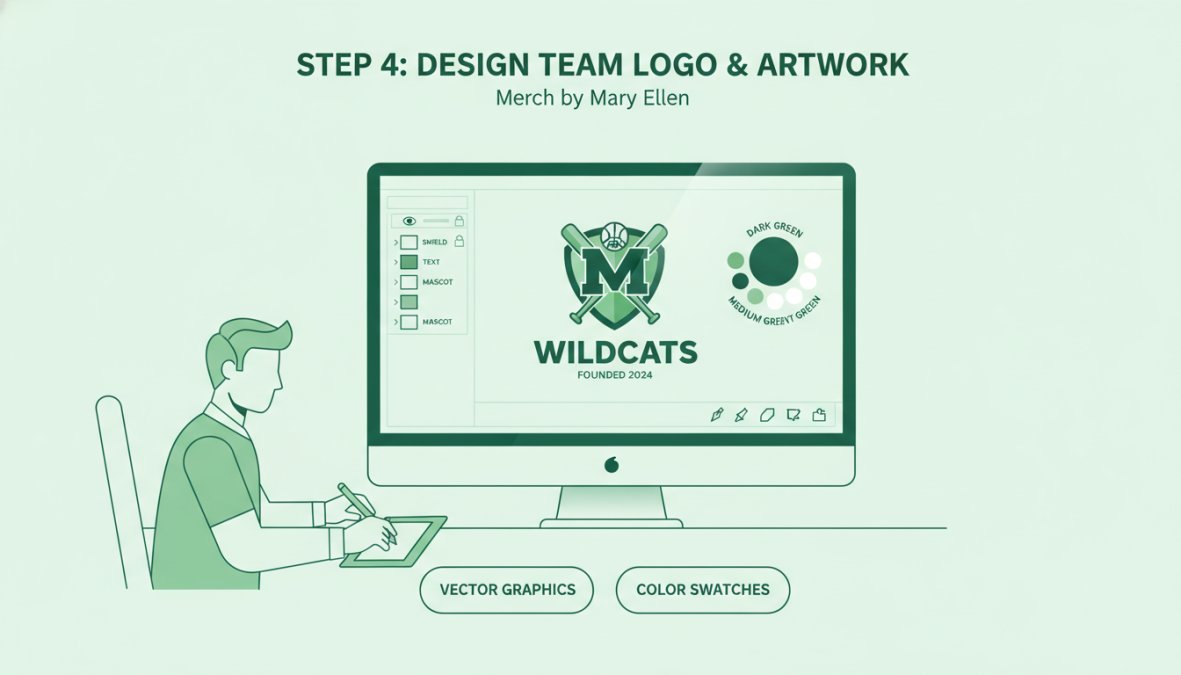
Online designer tools make the process accessible even without design experience. Many apparel vendors offer built-in design tools that let you upload logos, add text, adjust colors, and see mockups instantly. Start with a template if one fits your vision, then customize colors, text, and placement to match your team's identity.
Pay attention to placement. A logo centered on the chest looks different than one on the shoulder. Use the preview feature to see how your design looks on an actual garment mockup before committing.
Step 5: Master the Custom Team Apparel Design Process
Upload your artwork and create mockups through your apparel vendor's system. A mockup shows your design on an actual product photo, revealing how colors, size, and placement will look in real life.
Review the mockup carefully. Does the logo size work? Is text readable? Do colors match your vision? Many teams discover at this stage that logos are too small or colors don't match expectations.
Colors on your computer screen rarely match printed colors exactly. Different fabrics also affect how colors appear, the same blue looks different on white cotton versus navy polyester. Most vendors provide color samples or let you specify Pantone colors (an industry standard color system) to ensure consistency.
Consider how the wearer will interact with the garment. For athletic uniforms, think about how movement affects visibility. For casual wear, think about how the design looks when someone is sitting.
Step 6: Use Sports Uniform Design Software
Specialized uniform design software offers features that general apparel tools don't. Design templates let you build jerseys, shorts, and matching sets with integrated numbering systems. You can specify jersey cut, sleeve length, collar style, and add player numbers and names automatically across multiple sizes.
Adding player names and numbers is straightforward. Specify the font, size, and placement, then the system generates each player's jersey with their name and number. This automation prevents errors and saves hours of manual work when customizing 15+ jerseys.
Quality uniform software also handles size grading, adjusting design elements proportionally across different sizes so logos look correct on youth smalls and adult XXLs.
Step 7: Handle Sizing, Bulk Ordering, and Logistics
Get accurate sizing and fit guides before ordering. Every vendor sizes differently. Check the vendor's size chart and compare measurements to apparel you already own. If possible, order a sample in your size to verify fit before committing to bulk quantities.
For teams with multiple sizes, measure each person or have them reference the size chart. Ordering the wrong size for half your team creates frustration and additional costs.
Understand bulk pricing and turnaround times upfront. Most vendors offer tiered pricing: ordering 50 shirts costs less per unit than ordering 25. Screen printing typically takes 7-14 business days. Sublimation is faster at 3-7 days. Embroidery can take 10-21 days depending on complexity.
| Factor | Impact on Timeline | Impact on Cost |
|---|---|---|
| Order quantity | Larger orders (100+) have faster per-unit production | Bulk pricing reduces per-unit cost significantly |
| Decoration method | Sublimation fastest (3-7 days), embroidery slowest (10-21 days) | Screen printing cheapest at scale, sublimation costliest for small orders |
| Design complexity | Complex multi-color designs require longer setup | Simple designs cost less to produce |
| Rush options | Available but cost 20-50% more | Urgent orders add premium fees |
| Shipping method | Standard shipping adds 3-5 days, expedited adds cost | Shipping cost depends on weight and distance |
Plan ahead. If your event is in 10 days, you need rush production and expedited shipping, both cost significantly more. If you have 4-6 weeks, use standard production and save money.
Confirm shipping details. Will the vendor ship to one address or directly to team members? Can they ship internationally if needed? What's included in the quoted price?
Common Mistakes to Avoid When Designing Team Apparel
Skipping the planning phase leads to designs nobody agrees on. Spend time gathering input upfront.
Choosing cheap fabrics results in apparel that looks worn after a few washes. Invest in quality materials that last.
Underestimating timeline is perhaps the most common mistake. Teams wait until two weeks before an event to order, then panic when production takes longer. Add 2-3 weeks buffer time for standard orders.
Uploading low-quality artwork creates blurry, pixelated designs. Always use vector files or high-resolution images (300 DPI minimum).
Ignoring the mockup feedback means ordering apparel without confirming how it actually looks. Take mockups seriously and request revisions if needed.
Not confirming sizing leads to apparel that doesn't fit half your team. Verify sizes individually rather than guessing.
Choosing decoration methods based only on cost ignores durability and appearance. Match the method to your actual needs.
Forgetting about care instructions means apparel gets ruined by improper washing. Choose fabrics and decoration methods that match how your team will actually care for them.
Designing custom team apparel that your team actually loves wearing requires balancing aesthetics, durability, budget, and timeline. The process becomes manageable when you follow these seven steps systematically. At Merch by Mary Ellen, we specialize in helping teams navigate this journey, from initial concept through final delivery. Our platform offers personalized design tools, quality fabric options, multiple decoration methods, and reliable production timelines. Start designing your custom team apparel today.
Frequently Asked Questions
What's the best decoration method for custom team apparel?
It depends on your design and budget. Screen printing works best for bold, solid-color logos and is cost-effective for bulk orders. Embroidery creates a premium look ideal for team logos and player names. Sublimation allows full-color custom graphics and photo-quality details. Consider your artwork complexity, durability needs, and quantity when choosing your decoration method.
How do I choose the right fabric for sports uniforms?
Select performance fabrics with moisture-wicking properties if your team will be active. Look for breathable materials like polyester blends or mesh for athletic apparel. Consider durability, high-quality athletic fabrics withstand frequent washing and wear better than standard cotton. Check care instructions and colorfastness ratings to ensure your custom team apparel maintains its appearance after multiple washes.
What file format do I need for my team logo design?
Vector files (like .AI, .EPS, or .PDF) are ideal for screen printing and embroidery because they scale without losing quality. For sublimation, high-resolution raster files (300 DPI .PNG or .JPG) work best. Most online designer tools accept common formats and provide guidance. If you're unsure, ask your apparel provider, they can often help convert or adjust your artwork to meet production requirements.
How long does it take to order custom team apparel?
Turnaround times vary based on quantity, decoration method, and customization complexity. Simple bulk orders with standard designs may take 5-10 business days, while custom artwork with embroidery or sublimation can take 10-15 days. Rush options are sometimes available at higher costs. Check with your provider about their specific turnaround times and shipping options to ensure your team gear arrives when you need it.
This article was written using GrandRanker