

Table of Contents
- Step 1: Choose a Color Palette for Your Family Outfits
- Step 2: Decide Between Coordinating vs. Matching Outfits
- Step 3: Create a Family Outfit Planning Checklist
- Step 4: Bundle and Organize Clothing Sets by Outfit
- Step 5: Set Up a Digital Inventory System
- Family Photo Outfit Ideas: Planning for Events and Photoshoots
- How to Organize Matching Family Outfits in Your Closet Space
- Common Mistakes to Avoid When Organizing Family Outfits
Last Updated: July 7, 2026
Organizing matching family outfits doesn't have to be complicated. A thoughtful system saves time, reduces decision fatigue, and creates cohesive looks for every occasion. At Merch by Mary Ellen, we've helped countless families simplify their wardrobes with coordinated collections that celebrate togetherness while maintaining individual style. This guide walks you through a complete step-by-step system for bundling, storing, and managing matching sets so your family looks put-together without daily outfit battles.
The key to success lies in three core practices: selecting a cohesive color palette, deciding whether you want full matches or coordinated looks, and creating a system to keep everything accessible and visible.
Step 1: Choose a Color Palette for Your Family Outfits
Your color palette is the foundation of everything that follows. A well-chosen palette ensures pieces work together across multiple outfits, reducing the number of items you need to buy while maximizing combinations.
Start by identifying 3-5 core colors that complement your family's skin tones and personal preferences. Common palettes include neutral foundations (blacks, whites, grays, navies) paired with 1-2 accent colors. Some families choose seasonal palettes: warm earth tones in fall, pastels in spring, jewel tones in winter.
Consider the practical side. Neutral colors are easier to coordinate and photograph well. If you're planning family photoshoots, neutral palettes remain timeless in photos years later.
Once you've selected your palette, commit to it. Every new piece your family acquires should fall within these colors. This constraint ensures new items integrate seamlessly with existing pieces rather than creating orphan items that don't match anything.
| Color Type | Best For | Examples |
|---|---|---|
| Neutrals | Foundation pieces, versatility | Black, white, gray, navy, beige |
| Accent colors | Personality, visual interest | Red, teal, forest green, burgundy |
| Seasonal additions | Limited rotation, freshness | Pastels (spring), earth tones (fall) |
Step 2: Decide Between Coordinating vs. Matching Outfits
Before you organize, clarify what "matching" means for your family. Full matching means everyone wears identical or nearly identical outfits. Coordinating means everyone wears different pieces that work together visually through color, style, or theme.
Full matching works best for specific occasions: family photoshoots, holiday gatherings, special events. It creates striking visual unity and photographs beautifully. The downside is that it requires buying multiples of the same item in different sizes, which can be expensive and limits individual expression.
Coordinating outfits offer more flexibility for everyday wear. Each family member wears pieces in the same color palette or theme, but in styles that suit their individual taste and body type. For example, one person wears a navy t-shirt while another wears a navy sweater and a third wears navy jeans, all coordinated, all comfortable, all individual.
According to Family style experts at Real Simple, most families find that a hybrid approach works best: coordinated outfits for everyday and school, with full matching reserved for special events and family photos.
Step 3: Create a Family Outfit Planning Checklist
Before you bundle anything, document what outfits you actually need. This prevents over-buying and keeps your system focused.
List the occasions your family dresses for regularly: school days, weekend activities, family events, photoshoots, holidays, vacations. For each category, note how many complete outfits you need. Most families need 5-7 school outfits, 2-3 weekend outfits, 1-2 family event looks, and seasonal special occasion pieces.
Next, specify what pieces comprise a complete look for each category. A school outfit might be: shirt, pants, socks, and shoes. A family photoshoot outfit might be: coordinated shirt, pants, and accessories for each person. Document sizing for each family member so you know exactly what to buy.
This checklist becomes your shopping guide. When you see a piece on sale, you can quickly reference whether it fills a gap in your system or if you're already covered.
Step 4: Bundle and Organize Clothing Sets by Outfit
Now comes the core of organization: bundling complete outfits together so they're ready to grab and wear.
Start by laying out one complete outfit for each person on a bed or large table. Verify that all pieces fit, colors coordinate, and nothing is missing. If you're organizing for multiple occasions, create separate bundles for each category.
Once you've verified a complete outfit works, keep those pieces together. Pieces must stay bundled, not scattered across the closet.
Using Storage Bins for Outfit Bundles
Storage bins are the most practical solution for keeping outfit bundles intact. Clear plastic bins work best because you can see contents without opening them. Label each bin clearly: "School Week 1," "Weekend Outfits," "Family Photoshoot," "Holiday Outfits."
For each bin, organize outfits in one of two ways:
Method 1: Stack by outfit. Stack complete outfits on top of each other, one outfit per stack. This works well for small families or limited bin space.
Method 2: Organize by person within the bin. Create a section for each family member's pieces within the bin. This works better for larger families. Use dividers or smaller containers to separate each person's stack.
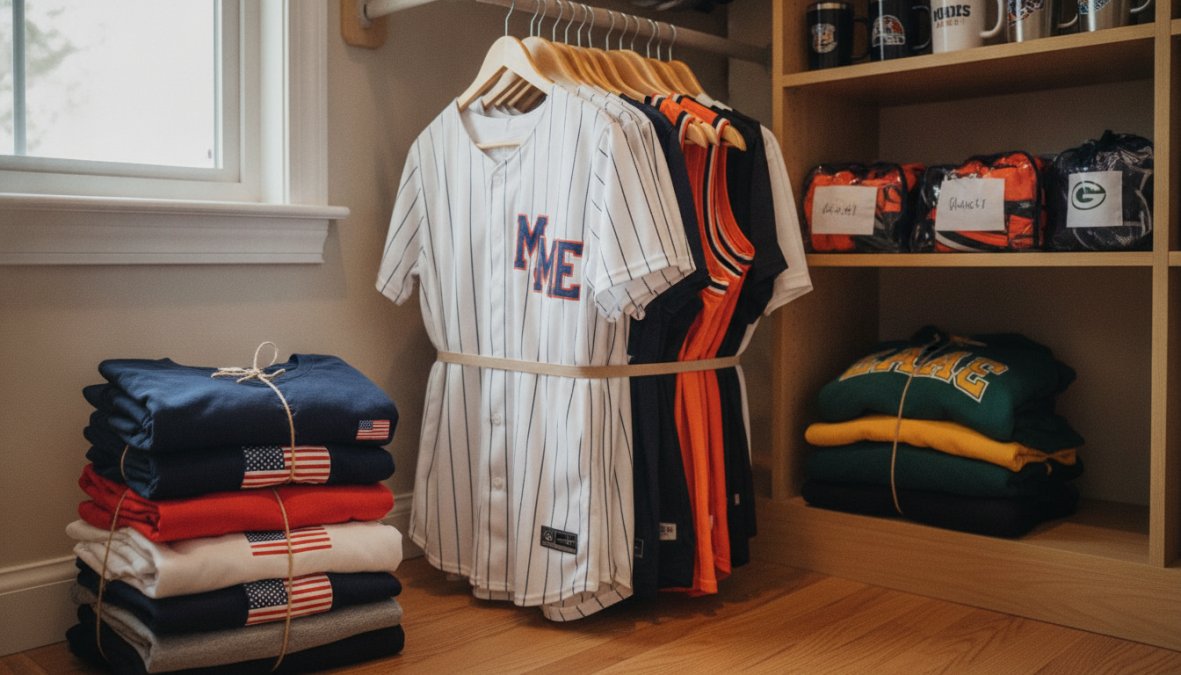
Bins should be stored in an accessible location, not in the attic or basement. Families with young children benefit from bins stored at child height so kids can grab their own outfits.
Labeling and Visual Identification Systems
Clear labeling prevents confusion and helps family members find their own outfits independently. Use a label maker or write clearly with a permanent marker on each bin.
Consider visual identification within bins. Some families use colored stickers or clothespins to mark each person's section. Others use small photos taped to the inside of the bin showing what outfit is in that section. For families with young children or neurodivergent members who benefit from visual supports, photos are especially helpful.
Step 5: Set Up a Digital Inventory System
A physical organization system works well for immediate access, but a digital inventory system helps with long-term planning and prevents duplicate purchases.
Create a simple spreadsheet or use a note-taking app to document:
- What's in each outfit bundle (specific item descriptions, colors, sizes)
- Which family member each piece belongs to
- When that outfit was last worn
- Condition notes (needs mending, stain, loose button)
- Where the bundle is stored
This digital record helps you quickly check whether you already own something similar when shopping. Before a family event, you can verify that all pieces are in good condition. When organizing seasonal transitions, you can note which bundles to pack away.
Family Photo Outfit Ideas: Planning for Events and Photoshoots
Family photoshoots are the primary driver for many families to organize matching outfits. Coordinated looks photograph beautifully and create lasting memories.
When planning a family photoshoot, start 4-6 weeks in advance. This gives you time to source pieces, ensure proper sizing, and plan any custom orders from places like Merch by Mary Ellen that offer personalization.
Choose a color palette that complements your location. If you're photographing outdoors in a natural setting, earth tones or jewel tones photograph beautifully. For holiday photos, classic reds and greens or neutral creams and golds are timeless.
Consider the season and weather. Winter photoshoots allow for layered looks with sweaters, jackets, and scarves. Summer shoots work best in lightweight fabrics and minimal layers.
Document your photoshoot outfit plan in writing or with Pinterest inspiration photos. Include specific pieces for each person, sizes, and any accessories needed.
How to Organize Matching Family Outfits in Your Closet Space
If you prefer to keep outfit bundles visible in your closet rather than in separate bins, dedicate one section of your closet to outfit bundles. Group all pieces for one outfit together using clip hangers or by hanging items on the same hanger in sequence.
Use divider clips between outfits so visual separation is clear. Label dividers with outfit names or dates.
For families with multiple children, consider color-coding hangers. Each child gets a specific hanger color, making it instantly obvious which pieces belong to whom.
Shelving works for folded items and lighter pieces that don't need hanging. Store complete outfit bundles on separate shelves, one outfit per shelf.
Laundry Management for Outfit Sets
Keeping outfit bundles together requires coordination with laundry routines. This is where many families' systems break down.
Establish a laundry protocol: wash outfit bundles together rather than mixing pieces from different outfits. After washing, immediately re-bundle pieces before they go into storage. Treat re-bundling as part of the laundry process, like folding or hanging.
For families with multiple children, consider assigning specific laundry days to each child or outfit category. One family does "School Outfits Monday," "Weekend Outfits Wednesday," and "Special Event Outfits Friday."
Rotating and Seasonal Transitions
Seasonal transitions offer an opportunity to refresh your system and assess what's working.
Four times per year, pull out all outfit bundles and evaluate. Check sizing, as kids grow quickly. Note any pieces that are stained, worn, or no longer work. Identify gaps in your system.
Before storing seasonal outfits away, clean all pieces and ensure they're in good condition. Store off-season bundles in separate, clearly labeled bins. Use acid-free tissue paper to protect delicate fabrics.
When bringing out seasonal outfits, do a quick inspection before putting them into active rotation. Check for mildew, dust, or any issues that developed during storage.
Common Mistakes to Avoid When Organizing Family Outfits
Understanding what doesn't work helps you build a system that actually lasts.
Mistake 1: Buying without a plan. Purchasing individual pieces without a clear vision creates closets full of items that don't work together. Create your color palette and outfit checklist before any shopping happens.
Mistake 2: Over-complicating the system. If your system requires 30 minutes of organizing every time laundry is done, it will fail. Keep it simple: bundle complete outfits, store them accessibly, re-bundle after laundry.
Mistake 3: Not involving family members. If only one parent manages the system, it fails when that person is unavailable. Teach children and partners how the system works.
Mistake 4: Ignoring individual preferences. Forcing a child to wear a matching outfit they hate creates resistance. Use coordinated outfits rather than full matches. Let family members choose between 2-3 coordinated options.
Mistake 5: Skipping the digital inventory. Without documentation, your system works great until you forget what you own. A simple spreadsheet prevents this.
Mistake 6: Storing bundles in inaccessible locations. If outfit bins are in the attic or basement, family members won't use the system. Store bundles in or near the closet where clothes are actually accessed.
Mistake 7: Letting laundry break the bundles. Pieces get washed separately and scattered. Make re-bundling a non-negotiable part of your laundry routine.
Organizing matching family outfits transforms daily dressing from a source of stress into a simplified process that works for everyone. Whether you're coordinating for school, preparing for family events, or planning photoshoots, a thoughtful system saves time, reduces decision fatigue, and helps your family look cohesive without feeling restrictive.
Merch by Mary Ellen makes this process easier with a diverse collection of apparel and accessories tailored for families and sports enthusiasts. From patriotic collections to specialized gear for your family's favorite sports, we offer high-quality items including t-shirts, hoodies, and coordinated pieces that work beautifully within a matching family outfit system. Many of our items are available with personalization options, allowing you to create truly custom coordinated looks. Start building your family's outfit system today, your morning routine will thank you.
Frequently Asked Questions
Should family outfits match exactly or coordinate?
Exact matching works well for formal events and photoshoots, while coordinating, where family members wear the same color palette or theme without identical pieces, offers more flexibility and comfort. Coordinating lets each person express individual style while maintaining visual unity. For casual family gatherings, coordinating is often preferred; for professional photos, exact matching creates stronger visual impact.
What color palettes work best for family photos?
Neutral palettes (cream, gray, navy, black) are timeless and photograph well. Jewel tones (emerald, sapphire, burgundy) add richness and depth. Soft pastels work beautifully for spring and summer. Avoid bright neons or busy patterns that compete visually. Consider your skin tones, the photo location's background, and seasonal lighting. Stick to 2-3 colors maximum across the family to maintain cohesion without looking overly coordinated.
How can I organize matching family outfits for a large family?
Use labeled storage bins or hanging organizers grouped by outfit bundle rather than by individual. Create a digital inventory with photos and sizes for quick reference. Assign each family member a color-coded label or section in the closet. Rotate seasonal outfits to maximize closet space. Consider a spreadsheet or app to track which outfits work for which events, sizes, and occasions. This system reduces decision fatigue and keeps sets intact.
What's the best way to manage laundry for outfit sets?
Wash complete outfit bundles together to keep sets intact and ready to wear. Use mesh laundry bags labeled by outfit to prevent pieces from separating in the wash. Fold and store immediately after drying to maintain organization. For delicate pieces, consider hand-washing or dry-cleaning. Keep a backup outfit bundle for each family member so laundry cycles don't disrupt your organization system.
This article was written using GrandRanker