

Table of Contents
- Why Setting Boundaries With Youth Sports Matters
- Define Your Family's Role and Expectations
- Establish Clear Communication Channels With Coaches
- How to Talk to Coaches About Playing Time
- Recognize Signs of Sports Burnout in Children
- Managing Youth Sports Travel Schedules and Family Time
- When to Let Your Child Quit a Sport
- Set Digital and Social Media Boundaries
Last Updated: August 18, 2026
Why Setting Boundaries With Youth Sports Matters
Setting boundaries with youth sports protects your child's well-being while they develop as athletes. Parents who establish clear boundaries early see healthier coach relationships, less family stress, and children who enjoy competing rather than dreading it.
Without boundaries, families face burnout, resentment, and kids who quit sports entirely by their teenage years. This guide explores how to set boundaries with youth sports in practical, actionable ways, whether navigating your first season or dealing with an overly demanding coach.
Define Your Family's Role and Expectations
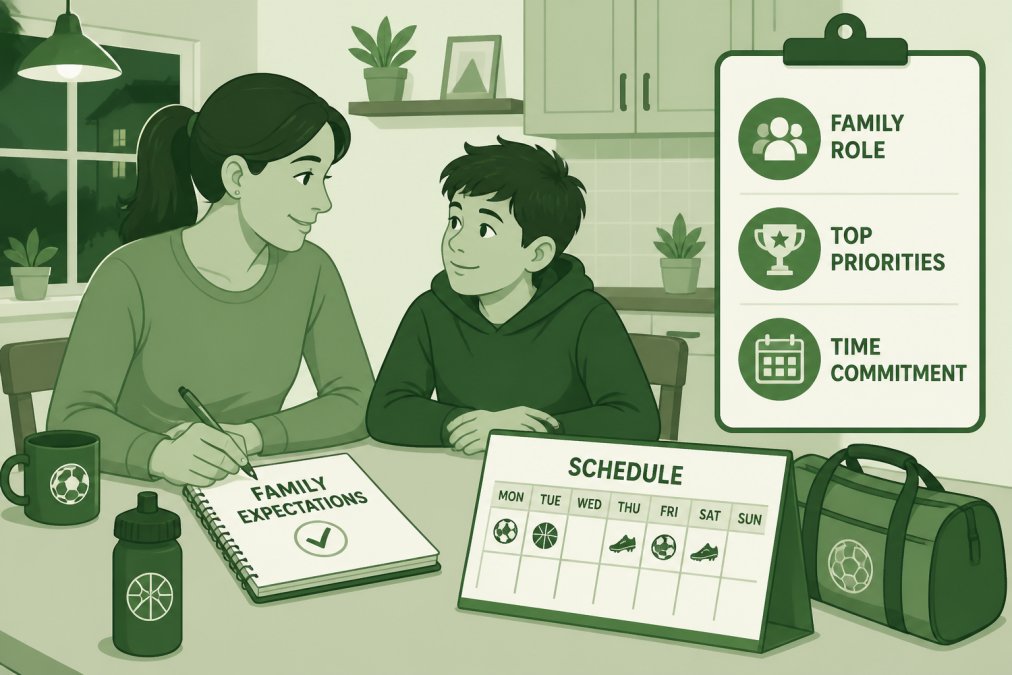
Your family's role in youth sports should be clear before the season starts. Ask yourself: Is this sport a fun activity or competitive advancement? How much time and money are we willing to invest? What does "success" look like, winning tournaments, making the team, or enjoying the sport?
Sit down with your child and discuss expectations together. A ten-year-old might think "soccer" means one practice a week, not weekend tournaments three hours away. Clarify the reality before signing up.
Set specific boundaries around practice and game attendance. If you decide that missing school for tournaments isn't acceptable, say that now. Document your family's approach in writing, even a simple list becomes your reference point when coaches push for more commitment.
Establish Clear Communication Channels With Coaches
Communication is where most coach-parent relationships go wrong. Before the season begins, ask your coach how they prefer to communicate: email, text, phone, or in-person? Confirm it in writing.
Set expectations about what gets discussed when. Tactical questions about playing time belong after practice or via email, not immediately after a game. Establish a rule: never discuss playing time or coaching decisions immediately after a game. Wait at least 24 hours.
Create a communication protocol for your family. If your child has a concern, do they talk to the coach directly first, or do you? Most experts recommend kids handling their own communication when developmentally appropriate, usually by age 12 or so.
What to do when communication breaks down. If a coach isn't responding to reasonable requests or is communicating disrespectfully, try direct clarification first. Send a calm, professional email: "I've noticed we haven't connected about [specific issue] as we discussed. When would be a good time to talk?"
If the problem persists, escalate to the next level. Most youth sports organizations have a chain of command: coach → assistant coach or team manager → athletic director → league administrator. Send one more email documenting the issue: "I've asked about [specific boundary violation] three times via email on [dates]. I'd like to resolve this with you directly, but I need a response by [date]. If I don't hear from you, I'll be reaching out to [next level of authority]."
When you escalate, be specific and factual. Don't say "The coach is mean." Say: "The coach told my child they were 'lazy' and 'not good enough' during practice on [date]. My child has been anxious about attending practice since then." Bring documentation: emails, text messages, dates, and what was said.
When to pull your child from the team. If a coach has crossed a serious boundary, verbal abuse, inappropriate physical contact, discrimination, or any behavior that makes your child feel unsafe, remove your child immediately and report the behavior to the program director and, if necessary, local law enforcement. Your child's safety comes before team loyalty.
For less severe boundary violations, you have options: request a conversation with the coach and athletic director together, move your child to a different team within the organization, or find a new program.
How to Talk to Coaches About Playing Time
Playing time is the single biggest source of tension between parents and coaches. Before raising the issue, accept this: the coach's decision is final. You're not negotiating playing time; you're asking for clarity on what your child can do to earn more minutes.
Frame the conversation around your child's development, not fairness. Instead of "Why isn't my son playing?" try "What specific skills should [child's name] work on to be ready for more playing time?" This shifts the conversation from complaint to coaching.
The best time to discuss playing time is before the season starts, during a general check-in about your child's role on the team. If your child is genuinely not getting playing time despite effort and improvement, you have a decision to make: Is this coach's approach acceptable to your family? If not, it might be time to find a different team or sport.
Recognize Signs of Sports Burnout in Children
Burnout in youth sports often looks subtle: declining performance, increased injuries, mood changes, or sudden anxiety about games. Watch for these warning signs: your child dreads practices or games instead of looking forward to them. They're constantly tired or complaining of aches and pains. Their grades are dropping. They've lost interest in the sport they once loved.

Burnout often stems from pressure or year-round play without breaks. The developing athlete's body needs rest and recovery, not constant competition. Burnout can take months to recover from, so prevention is far easier than recovery.
If you suspect burnout, take action immediately. Have a conversation with your child about what they're feeling. Talk to the coach about reducing pressure or taking a break. Consider whether your child needs time off from this sport entirely, not quitting forever, just stepping back for a season.
Managing Youth Sports Travel Schedules and Family Time
Travel schedules destroy family time if you don't set boundaries. Decide in advance what matters more: winning tournaments or maintaining family connection.
Set specific limits: "We'll do regional tournaments but not travel more than 4 hours away" or "We skip tournaments during holiday weeks." These boundaries protect your family from burnout and financial strain.
Talk to other parents about carpooling and shared hotel rooms. Travel costs add up fast, and splitting expenses makes tournaments more affordable. Create a rule about what happens during travel time, whether it's bonding time without screens or time for kids to decompress.
If your child plays multiple sports, the travel schedule becomes impossible. Most child development experts recommend kids specialize in one sport during competitive seasons, which naturally limits travel demands.
When to Let Your Child Quit a Sport
Sometimes quitting is the healthiest choice. Let your child quit if they're experiencing burnout or showing signs of anxiety related to the sport. Let them quit if the coach is verbally abusive or creates an unsafe environment.
Don't let them quit because one bad game discouraged them or because it's hard. Those are normal challenges worth working through.
Have a conversation: "I've noticed you seem unhappy with [sport]. What's going on?" Listen without judgment. If they say the coach is mean or they're not having fun, that's different from "practice is hard."
Set a reasonable timeline. If your child wants to quit mid-season, you might ask them to finish the season and reassess. This teaches follow-through. But if they're truly miserable, forcing them to stay teaches the opposite lesson.
When kids quit, frame it as a learning experience, not a failure. "You tried [sport], learned about yourself, and now you're exploring what you actually enjoy."
Set Digital and Social Media Boundaries
Modern youth sports operates across multiple digital channels, team group chats, coach texting, Instagram, and private messaging platforms. Most boundary-setting guides ignore this entirely, but it's where many coach-parent conflicts now originate.
Establish texting and messaging protocols with coaches. Before the season starts, clarify: Is texting acceptable for non-emergency communication? What time window is off-limits? Should all team communication go through official channels like a team app or email?
For athletes under 13, consider whether direct coach-to-athlete messaging is appropriate at all. Many youth sports organizations now recommend that coaches communicate with young athletes only through parents or official team channels. If your child is 13 or older and direct messaging is permitted, establish a rule: your child should never receive messages from a coach about performance, playing time, or personal matters outside of team settings.
Create a family rule about sports-related social media consumption. Decide whether your child is allowed to follow coaches, teammates, or rival teams on social media. Many young athletes develop anxiety by comparing themselves to highlight reels. A practical boundary: no social media scrolling for 2 hours after a game or practice.
If your child posts about their sport, establish guidelines: no posting immediately after games (wait at least 24 hours), no negative comments about teammates or coaches, no photos that reveal team strategies or private moments.
Set boundaries for parent behavior on social media. If you're posting game videos, live-tweeting your child's performance, or commenting on other athletes' posts, you're modeling the behavior you want to restrict. Ask yourself: Is this post for my child's benefit, or for my own social validation?
Address coach social media oversharing directly. If a coach is posting photos of your child without permission or using social media to communicate about playing time or team issues, send a professional email: "I'd prefer [child's name] not be posted on social media without my prior permission."
Differentiate boundaries by age. A 7-year-old shouldn't have any direct digital contact with a coach; all communication flows through parents. A 12-year-old might receive team announcements via a group chat but shouldn't be texted individually by a coach. A 16-year-old can handle direct coach communication but should still have clear expectations about response times and appropriate topics.
Finally, monitor for grooming behavior. While most coaches are trustworthy, predatory behavior often begins with digital isolation, a coach who texts a child privately, asks them not to tell parents, or builds a special relationship through messaging. If a coach is seeking private digital communication with your child, asking them to keep conversations secret, or using social media to build a one-on-one relationship outside team settings, that's a serious red flag. Trust your instincts and report it to the organization immediately.
Frequently Asked Questions
What are the 4 C's of setting healthy boundaries in youth sports?
The 4 C's are Clarity, Communication, Consistency, and Compassion. Clarity means defining roles and expectations upfront. Communication involves regular conversations with coaches, your child, and other family members about boundaries. Consistency means enforcing the same boundaries across all situations. Compassion ensures your approach remains supportive of your child's athletic journey while protecting their well-being. These principles work together to create a healthy sports environment.
How do I balance supporting my child's sports goals with family time?
Set specific boundaries around practice frequency, tournament schedules, and travel commitments before the season starts. Designate certain days or times as family-only time that sports won't intrude on. Have honest conversations with your child about what level of commitment feels sustainable for your whole family. Remember that rest and downtime are essential for athletic performance and mental health. If managing the schedule feels overwhelming, it may be time to reassess your child's involvement.
Why do so many kids quit sports before age 13?
Kids quit sports for various reasons including pressure from coaches or parents, lack of playing time, burnout from overtraining, conflict with teammates or coaches, and loss of enjoyment. Poor boundaries often contribute to these issues. When parents and coaches prioritize winning over the child's well-being, when training becomes excessive, or when the sport stops being fun, children naturally lose motivation. Setting clear boundaries around performance expectations and self-care helps prevent early dropout.
What should I do if my child shows signs of burnout?
First, listen to your child without judgment. Common burnout signs include reluctance to practice, declining performance, irritability, sleep problems, or loss of interest in the sport they once loved. Have a conversation with your child about their feelings and take their concerns seriously. Consider reducing practice frequency, taking a break from the sport, or exploring a different activity. Talk with the coach about your observations and discuss ways to make the experience more enjoyable. Prioritize your child's mental health and well-being over athletic achievement.
This article was written using GrandRanker