

Table of Contents
- Is Private Coaching Worth It for Kids: The Real Tradeoffs
- The Case for Private Coaching: Skill Development and Injury Prevention
- Youth Sports Burnout Symptoms: When Private Coaching Backfires
- Benefits of Multi-Sport Participation for Kids vs. Specialization
- Cost of Private Sports Lessons: Budget Reality and ROI
- How to Decide: Is Private Coaching Right for Your Child?
- Conclusion
Last Updated: August 26, 2026
Is Private Coaching Worth It for Kids: The Real Tradeoffs
The question isn't whether private coaching works, it does. The real question is whether it's the right investment for your child, your family, and your budget right now. Private coaching accelerates skill development, reduces injury risk, and builds confidence. But it also carries hidden costs: financial strain, burnout risk, and the pressure of specialization when kids benefit most from exploring multiple sports.
At Merch by Mary Ellen, we understand that is private coaching worth it for kids depends entirely on your child's age, goals, and personality, not on what the neighbor's kid is doing.
This guide breaks down the real tradeoffs: when private coaching delivers genuine value, when it backfires, and how to decide if it's right for your family. We'll cover the financial reality, the injury prevention angle, the burnout warning signs, and the evidence that multi-sport participation often beats early specialization.
The Case for Private Coaching: Skill Development and Injury Prevention
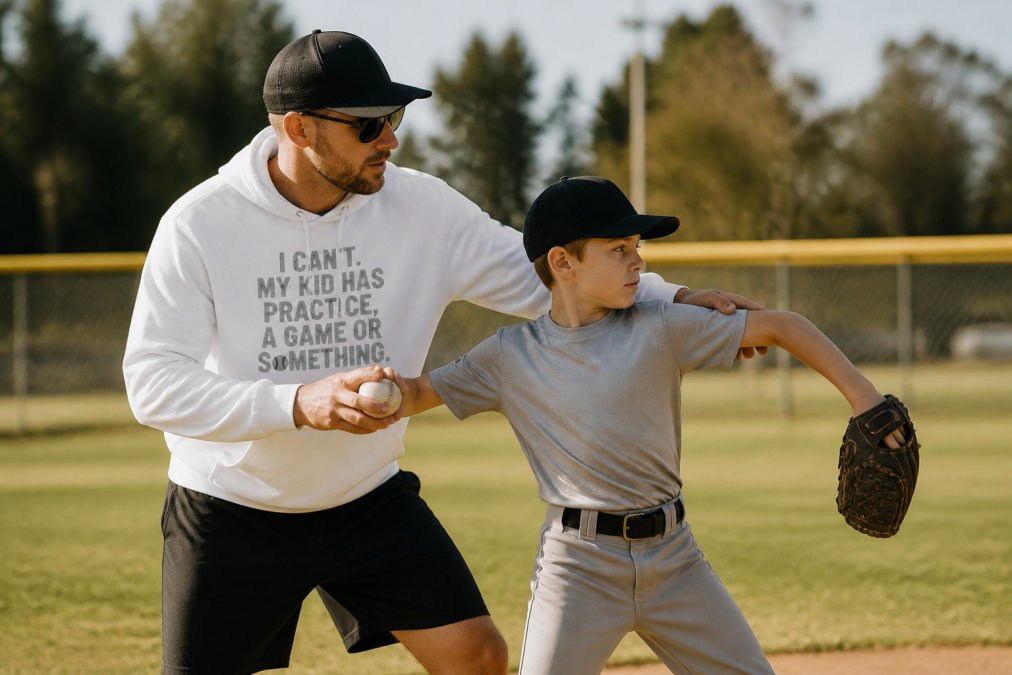
Private coaching accelerates motor skills, coordination, and athletic literacy in ways group instruction cannot match. A coach working with one or two athletes can identify movement inefficiencies, correct form in real time, and tailor progressions to the individual child's development level. This personalized attention compounds over time, creating measurable gaps in performance between coached and uncoached peers.
Accelerated Motor Skills and Coordination
Motor skills and coordination improve fastest under individualized instruction. A private coach can isolate specific movement patterns, footwork, arm angle, weight transfer, balance, and drill them until they become automatic. Group classes move at the pace of the slowest learner; private coaching moves at your child's pace.

This matters most between ages 6 and 12, when the nervous system is most plastic and motor learning is fastest (the NIH). A child who receives consistent private instruction during these years builds a stronger foundation of physical literacy than a child who only plays recreational sports. That foundation becomes the platform for everything else: speed, strength, agility, sport-specific skills.
The tradeoff is cost and time. A single 30-minute session typically runs $30 to $75 depending on the sport and coach credentials. Weekly sessions add up to $120 to $300 per month. Some families invest in multiple sessions per week, pushing toward $500 to $1,000 monthly for serious young athletes.
Reduced Risk of Overuse Injuries
Overuse injuries are the silent cost of youth sports specialization. A child who focuses exclusively on one sport, especially overhead sports like baseball, tennis, or volleyball, develops movement imbalances. They overload the same joints, muscles, and tendons repeatedly, without the counterbalancing stress of different movement patterns.
Private coaching can reduce this risk in two ways. First, a skilled coach teaches proper mechanics from the start, reducing compensatory movements that lead to injury. Second, a good coach recognizes when a child is overtraining and recommends rest or cross-training.
The problem: not all private coaches understand injury prevention. A coach focused purely on performance gains may push a child toward specialization and higher volume, the exact pattern that creates overuse injuries. Choose a coach who emphasizes movement quality, recovery, and balanced training across multiple movement patterns.
Youth Sports Burnout Symptoms: When Private Coaching Backfires
Burnout in youth sports is real, measurable, and often invisible until it's too late. A child who loves soccer in September can resent it by March if the pressure, volume, or intensity ramps too fast. Private coaching, when misapplied, accelerates this trajectory.
Burnout shows up as withdrawal from the sport, loss of enthusiasm, increased anxiety before competitions, sleep disruption, or complaints of chronic soreness. Some kids internalize pressure and push harder; others shut down entirely. Both patterns signal that the current structure isn't working.
The risk intensifies when private coaching combines with elite-level club teams, tournament travel, and parental pressure to "make the team" or "get recruited." A 10-year-old receiving three private coaching sessions per week while playing on a competitive travel team is not a prodigy in training, they're a burnout risk.
Many parents don't recognize burnout because their child still participates. But participation under pressure is not the same as engagement. A child who plays because they fear disappointing their parents or losing their spot on the team is not developing a love of sport, they're developing anxiety.
The solution is not to avoid private coaching. It's to keep the volume and intensity age-appropriate, to protect free play and unstructured practice time, and to listen when a child expresses loss of interest. If a child is playing multiple organized sports plus private coaching, something has to give, usually sleep, school focus, or emotional wellbeing.
Benefits of Multi-Sport Participation for Kids vs. Specialization
The evidence is clear: benefits of multi-sport participation for kids outweigh the benefits of early specialization for most children. Kids who play multiple sports develop broader motor skills, more transferable athletic abilities, and lower injury rates than early specialists.
A child who plays soccer in fall, basketball in winter, and baseball in spring develops:
- Different movement patterns (kicking, lateral movement, overhead throwing)
- Varied injury risk profiles (no single joint or muscle group overloaded)
- Broader social circles (different teammates, coaches, environments)
- Greater resilience (if one sport stalls, others remain engaging)
- Better long-term athletic development (more years before specialization is necessary)
Early specialization, focusing on one sport before age 12, is recommended only for sports with extremely limited competitive windows (gymnastics, figure skating) or where early technical mastery is essential. For baseball, basketball, soccer, and most other youth sports, specialization before age 14 is neither necessary nor beneficial.
The research on athletic development shows that elite athletes typically specialize AFTER age 12, not before (peer-reviewed research). They sample multiple sports during elementary school, develop physical literacy and love of movement, then specialize based on aptitude and interest as teenagers.
Private coaching fits better into a multi-sport model than a specialization model. A child playing multiple sports can benefit from focused skill development in each sport without the volume and intensity that create burnout and injury.
Cost of Private Sports Lessons: Budget Reality and ROI
Cost of private sports lessons ranges widely depending on sport, coach credentials, location, and session length. A realistic budget framework:
| Sport | Typical Session Cost | Weekly Cost (1 session) | Monthly Cost (4 sessions) |
|---|---|---|---|
| Baseball/Softball | $40-$75 | $40-$75 | $160-$300 |
| Soccer | $35-$65 | $35-$65 | $140-$260 |
| Basketball | $40-$70 | $40-$70 | $160-$280 |
| Tennis | $50-$100 | $50-$100 | $200-$400 |
| Swimming | $30-$60 | $30-$60 | $120-$240 |
| Track/Field | $35-$60 | $35-$60 | $140-$240 |
These are per-session costs for individual or small-group instruction. Group clinics run lower (typically $20-$40 per session); elite private coaches with competitive records run higher ($80-$150+).
The ROI question is personal, not financial. Private coaching doesn't lead to college scholarships for most kids, the odds are stacked against that outcome. But it can:
- Build confidence and competence in a sport your child loves
- Accelerate skill development if your child shows genuine interest
- Reduce frustration for a child who's falling behind peers in a competitive environment
- Provide structure and mentorship during a critical developmental period
The financial reality: most families cannot sustain high-volume private coaching across multiple children or multiple sports. If you have three kids and each plays two sports, weekly private coaching becomes prohibitively expensive. This is where choices matter. Prioritize coaching for one child in one sport, or rotate coaching across kids based on interest and need.
How to Decide: Is Private Coaching Right for Your Child?
The decision hinges on three factors: your child's age, their interest level, and your family's financial capacity.
Start with your child's interest. Does your child ask for coaching? Do they practice on their own? Do they get frustrated when they can't do something and want to improve? Those are green lights. If you're pushing coaching on a reluctant child, stop. Private coaching works only when the child is intrinsically motivated.
Consider your child's age. Under age 8, private coaching is rarely necessary and often counterproductive (aap.org). Kids that age learn best through play, exploration, and low-pressure instruction. Recreational team sports provide enough structure. Private coaching makes sense starting around age 9-10 if your child has demonstrated sustained interest in a sport and is ready for more focused skill development.
Assess your family budget honestly. Private coaching is an optional investment, not a necessity. If it strains your finances or requires sacrificing other family priorities, it's not the right time. Some families can afford it; many cannot. Both outcomes are fine.
Age-Specific Guidelines for Starting Private Coaching
Ages 4-7: Avoid private coaching. Kids this age benefit from play-based instruction, recreational team sports, and free play. The focus should be on building a love of movement and basic motor skills, not technique refinement.
Ages 8-10: Private coaching is optional. If your child shows strong interest in a specific sport and is ready for more structure, 1-2 sessions per month can help. Keep the volume low and the pressure minimal. Multi-sport participation is ideal.
Ages 11-13: Private coaching becomes more valuable if your child is serious about a sport. 1-2 sessions per week is reasonable for a child with genuine interest. This is still not specialization time, multi-sport participation is still recommended.
Ages 14+: Specialization is appropriate for kids who want it. More intensive coaching (2-3+ sessions per week) makes sense if your child is pursuing competitive play or considering a sport-related future.
Red Flags and When to Skip Private Coaching
Skip private coaching if:
- Your child is not interested. Coaching works only with intrinsic motivation.
- Your child is already playing organized sports plus private coaching in the same sport. More is not better.
- Your family budget cannot absorb the cost without stress. There are no scholarships for private coaching investment.
- Your child shows signs of burnout: loss of enthusiasm, anxiety, sleep disruption, or complaints of chronic pain.
- Your child is under age 8. Recreational sports and free play are sufficient.
- The coach prioritizes winning over development. A good youth coach builds skills and confidence, not just wins.
- Your child plays only one sport. Multi-sport participation should come first.
Red flags for a bad coaching situation:
- The coach pressures your child to specialize in one sport
- The coach dismisses injury concerns or recommends pushing through pain
- The coach creates an environment where mistakes are punished rather than learned from
- Your child's confidence drops after coaching sessions
- The coach is unavailable for questions or seems disorganized
A good coach is a teacher first, a strategist second. They care about your child's long-term development, not just this season's results.
Private coaching can be a valuable tool for kids who are ready for it, interested in it, and supported by families who can afford it without strain. But it's not a requirement for athletic success, and it's often misapplied, too early, too intensely, or in the wrong context.
The families we work with at Merch by Mary Ellen who manage youth sports most successfully are the ones who keep perspective: they invest in coaching strategically, protect their kids' time for free play and multi-sport exploration, and remember that the goal is lifelong athletic engagement, not elite performance by age 12.
Whether your child is diving into baseball, soccer, basketball, or any other sport, with or without private coaching, we've got gear for the whole family. Check out our Baseball Collection, Soccer Collection, Basketball Collection, and Shop for Kids for apparel that celebrates the sports your family loves. We also offer a full range of sports-themed gear for parents and families, from travel mugs to tote bags, designed for families living out of the car during game season. Browse our Best Sellers for the most popular items.
Frequently Asked Questions
At what age should a child start private sports coaching?
Most child development experts suggest ages 8-12 are optimal for introducing private coaching, after a child has developed basic motor skills and shown genuine interest in a sport. Younger children (under 8) typically benefit more from free play and recreational team sports to build foundational coordination and athletic confidence. Starting too early can increase injury risk and reduce enjoyment. The key is matching coaching intensity to your child's developmental stage and motivation level.
What are the main youth sports burnout symptoms I should watch for?
Common burnout indicators include reluctance to attend practices or games, complaints of chronic fatigue or pain, loss of enthusiasm for a sport they once loved, increased irritability or mood changes around training, and declining performance despite effort. Physical signs include persistent soreness, sleep disruption, or frequent minor injuries. Psychological stress from competitive pressure, especially when combined with early specialization, often triggers burnout. If your child shows multiple signs, scaling back coaching intensity or encouraging multi-sport participation may help.
What are the benefits of multi-sport participation for kids compared to single-sport focus?
Multi-sport participation develops well-rounded athletic skills, reduces overuse injury risk, prevents mental staleness, and builds transferable motor skills across different activities. Kids who play multiple sports often show better long-term athletic development, improved cognitive function, and stronger social behaviors. They're also less likely to experience burnout because variety maintains engagement and reduces psychological stress. Research shows well-rounded athletes often outperform early specialists by their teenage years.
What is the average cost of private sports lessons, and is the investment worth it?
Private coaching typically ranges from $30-$100+ per hour depending on the sport, coach experience, and location. Most families invest $500-$2,000 annually for regular sessions. ROI depends on your child's goals: if they're pursuing competitive advancement or showing genuine talent, coaching often accelerates skill development and confidence. For recreational participation or injury prevention, group coaching or team practice may deliver similar benefits at lower cost. Consider your budget, your child's motivation, and whether team-based options could meet the same needs.
This article was written using GrandRanker