

Table of Contents
- Screen Printed vs Embroidered Shirts: What's the Real Difference
- How Screen Printing Works and Why Teams Choose It
- How Embroidery Creates Custom Team Apparel and When It Shines
- Durability of Screen Printed vs Embroidered Logos: What Lasts
- Cost Comparison: Custom Apparel Decoration Methods
- Design Complexity, Detail, and What Each Method Can Handle
- Which Method Should You Choose for Your Team
Last Updated: August 26, 2026
Screen Printed vs Embroidered Shirts: What's the Real Difference
When you're ordering custom apparel for your team, you face a fundamental choice: screen printed vs embroidered shirts. Each method delivers a different look, feel, and durability profile. The decision isn't about which is universally "better", it's about matching the method to your specific needs, budget, and vision for your team's identity.
At Merch by Mary Ellen, we've helped countless coaches, parents, and team organizers navigate this choice. The difference between these two approaches shapes everything from how your logo looks on game day to how long it survives the washing machine. This guide breaks down the real distinctions, the trade-offs, and the decision framework you need to choose correctly.

How Screen Printing Works and Why Teams Choose It
Screen printing is a direct-to-fabric method where ink is pushed through a mesh screen onto the garment. The process creates a smooth, flat layer of color that sits on top of the fabric. Each color in your design requires a separate screen, which is why multi-color logos are more complex (and more expensive) to set up than single-color designs.
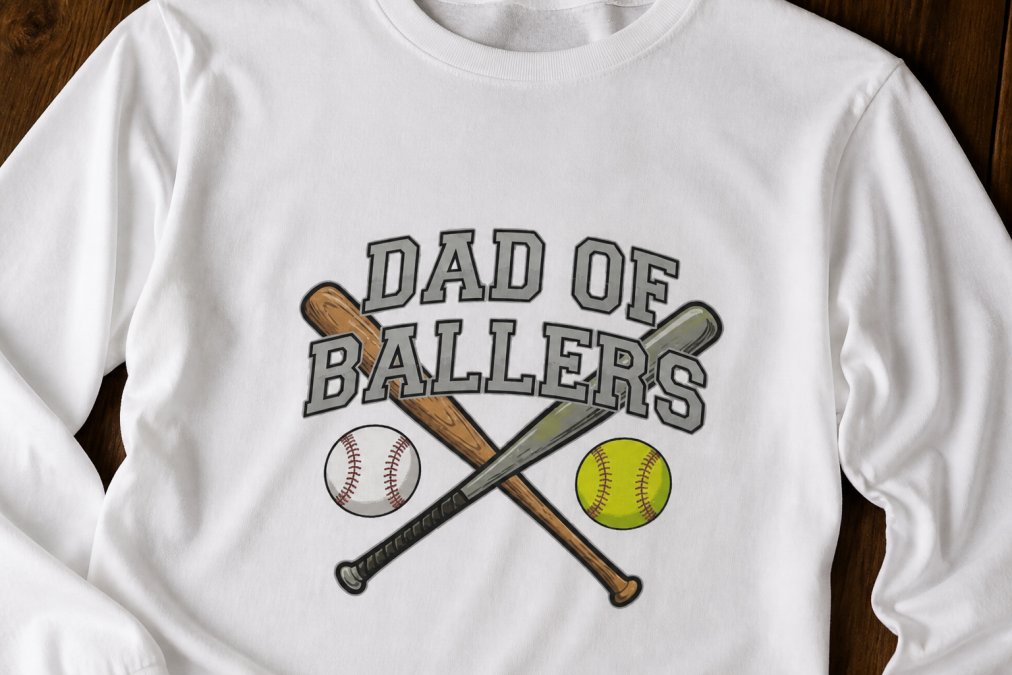
Here's what makes screen printing popular for team apparel: the ink opacity is exceptional. A single-color screen print covers the base fabric completely, giving you bold, vibrant colors that read clearly from a distance. This matters when you're cheering from the bleachers, the design needs to pop. Screen printing also handles large production runs efficiently. Once your screens are made, printing additional shirts becomes a straightforward, cost-effective process.
The setup process involves creating a digital file, separating it into individual color layers, and burning those layers onto screens. This upfront work means screen printing makes the most sense when you're ordering in volume. A batch of 12 shirts costs more per unit than a batch of 50 because the setup fees are spread across more units. For teams ordering matching apparel, this economics typically works in your favor.
Screen printing works best with spot colors, solid, uniform colors rather than gradients or photorealistic images. If your team logo is a solid-color design with clean lines, screen printing delivers professional results. The process handles simple geometric shapes, text, and bold graphics beautifully. Complex photographic images or gradient transitions are technically possible but become expensive and lose detail in the printing process.
How Embroidery Creates Custom Team Apparel and When It Shines
Embroidery uses thread to create raised, dimensional designs on fabric. A machine reads a digitized file and stitches the design directly into the garment using colored thread. The result is tactile, you can feel the texture of the stitching, and the design has genuine depth that screen printing cannot replicate.
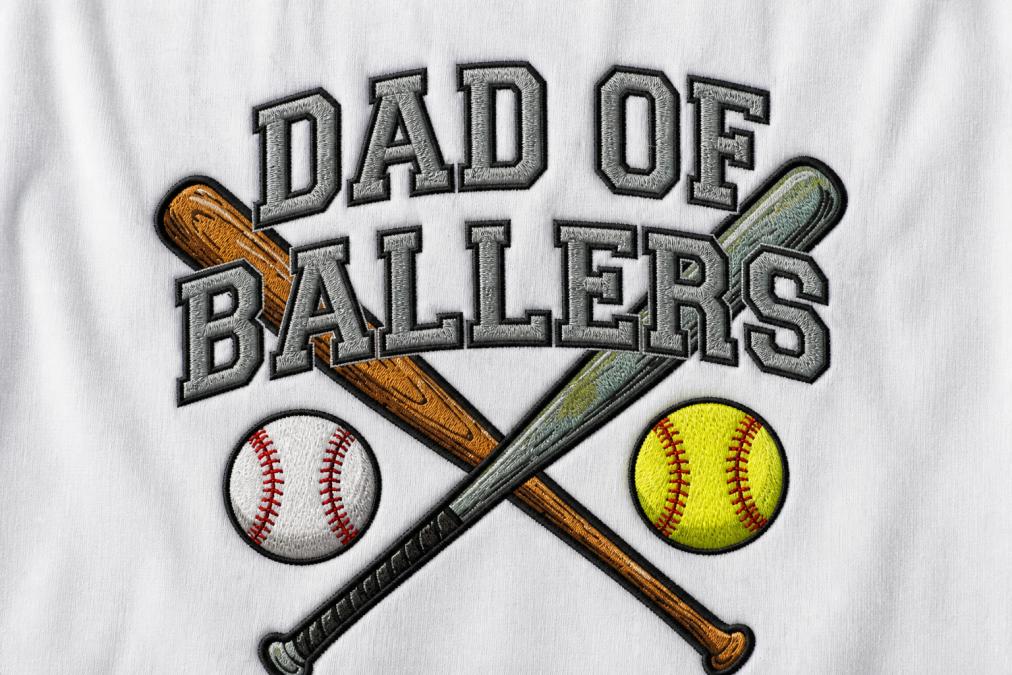
Embroidery shines when you want a premium, professional aesthetic. A polo shirt with an embroidered logo looks more upscale than a screen-printed version. This matters when your apparel serves a formal purpose, uniforms for staff, gear for team officials, or merchandise you're selling at events. The dimensional quality signals quality and care in a way that flat screen printing cannot.
The process requires digitizing your design, converting your artwork into a stitch file that the embroidery machine can read. This digitizing step is less complex than creating multiple screens, but it's still a specialized task. Once digitized, the machine stitches your design using thread. The quality of the embroidery depends heavily on stitch density (how tightly stitched the design is) and thread quality.
Embroidery handles detail well, but there are limits. Very small text becomes difficult to stitch cleanly. Extremely fine lines can break during the embroidery process. Gradients and photorealistic images are impractical with thread, embroidery works best with clear shapes, logos, and solid design elements. The process also works beautifully on structured garments like polos, jackets, and hats. On lightweight t-shirts, the stitching can pucker the fabric slightly if not executed carefully.
One advantage of embroidery: each shirt is customizable independently. You can embroider different names or numbers on each garment without changing your setup, making it ideal for personalized team rosters. Merch by Mary Ellen's Baseball and Softball Dad of Ballers Long Sleeve T-shirt with Personalization Available demonstrates this flexibility, you can customize the roster on the back while keeping the front design consistent across your team.

Durability of Screen Printed vs Embroidered Logos: What Lasts
This is where the real-world differences emerge. Both methods create durable designs when executed properly, but they fail in different ways.
Screen printed designs fade over time. The ink sits on top of the fabric, and repeated washing gradually breaks down the ink's adhesion. After 50-100 wash cycles, you'll notice the colors becoming duller (peer-reviewed research). After 150+ cycles, the design may begin to crack or peel, especially at the edges where the ink meets bare fabric. This degradation accelerates if you wash in hot water, use chlorine bleach, or dry on high heat. The care instructions matter enormously for screen prints.
Embroidered designs are more stable. Thread doesn't fade the way ink does. After hundreds of wash cycles, an embroidered logo looks nearly identical to the day it was stitched. The thread color remains vibrant. However, embroidery can fail if the stitching is loose or if the thread itself is low-quality. Poorly executed embroidery can unravel, especially in high-stress areas like corners or where the design is densely stitched.
The durability advantage goes to embroidery for long-term wear. If you're ordering apparel for a multi-year commitment, team uniforms, official merchandise, or gear you'll wear for seasons, embroidery holds up better. Screen printing is more practical for seasonal apparel or one-time event gear where you expect 20-50 washes before retirement.
Washing instructions matter for both. Screen printed designs benefit from cold water, inside-out washing, and air drying. Embroidered pieces are more forgiving but still prefer gentle handling. Neither method should be dry-cleaned, as the chemicals can damage both ink and thread.
Cost Comparison: Custom Apparel Decoration Methods
Screen printing has lower per-unit costs at volume but higher setup fees. A single-color screen print typically costs between $3-8 per shirt for orders of 50+ units. Setup fees (creating the screens) usually run $25-75 per color. For a 50-shirt order with a single-color logo, you're looking at roughly $150-400 in setup plus $150-400 in printing, or about $6-8 per shirt total.
Embroidery costs more per unit but has lower setup fees. Digitizing a design costs $25-75 (one-time fee) (iae.org). Embroidery itself typically costs $5-15 per shirt depending on design complexity and thread quality. For a 50-shirt order, you're looking at $25-75 in digitizing plus $250-750 in embroidery, or about $5.50-15.50 per shirt total.
The break-even point varies, but generally: screen printing becomes cheaper per unit once you exceed 100 shirts. Below that threshold, embroidery is often competitive or cheaper, especially if you're personalizing each shirt (which adds minimal cost to embroidery but would require separate screens for screen printing).
Merch by Mary Ellen's baseball and softball apparel offerings, like the Baseball Game Day Unisex Raglan T-shirt with Personalization Available at $40.99, reflects the value of combining quality base garments with personalization options. When you're ordering custom team gear, the base garment cost matters as much as the decoration cost.
For small orders (under 25 shirts), embroidery is often the more economical choice. For large orders (100+ shirts), screen printing wins on cost. For mid-range orders (25-100 shirts), the decision depends on your design complexity and personalization needs.
| Decoration Method | Setup Cost | Per-Unit Cost (50 shirts) | Per-Unit Cost (200 shirts) | Best For |
|---|---|---|---|---|
| Screen Printing (1 color) | $25-75 | $6-8 | $3-5 | Large orders, bold solid-color designs |
| Screen Printing (3+ colors) | $75-225 | $8-12 | $4-7 | Multi-color logos, high volume |
| Embroidery | $25-75 | $5-15 | $5-12 | Small orders, personalization, premium look |
Design Complexity, Detail, and What Each Method Can Handle
Screen printing excels with simple, bold designs. Solid colors, clear lines, and geometric shapes are its sweet spot. A team name in a single color, a logo with 2-3 color blocks, or a stripe pattern, all work beautifully with screen printing. The process struggles with gradients, photorealistic images, and very fine detail.
Embroidery handles complexity differently. It manages fine detail better than screen printing but struggles with extremely small text or very thin lines. A detailed team crest with multiple colors works better embroidered than screen-printed. A photorealistic image of your team mascot works poorly with either method, embroidery is slightly better, but neither is ideal.
Text legibility depends on size and method. For screen printing, text smaller than half an inch becomes hard to read from a distance. For embroidery, text smaller than a quarter-inch becomes difficult to stitch cleanly. If your design includes player names or numbers, screen printing handles it well at standard sizes. Embroidery handles it well but requires careful digitizing to ensure readability.
Color matching is easier with screen printing. You can specify a Pantone color and get a precise match. Embroidery thread comes in hundreds of colors, but matching a specific Pantone shade to thread is less precise, thread colors vary by manufacturer and lighting conditions.
Gradients and shading are impractical with both methods. Screen printing creates flat colors, so gradients require multiple screens and become expensive. Embroidery creates gradients through stitch density variations, but this technique is labor-intensive and expensive. If your design includes shading, consider simplifying it or using a different approach.
The real constraint is this: both methods work best with designs that have been simplified for the decoration process. Overly complex artwork needs to be adapted. Merch by Mary Ellen's curated collections, like the USA 250 Patriotic Collection, showcase designs that work well with screen printing, bold, clear graphics that maintain impact on apparel.
Which Method Should You Choose for Your Team
Start with your timeline. Screen printing requires setup time, typically 3-7 business days from approval to production. Embroidery also requires digitizing time but often processes faster once digitizing is complete. If you need shirts within 10 days, embroidery may be your only realistic option.
Consider your order size. Under 25 shirts, embroidery is usually more economical and gives you personalization flexibility. Between 25-100 shirts, compare quotes from both methods, the answer depends on your specific design.
Evaluate your design. Simple, bold designs favor screen printing. Designs requiring personalization (different names/numbers on each shirt) favor embroidery. Multi-color complex designs are expensive either way, consider simplifying.
Think about the garment type. Screen printing works on any fabric. Embroidery works best on structured garments (polos, jackets) and adequately on t-shirts. On lightweight, stretchy fabrics, embroidery can pucker.
Durability matters if you're buying gear meant to last multiple seasons. Embroidery outlasts screen printing significantly. For one-time event apparel, screen printing is fine.
The aesthetic preference is personal. Screen printing gives a classic, athletic look. Embroidery gives a premium, professional look. For youth sports apparel, both work, it depends on the impression you want to create.
If you're ordering from Merch by Mary Ellen, their Baseball Collection and Football Collection offer pre-designed screen-printed options that skip the custom design process entirely. This is the fastest, most economical route if their existing designs match your team's needs. For fully custom work, you'll need to specify your decoration method and design.
Choosing between screen printed vs embroidered shirts comes down to matching the method to your specific constraints: budget, timeline, design complexity, and durability expectations. Screen printing delivers bold, vibrant colors at scale. Embroidery creates premium, personalized apparel that lasts through countless wash cycles. Neither method is universally superior, the right choice depends on what matters most to your team. At Merch by Mary Ellen, we help teams navigate this decision with pre-designed collections that balance quality, cost, and quick turnaround. Browse our Best Sellers to see apparel options designed for teams and sports enthusiasts, or work with us to create fully custom gear that matches your vision.
Frequently Asked Questions
Q: Is screen printing or embroidery better for sports jerseys?
A: It depends on your priorities. Screen printing works best for large, colorful designs and high-volume orders because it's cost-effective and produces vibrant graphics. Embroidery is ideal for a professional, durable look that withstands heavy washing and creates a dimensional, upscale appearance. For youth sports, screen printing offers better color vibrancy, while embroidery suits uniforms requiring a polished, long-lasting finish.
Q: Which is cheaper: screen printing or embroidery?
A: Screen printing is generally cheaper per unit, especially for bulk orders. Setup fees are lower, and production costs drop significantly with volume. Embroidery has higher per-unit costs because each item requires individual stitching time. However, embroidery eliminates the need for screen setup, making small orders (under 10 units) sometimes more affordable with embroidery. For team orders of 20+ shirts, screen printing typically costs less.
Q: How do I know the print quality won't fade or peel after a few washes?
A: Screen-printed designs fade gradually over 50-100+ washes with proper care. Wash inside-out in cold water and avoid high heat drying to extend durability. Embroidery is more resistant to fading because thread doesn't break down like ink, lasting through hundreds of washes. Both methods hold better on quality garments. Machine-wash warm (inside-out) and tumble-dry low for best results with either decoration method.
Q: Can you screen print or embroider on all types of fabric?
A: Screen printing works on most fabrics (cotton, poly blends, canvas), but ink adhesion varies. Embroidery requires stable, medium-weight fabrics; lightweight or stretchy materials can pucker. Both methods work best on 100% cotton or cotton-blend shirts. Avoid heavily textured or delicate fabrics for embroidery. For custom team apparel, choose standard t-shirt or polo materials to ensure quality results with either decoration method.
This article was written using GrandRanker