

Table of Contents
- Why Staying Warm at a Football Game Matters
- Best Fabrics for Outdoor Sports Apparel
- How to Layer Clothes for Cold Weather
- Best Hand Warmers for Football Games
- Additional Warmth Strategies Beyond Clothing
- Game Day Gear That Works
- Conclusion
Last Updated: August 27, 2026
Why Staying Warm at a Football Game Matters
Sitting in a stadium for three hours in cold weather isn't just uncomfortable, it's a test of your body's ability to maintain core temperature while staying engaged with the game. When you're stationary on metal bleachers and wind cuts across an open field, your body loses heat faster than it can generate it, even if you're bundled up. The difference between shivering through the fourth quarter and actually enjoying the experience comes down to one thing: preparation.
Most fans show up underdressed. They wear a single heavy jacket and hope it's enough. By halftime, they're cold. By the end of the game, they're miserable. The real solution isn't just thicker clothing, it's understanding how fabrics work, how layering traps warmth, and which accessories actually make a measurable difference.
At Merch by Mary Ellen, we help families and sports fans gear up for game day with apparel designed to handle outdoor conditions. Whether you're a parent in the bleachers or a dedicated fan who shows up rain or shine, staying warm at a football game requires strategy. Below, we'll show you exactly how to build a warmth system that keeps you comfortable from kickoff through the final whistle.

Best Fabrics for Outdoor Sports Apparel
The fabric you choose determines how well your clothing manages moisture, traps heat, and performs in cold, windy conditions. Not all materials are created equal when you're sitting still in a stadium.
Moisture-Wicking Synthetics vs. Natural Fibers
Moisture-wicking synthetics like polyester and nylon pull sweat away from your skin and move it to the outer layers of fabric, where it can evaporate. This matters because wet skin loses heat 25 times faster than dry skin (peer-reviewed research). Synthetic fibers excel at this job and dry quickly once moisture reaches the surface. They're also typically lighter, more durable, and resistant to abrasion, qualities that matter when you're moving around bleachers or leaning against rough stadium seats.
Natural fibers like merino wool have different strengths. Merino wool is hydrophilic, meaning it absorbs moisture into the fiber itself without feeling wet. It also regulates temperature naturally and resists odor even when damp. For a long game day where you might be sitting for hours, merino wool's thermal regulation keeps you warmer at rest than synthetic alternatives.
The trade-off: synthetics dry faster and cost less, but merino wool performs better in extreme cold and maintains warmth when damp. For football games in freezing temperatures, merino wool base layers outperform synthetics. For mild cold (above 40°F), synthetic moisture-wicking materials are sufficient and more affordable.
Blended fabrics, polyester mixed with elastane or nylon with spandex, give you the best of both worlds: moisture management from synthetics, stretch and comfort from elastane, and durability from the blend. Most quality activewear uses these combinations for exactly this reason.
Weight, Durability, and Thermal Regulation
Fabric weight, measured in grams per square meter (GSM), directly correlates with warmth (peer-reviewed research). A lightweight fleece (200-300 GSM) provides basic insulation for mild weather. A mid-weight fleece (300-400 GSM) is appropriate for cool fall games. Heavy-weight fleece or wool blends (400+ GSM) are necessary for winter games where temperatures drop below 32°F.
Durability matters because you're wearing this gear repeatedly. Abrasion-resistant fabrics hold up better against rough bleacher surfaces, zippers, and the wear of frequent washing. Nylon and polyester have high tensile strength and resist pilling. Natural fibers like merino wool are more delicate but last longer if treated carefully.
Thermal regulation, the fabric's ability to maintain your body heat, depends on fiber type and construction. Four-way stretch fabrics (stretch in all directions) with hydrophobic or water-repellent treatments keep wind and light moisture out while allowing breathability. A durable water repellent (DWR) finish on the outer layer prevents rain and snow from soaking through, which is critical at outdoor games where weather changes unpredictably.
For football games, choose mid-to-heavy weight fabrics with moisture-wicking properties and DWR treatment. This combination keeps you warm, dry, and comfortable for the entire game.
How to Layer Clothes for Cold Weather
Layering is the foundation of staying warm at a football game. The system works by trapping air between layers, and each layer serves a specific purpose. You're not trying to wear the thickest possible clothing, you're building a thermal system.
Base Layer Foundation
Your base layer sits directly against your skin and does one job: move moisture away from your body. This is non-negotiable. If your base layer keeps sweat against your skin, you'll feel cold no matter what you wear on top.
Synthetic moisture-wicking fabrics or merino wool both work well here. The base layer should fit snugly (not tight, but not loose) so it stays in contact with your skin and can do its job. Avoid cotton entirely, it absorbs moisture, holds it against your skin, and takes forever to dry.
A quality base layer doesn't have to be expensive. Long-sleeved thermal underwear in synthetic or wool blends make an enormous difference. Wear these under your regular clothes at the game. Most people skip this step and regret it by the second quarter.

Mid-Layer Insulation and Outer Shell Protection
Your mid-layer traps air and provides insulation. This is where a hoodie or fleece comes in. A mid-weight fleece hoodie (300-400 GSM) works well for most football games. It should be loose enough to fit over your base layer without compressing it, compression reduces the air pockets that insulate you.
The outer shell protects you from wind and moisture. Wind strips away your body heat through convection, so a windproof or wind-resistant outer layer is essential. This can be a lightweight jacket with a DWR finish, or a heavier winter coat depending on temperature. The outer shell doesn't need to be bulky, it just needs to block wind and shed light precipitation.
For a typical football game in cold weather, the system looks like this: thermal base layer + fleece hoodie + windproof jacket. If temperatures drop below 20°F, add a heavier mid-layer (wool sweater or insulated hoodie) between your base layer and outer shell. If it's windy, prioritize the outer shell's wind resistance over additional bulk.
Test your layers before game day. Sit outside for 30 minutes in similar weather and adjust. You want to feel comfortable at rest, not overheated. Overheating causes sweating, which defeats the purpose of your moisture-wicking base layer.
Best Hand Warmers for Football Games
Your hands are one of the first places your body sacrifices heat in cold weather. Keeping them warm is non-negotiable for enjoying the game, numb hands can't hold a phone, snacks, or even a drink comfortably.
Disposable vs. Reusable Hand Warmers
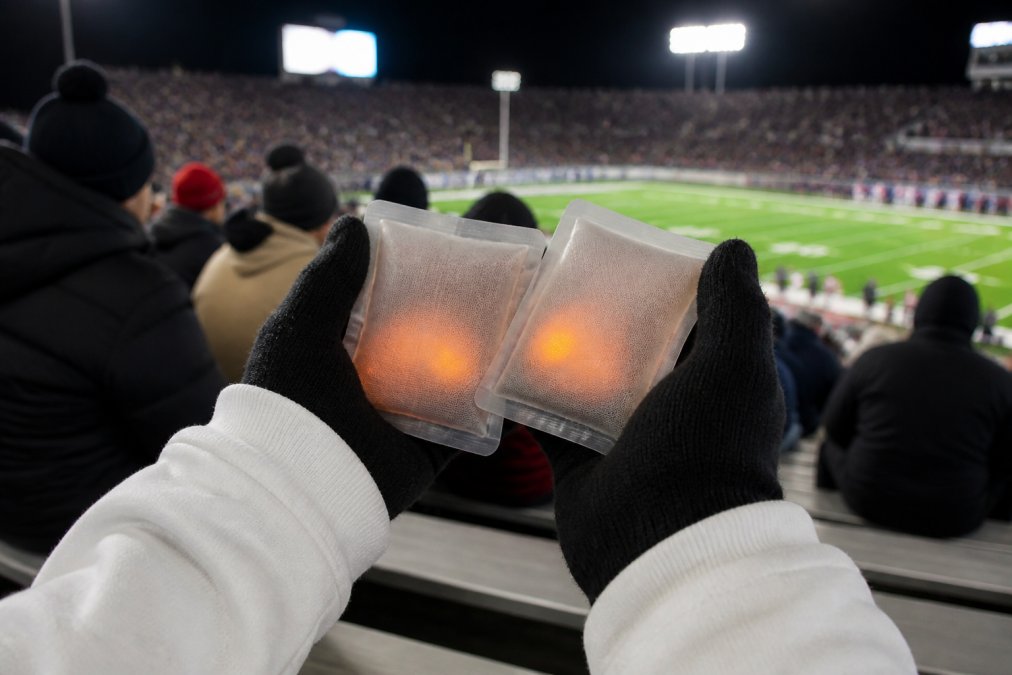
Disposable hand warmers activate when exposed to air and generate heat through an exothermic chemical reaction. They typically reach 130-160°F and last 7-10 hours (the FDA). They're cheap (usually $1-3 per pair), require no preparation, and work immediately. The downside: they're single-use waste, and you need to bring multiple pairs if you attend multiple games.
Reusable hand warmers use a gel that crystallizes when heated, releasing warmth. You boil them to reactivate the gel after use. They reach 130-150°F and last 30-60 minutes per activation. They cost $10-20 upfront but work for hundreds of uses, making them economical if you attend multiple games or outdoor events regularly. The downside: you need to prepare them before the game, and they cool faster than disposables.
For a single football game, disposable hand warmers are the practical choice. For someone who attends multiple games per season, reusable warmers pay for themselves quickly and eliminate waste.
Strategic Placement and Duration
Don't just shove hand warmers in your pockets. Placement matters. Hold them for 10-15 minutes to warm your hands directly, then place them in your jacket pockets with your hands on top of them. This keeps your hands warm without overheating the warmers.
If you're wearing gloves, place the warmers inside the gloves against your palms. This concentrates heat where you need it most and prevents the warmers from cooling too quickly. Mittens work better than gloves for this because they trap more heat around your hands.
Disposable hand warmers typically last 7-10 hours, which covers a full game plus pre-game and post-game time. Buy enough pairs so you can rotate them, use one pair for the first half, switch to a fresh pair for the second half. This ensures consistent warmth throughout the game.
A practical strategy: bring two pairs of disposable hand warmers per person. Use the first pair during the first and second quarters, switch to the second pair for the third and fourth quarters. This simple rotation keeps your hands warm for the entire game without running out of warmth at the end.
Additional Warmth Strategies Beyond Clothing
Clothing is the foundation, but other factors significantly impact how warm you stay during a long game.
Footwear, Seat Cushions, and Accessories
Your feet lose heat rapidly when sitting still on cold metal bleachers. Wear insulated, waterproof boots with thick socks, not cotton, but wool or synthetic blends. Numb feet make the entire experience miserable. Insulated boots make the difference between enjoying the game and enduring it.
A seat cushion does more than provide comfort, it creates an air gap between you and the cold metal bleachers, which reduces heat loss through conduction. A simple foam cushion or an insulated stadium cushion keeps your core warmer by preventing direct contact with freezing metal.
A neck gaiter or balaclava protects your face and neck, which are highly sensitive to cold and wind. These areas have thin skin and high blood flow, making them vulnerable to heat loss. A simple neck gaiter can reduce wind chill significantly.
A beanie or winter hat is non-negotiable. Your head loses heat rapidly, and covering it with an insulated hat reduces overall heat loss. Choose a hat that covers your ears completely.
Movement, Hydration, and Nutrition
Sitting still accelerates heat loss because your muscles aren't generating warmth through activity. Stand up and move around during timeouts and between quarters. Walk to concessions, stretch, do light movement. This keeps your metabolism active and generates body heat.
Hydration matters more than most people realize. Dehydration reduces your body's ability to regulate temperature. Drink water throughout the game, even in cold weather. You lose fluids through respiration and perspiration regardless of temperature.
Eat calorie-dense snacks. Your body burns calories to generate heat, this is called thermogenesis. Bringing high-calorie snacks (nuts, chocolate, energy bars) provides fuel for your body to generate warmth. Avoid alcohol, which dilates blood vessels and increases heat loss.
Hot drinks are psychological and physiological wins. A hot coffee, cocoa, or tea warms you from the inside and provides comfort. The warmth is temporary, but the psychological benefit of holding a warm cup and drinking something hot shouldn't be underestimated.
Game Day Gear That Works
The right apparel makes staying warm at a football game manageable instead of miserable. You don't need specialized technical gear, functional layers and smart accessories are enough.
Merch by Mary Ellen's Football Collection includes hoodies and sweatshirts designed for game day comfort. The Baseball Game Day Unisex Hoodie ($40.99) offers mid-layer warmth with personalization options, so you can customize it with your team or family name. For parents who spend entire seasons in the bleachers, the Dr. Mom Prescription Graphic Hoodie ($40.99) combines warmth with humor, because staying warm at a football game requires both function and attitude.

If you're looking for team-specific gear, the Football Collection offers apparel that shows your team spirit while keeping you warm. Heavy-blend hoodies provide the insulation you need for outdoor games, and personalization options let you make each piece uniquely yours.
A complete game-day setup looks like this: thermal base layer under a team hoodie, windproof jacket on top, insulated boots, a beanie, hand warmers in your pockets, and a seat cushion. This system keeps you warm from kickoff through the final whistle, even in sub-freezing temperatures.
Staying warm at a football game isn't about suffering through cold weather, it's about building a system that keeps you comfortable so you can focus on the game. The right fabrics, layering strategy, and accessories transform a miserable experience into one you'll actually enjoy. Start with quality base layers, add insulation and wind protection, and use hand warmers and seat cushions to address the areas where you lose heat fastest. When you show up prepared, you're free to focus on what matters: the game, the team, and the time with family and friends in the stands. Get started with Merch by Mary Ellen's Football Collection and personalize your game-day gear with your team colors and family names, because staying warm at a football game works best when you're wearing something that means something to you.
Frequently Asked Questions
What are the best layers to wear to a cold football game?
Start with a moisture-wicking base layer (synthetic or merino wool) to pull sweat away from skin. Add an insulating mid-layer like fleece or a heavy-blend hoodie for warmth without bulk. Top it with a water-repellent outer shell or jacket to block wind. This three-layer system traps warm air while managing moisture. Many fans also wear thermal leggings under jeans and thick socks for lower-body protection. The key is avoiding cotton, which holds moisture and loses insulating power when damp.
Should I use hand warmers at a football game?
Yes, hand warmers are highly effective for staying warm at a football game. Disposable hand warmers activate instantly and last 7-10 hours, perfect for a single game. Keep them in your jacket pockets or hold them during inactive moments. Reusable hand warmers are more economical if you attend multiple games. Position them in pockets near your torso rather than at your fingertips, this warms your core and allows blood to circulate to your hands naturally. Pair hand warmers with proper layering for maximum comfort.
What fabrics keep you warmest for outdoor sports apparel?
Merino wool and synthetic blends (polyester, nylon with elastane) are superior for cold-weather football games. Merino wool naturally regulates temperature, resists odor, and maintains warmth when damp. Synthetic fibers offer quick-dry properties and durability, especially in heavy-blend hoodies designed for outdoor use. Fleece provides excellent insulation and breathability. Avoid 100% cotton, which absorbs moisture and loses warmth quickly. Look for fabrics with DWR (durable water-repellent) coatings on outer layers to shed wind and light precipitation.
How can I keep my feet warm during a long football game?
Invest in insulated, moisture-wicking socks made from merino wool or synthetic thermal blends, avoid cotton socks entirely. Wear waterproof, insulated boots or lined athletic shoes with thermal linings. Consider thermal foot warmers designed for shoes, or use disposable hand warmers inside your boots. Keep moving during timeouts and halftime to maintain circulation. Avoid sitting motionless for extended periods, as this restricts blood flow to your feet. Proper footwear accounts for 30-40% of overall body warmth retention in cold conditions.
This article was written using GrandRanker