

Table of Contents
- Assessing Your Child's Physical Ability and Readiness
- How to Talk to a Coach About Playing Time
- Helping Children Handle Sports Disappointment
- Focusing on Individual Development in Team Sports
- Building Resilience and a Growth Mindset
- Managing Your Own Expectations as a Parent
- Actionable Bench-Time Activities and Skill Work
- Conclusion
Last Updated: August 13, 2026
Assessing Your Child's Physical Ability and Readiness
Before addressing playing time, honestly evaluate where your child stands physically and developmentally. A child who appears "behind" at age 10 might be perfectly positioned at 13. Physical readiness involves coordination, speed, and sport-specific skills more than height and weight. A smaller child with excellent footwork might outperform a larger peer still developing body control.
Watch your child during practice and games. Can they execute fundamental skills the coach emphasizes? Do they move with confidence? Talk to the coach privately about your child's developmental trajectory. A good coach will honestly assess whether your child needs more time, specific skill work, or if there are legitimate readiness concerns.
Consider whether your child genuinely wants to play. Pressure to "earn" playing time backfires without intrinsic motivation. A child who loves the sport will naturally work harder. Document your child's baseline skills, what they do well and what needs work, to create a roadmap for the season and celebrate real progress.
How to Talk to a Coach About Playing Time
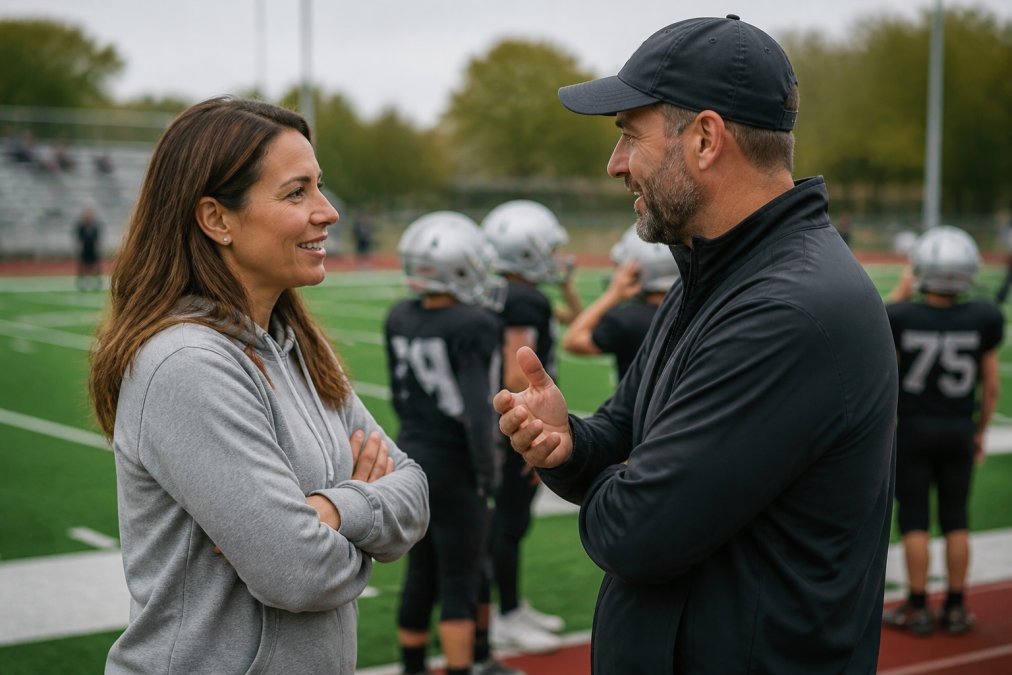
Request a private meeting; never ambush a coach before or after practice. Send a brief email: "I'd like to discuss how [child's name] can improve and get more opportunities this season. When would be a good time to talk?" This signals respect for the coach's time.
Go in with genuine curiosity, not an agenda. Ask questions first: "What do you see as [child's name]'s strengths? What areas need development? What can we work on at home?" Listen more than you talk.
Avoid statements like "My child should be starting," "They play better than [another child]," or "This is unfair." Instead, try: "I want to understand what you're looking for. How can we help [child] get ready for more playing time?"
Ask for specific, measurable feedback. "What would [child] need to demonstrate to earn more minutes?" might get you actionable answers like "Better defensive positioning" or "Consistent conditioning effort." Establish a timeline: "Can we check in again in three weeks?" This shows you're invested in growth, not immediate gratification.
Helping Children Handle Sports Disappointment
Disappointment is real. When a child sits the bench more than expected, they feel it. Start by validating the feeling: "I know you're disappointed. You wanted to play more, and that's normal." Don't immediately pivot to solutions.
After validation, help them process what happened. Ask: "What did you notice during the game?" or "What do you think the coach was looking for?" This moves the conversation from emotion to observation and teaches analytical thinking about performance.
Help them separate their worth from playing time. A non-starter is not less valuable as a person or athlete. Playing time reflects the coach's current assessment of fit for that team at that moment, nothing more. Many future stars rode the bench early in their youth careers.
Frame bench time as a "growth opportunity." Sitting on the bench is ideal for observing the game, understanding positioning, and mentally preparing. Some of the best learning happens when you're not in the game.
Avoid blaming the coach or other players. Instead, focus on what's within your child's control: effort, attitude, skill development, and coachability.
Focusing on Individual Development in Team Sports
Help your child identify one specific skill to improve each week. Narrow focus builds momentum. Working on "everything" feels overwhelming and guarantees minimal progress.
Create a simple practice routine at home: thirty minutes, three times a week beats an hour once a week. Consistency matters more than duration. If your child plays basketball, shoot 50 free throws. If soccer, practice first touches and passes. If baseball, hit off a tee or throw against a wall.
Track visible progress. After two weeks of focused work, your child should notice improvement. This tangible progress builds confidence and intrinsic motivation far better than playing time.
Celebrate effort-based improvements, not just outcomes. "I noticed your passing accuracy improved this week" is more powerful than "You played well today." This teaches your child that hard work produces results.
Encourage your child to ask the coach for feedback on their specific focus area. This shows seriousness about improvement and creates a direct line between effort and recognition. Individual development during bench time often produces better athletes long-term than kids who play every minute but never face pressure to improve.
Building Resilience and a Growth Mindset
Resilience is built through experience and reflection. A child who is not a starter has a built-in resilience-building opportunity. A growth mindset is the belief that abilities develop through effort, not that you're either good at something or you're not.
Model this mindset in your own life. When you struggle, narrate your thinking: "This is hard, but I'm going to try a different approach." Your child absorbs these patterns.
When your child faces setbacks, ask questions that build growth mindset: "What did you learn?" "What would you do differently next time?" "What's one thing you could improve?" These questions assume the situation is temporary and improvable.
Introduce the concept of "yet." If your child says, "I'm not fast enough," reframe it: "You're not fast enough yet. What will help you get faster?" This signals that current ability is not permanent.
Share stories of athletes who faced rejection or sat the bench early in their careers. Michael Jordan was cut from his high school basketball team. Tom Brady was a sixth-round draft pick. Mental toughness, the ability to stay focused despite disappointment, is more important than raw talent in youth sports.
Managing Your Own Expectations as a Parent
Your own expectations about your child's athletic success might be the biggest obstacle to their growth. Many parents project unfulfilled athletic dreams onto their children or measure parenting success by playing time.
Examine your own relationship with sports. Did you play as a kid? How did you feel about your own playing time? These experiences shape how you respond to your child's situation, often without awareness.
Ask yourself honestly: am I upset because my child is upset, or because my child isn't playing? These are different things. If you're upset because your child isn't playing, that's about your expectations, not your child's wellbeing.
Be realistic about talent. Most youth athletes won't play in college. A vanishingly small percentage will play professionally. A child can be a good athlete and still not be among the elite.
Avoid comparing your child to teammates. This creates resentment and teaches your child that their value depends on external ranking. Every child develops on a different timeline.
Manage your own emotions in front of your child. If you're visibly angry or disappointed about playing time, your child will internalize that as evidence that playing time matters more than effort or growth.
Actionable Bench-Time Activities and Skill Work

Bench time is wasted only if you treat it that way. Ask the coach what skills would help your child earn more playing time. Don't guess.
Create a three-times-per-week practice routine of thirty focused minutes. For basketball: 10 minutes of ball-handling drills, 15 minutes of shooting (emphasizing free throws), 5 minutes of defensive footwork. For soccer: 10 minutes of first-touch work, 10 minutes of passing accuracy, 10 minutes of game-realistic scenarios. For baseball: 15 minutes of batting practice, 10 minutes of fielding, 5 minutes of base running.
Specificity matters. Targeted work on identified weaknesses moves the needle; generic practice doesn't. Record progress. After two weeks, your child should notice measurable improvement. If not, adjust the drill or focus.
Encourage your child to demonstrate improved skills in practice. When a coach sees a player working on specific weaknesses and improving noticeably, they notice. Consider also mental preparation during bench time: mental rehearsal of game situations, visualization of successful plays, or studying opposing team patterns.
Make sure your child understands this work is about becoming a better athlete, not "earning" playing time. The skill development is permanent and valuable regardless.
Conclusion
Supporting a child who is not a starter requires balancing honesty with encouragement, validation with perspective, and patience with progress. Bench-time years often produce the most resilient, coachable, mentally tough athletes when parents handle the situation thoughtfully.
Your role is helping your child separate their worth from playing time, develop a growth mindset about improvement, and build resilience that serves them far beyond sports. When you do this well, your child learns that setback is temporary, effort produces results, and character matters more than immediate success.
At Merch by Mary Ellen, we understand that youth sports are about more than playing time, they're about identity, belonging, and pride in your team. Whether your child is a starter or on the bench, our personalized team apparel helps them feel connected to the group and proud of their role. From custom team gear to family spirit wear, we offer clothing that celebrates every member of the team, regardless of minutes played. Browse our sports-themed collection and find the perfect way to show your family's support this season.
Frequently Asked Questions
How do I help my child deal with the disappointment of not starting?
Start by validating their feelings without dismissing them. Let them express frustration or sadness, then shift focus to what they can control: effort, attitude, and skill improvement. Ask what specific areas they want to work on and create a plan together. Celebrate small wins and progress in practice. Remind them that many successful athletes started on the bench. Frame bench time as an opportunity to learn from different perspectives and build mental toughness, not as failure.
Is it appropriate to talk to the coach about my child's playing time?
Yes, but approach it strategically. Request a private conversation outside of games or practice when the coach isn't managing the team. Ask questions first: What skills does your child need to develop? What's the coaching philosophy on playing time? Listen more than you speak. Avoid demanding changes or comparing your child to starters. Instead, ask how your child can earn more time and what you can do at home to support their development. Keep the focus on growth, not complaints.
How can I encourage my child to keep working hard when they aren't getting playing time?
Connect effort to progress, not just wins or starting status. Praise specific actions: 'I noticed you stayed focused during that drill' rather than 'You're so talented.' Set process goals together (master a new skill, improve conditioning, show better sportsmanship) instead of outcome goals (get into the starting lineup). Involve them in bench-time skill work that feels purposeful. Share stories of late bloomers and athletes who overcame similar setbacks. Most importantly, show genuine interest in their athletic journey regardless of playing time.
What should I say to my child after a game where they didn't play much?
Ask open-ended questions first: 'How do you feel about today?' and 'What did you notice during the game?' This helps them process their emotions and teaches self-reflection. Acknowledge their disappointment without fixing it immediately. Then highlight one positive: effort shown, a good practice moment, or team support. Avoid empty reassurances like 'You'll get more time next week.' Instead, focus on controllable next steps: 'Let's work on X this week and see how it goes.' Keep the conversation brief if they're upset; sometimes sitting with them quietly is more powerful than words.
This article was written using GrandRanker