

Table of Contents
- Start with a Unified Color Palette
- Match vs. Coordinate: Finding the Right Balance
- Family Sports Photo Outfit Ideas That Stand Out
- Limit Patterns, Logos, and Distracting Elements
- Sports Gear Organization Tips for Families
- Accessorize for Cohesion and Practicality
- Budget-Friendly Tips for Coordinating Family Sports Gear
- Prepare Your Family for Game Days and Photo Sessions
Last Updated: August 3, 2026
Coordinating family sports gear means balancing aesthetics, practicality, and budget across multiple kids, sizes, and schedules. At Merch by Mary Ellen, we help families create unified looks for games and photo sessions without last-minute stress. Below, we'll show you exactly how to coordinate your family's sports wardrobe so you look intentional and cohesive.
Start with a Unified Color Palette
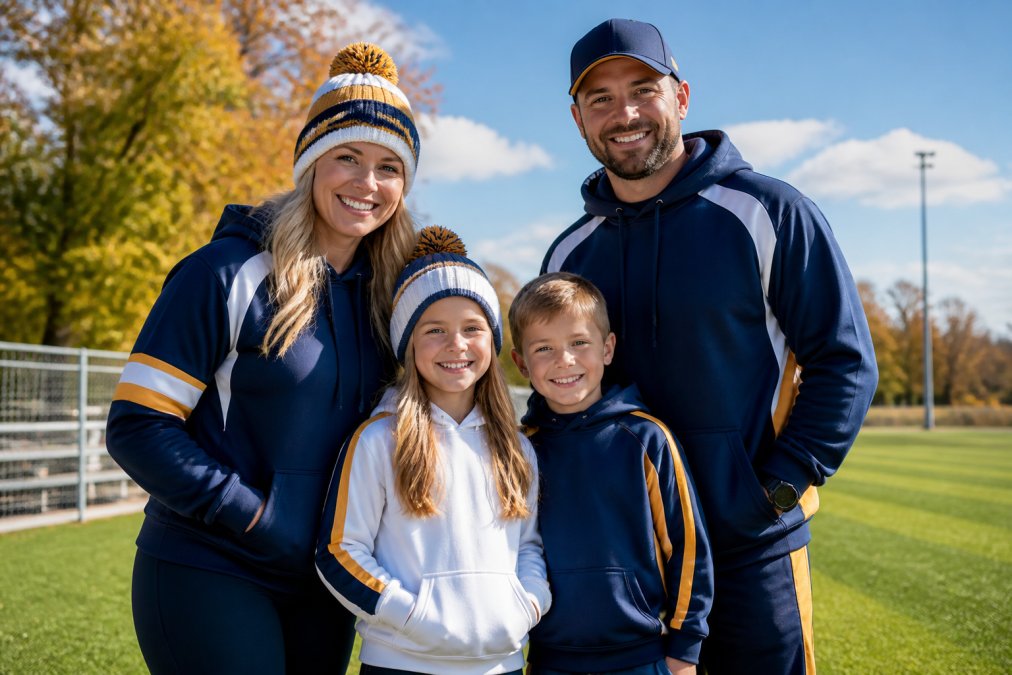
The foundation of coordinating family sports gear is choosing two to three core colors that complement each other and work with your skin tones. Navy and white is a classic combination that works year-round; add one accent color like red, gold, or forest green to tie everything together. This approach gives flexibility: one child wears a navy graphic tee with white shorts, another wears a white hoodie with navy joggers. The coordinated colors create cohesion without matching exactly.
Consider your family's lifestyle and seasons. Spring and summer allow brighter accents like coral or turquoise. Fall and winter call for deeper tones like burgundy or forest green. Choose colors that appear across pieces your family already owns, so you're not buying an entirely new wardrobe.
Match vs. Coordinate: Finding the Right Balance
Matching every family member head-to-toe works for formal family portraits or championship events. Coordinating, where everyone wears the same color palette but different pieces, feels more natural and allows age-appropriate styling.
Match for professional family photos or special tournament events where you want maximum impact. Everyone in navy tracksuits with white accents photographs beautifully and shows team unity. For regular games and casual outings, coordination is more practical. Your oldest might wear a custom jersey with joggers in your accent color, while your youngest wears a graphic tee in the same color with shorts. The visual connection is clear, but outfits feel age-appropriate and comfortable.
Family Sports Photo Outfit Ideas That Stand Out
Layering activewear creates visual interest and solves the practical problem of accommodating different comfort levels and body types. Start with a fitted base layer in one of your core colors, a white or navy athletic tee works well. Layer a lightweight hoodie, track jacket, or open button-up shirt in your accent color over top. This creates dimension without changing the entire outfit.
Textures add sophistication to family photos. Mix smooth athletic fabrics with textured pieces: a soft fleece hoodie paired with ribbed joggers, or a sleek nylon jacket over a cotton graphic tee. Varied textures catch light differently and create visual interest that solid colors alone can't provide.
Complementary colors elevate the look beyond basic coordination. If your primary color is navy, add white accents and a pop of gold or copper through accessories like watches or sneakers. These small color choices make the difference between looking "coordinated" and looking intentionally styled.
Limit Patterns, Logos, and Distracting Elements
The biggest mistake families make is overloading the look with competing patterns and logos. A graphic tee on one child, a striped shirt on another, and a logo-heavy hoodie on a third creates visual chaos rather than cohesion.
Limit yourself to one focal-point pattern per person, and make sure it's the same pattern across the family. If one child wears a graphic tee with your team's logo, another could wear a solid color with the same logo on the chest. Custom jerseys and personalized gear are where you can safely add visual interest. When everyone wears custom jerseys with their names and numbers, personalization creates individuality within a cohesive framework.
Graphic tees work best when minimal and intentional. A single-color tee with a small, centered logo reads as clean and coordinated. Avoid tees with large all-over prints or multiple logos.
Sports Gear Organization Tips for Families
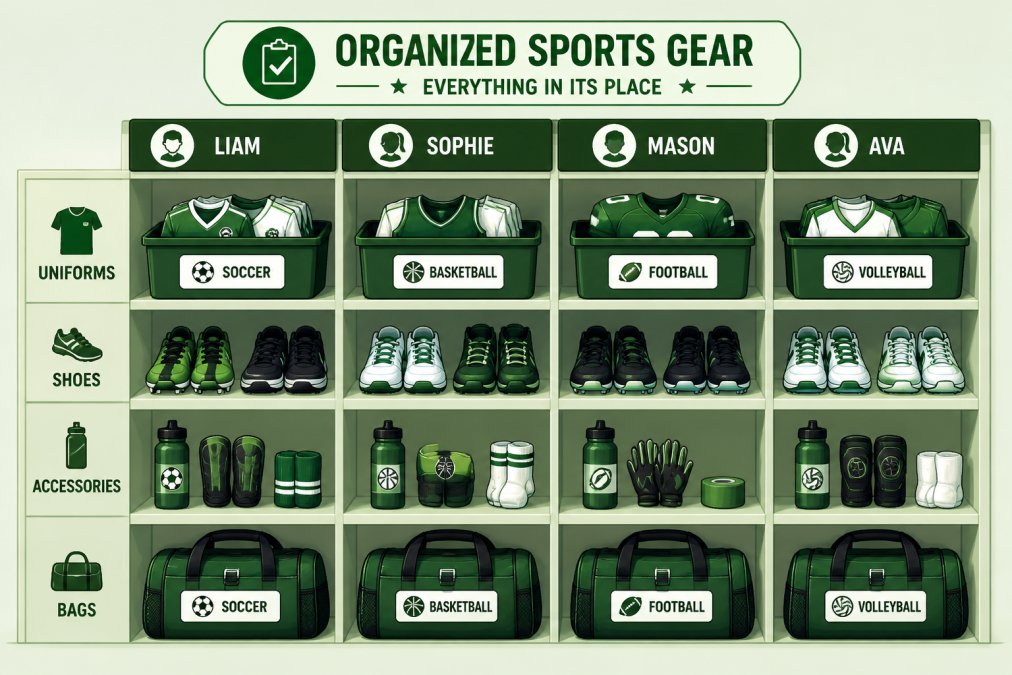
Beyond aesthetics, managing sports equipment for multiple children requires a system. Invest in labeled equipment bags for each child, a medium-sized duffel or backpack designated for each kid keeps their gear separated and easy to grab. Inside, use smaller pouches to organize by category: uniforms in one, shoes in another, accessories in a third.
Store equipment bags in a designated closet or garage area near the door you use for game days. Some families use a rolling cart with labeled drawers, one per child. Others hang individual bags on hooks with names clearly visible. The key is making it easy to grab everything and go.
For seasonal sports, rotate gear storage. Off-season equipment can be stored in bins in a less-accessible location, freeing up space for active-season gear.
Accessorize for Cohesion and Practicality
Accessories add personality while maintaining coordination. Hats, headbands, wristbands, and watches in your color palette pull the entire look together and serve practical purposes during games.
Matching baseball caps or beanies in your primary color create instant visual cohesion. Headbands and wristbands in your accent color add a pop without overwhelming the outfit. Footwear is the anchor of any outfit, matching sneakers or athletic shoes in your color palette tie everything together. White sneakers work with almost any combination; navy or black sneakers ground the look.
Practical accessories matter too. A small crossbody bag or backpack in your color scheme carries essentials without adding bulk. A team-branded water bottle or towel in your accent color serves a purpose while reinforcing the coordinated look.
Budget-Friendly Tips for Coordinating Family Sports Gear
Coordinating multiple people doesn't have to drain your budget. Start by auditing your current wardrobe. You likely already own neutral pieces in navy, white, and gray. Build coordinated looks from these existing items first, then add just a few new pieces in your chosen accent color.
Mix-and-match strategies maximize wardrobe value. Instead of buying complete matching outfits, buy individual pieces that work together. Three navy tees, three white tees, two pairs of navy joggers, and two pairs of white shorts create nine different outfit combinations. Add one jacket in your accent color, and you've exponentially increased possibilities.
Personalization without breaking the bank comes from strategic custom pieces. Rather than customizing every piece, choose one key item per child, perhaps a jersey with their name and number. Buy basics in bulk when possible; ordering several at once often reduces per-item costs. Look for sales during off-season periods and stock up for the year ahead.
Prepare Your Family for Game Days and Photo Sessions
Brief conversations with your family about the plan prevent last-minute chaos. For game days, communicate the color palette the night before. Let each child choose their own outfit within the coordinated framework so they feel ownership over their look.
For photo sessions, be more specific. Share a photo of what you're envisioning so everyone understands the goal. Discuss fit and comfort in advance. A child who feels uncomfortable in their outfit will show that discomfort in photos. Arrive early to photo sessions to allow time for adjustments, and bring backup pieces in case something doesn't work as planned.
For families using custom apparel from Merch by Mary Ellen, order well in advance of game days or events. Custom pieces typically require lead time, and planning ahead gives you time to confirm fit and quality before the actual event.
Coordinating family sports gear doesn't have to be complicated or expensive. A unified color palette, thoughtful layering, and strategic custom pieces create the cohesion you're after. Merch by Mary Ellen specializes in personalized apparel that lets you build coordinated family looks with custom jerseys, hoodies, and accessories in your chosen colors. Get started by defining your color palette, then build your coordinated wardrobe piece by piece. The result is a family that looks intentionally united at every game, event, and photo session, without the stress of last-minute scrambling.
| Strategy | Best For | Time to Implement | Visual Impact |
|---|---|---|---|
| Unified color palette | All game days and events | 30 minutes planning | High, creates instant cohesion |
| Layering activewear | Photo sessions and special events | 15 minutes per outfit | High, adds depth and dimension |
| Custom jerseys and personalized gear | Team events and individual identity | 2-3 weeks ordering | Very high, professional and unique |
| Coordinated accessories | All occasions | 10 minutes per outfit | Medium, polishes the look |
| Functional gear organization | Everyday game-day prep | 1-2 hours setup | High, reduces stress and lost items |
| Mix-and-match basics | Budget-conscious families | Ongoing | Medium, practical flexibility |
Research from the American Academy of Pediatrics on family engagement in youth sports emphasizes how visual team unity strengthens family bonds and children's sense of belonging. When families coordinate their appearance for games, children feel supported and part of something larger than themselves.
Clear, visible systems like labeled equipment bags and designated storage areas reduce decision fatigue and increase compliance from family members. For families looking to elevate their coordination beyond basic color matching, fashion and styling guides for active families recommend investing in a few quality layering pieces and accessories that work across multiple outfits. This approach maximizes your budget while creating a polished, intentional appearance that photographs well and feels comfortable for actual game-day wear.
Frequently Asked Questions
How do I coordinate family sports gear without everything looking too matchy?
Use a unified color palette as your base, then vary how family members wear those colors. One child might wear a solid navy shirt while another wears navy with white stripes. Mix graphic tees with solid layers, and incorporate different textures like smooth athletic wear with textured tracksuits. This creates visual harmony and cohesion while letting each person's personality show through. The key is choosing complementary colors and limiting how many different hues appear across the group.
What's the best way to organize sports equipment and gear for multiple kids?
Assign each child their own equipment bag or storage bin labeled with their name and sport. Keep uniforms, practice gear, and accessories together by child rather than by item type. Use clear containers so you can see what's inside without opening them. Organize your main storage area by sport or season if you have multiple athletes. This functional gear organization prevents mix-ups, makes packing for games faster, and helps kids take ownership of their equipment. Check inventory monthly to catch missing items before game day.
How can I make coordinated family sports gear work for kids of different ages?
Age-appropriate gear styling means choosing pieces that fit each child's size and maturity level while keeping the color scheme consistent. A toddler might wear a simple solid-colored tracksuit while an older sibling wears a custom jersey in the same color family. Vary the layering and accessories based on age. Younger kids often look best in simpler designs, while older kids can handle more complex patterns or logos. This approach ensures everyone looks intentional as a group without forcing younger children into styles that don't suit them.
What budget-friendly strategies help coordinate family sports gear without spending too much?
Start with a base color palette of two to three neutral or team colors, then build outfits around those. Buy solid-colored basics in bulk and mix them with one or two statement pieces. Look for personalization options on select items rather than custom-printing everything. Mix new gear with well-maintained pieces from previous seasons. Consider coordinating on accessories like hats, socks, or scarves instead of entire outfits. Many families find that establishing a clear color scheme upfront actually saves money because purchases become more intentional and pieces coordinate across multiple kids and seasons.
This article was written using GrandRanker