

Table of Contents
- What to Wear to Youth Baseball: The Basics
- Youth Baseball Uniform Requirements Explained
- Essential Youth Baseball Gear Checklist
- Choosing the Right Baseball Cleats and Footwear
- Baseball Pants, Socks, and Base Layers
- Cold Weather Gear for Baseball Players
- Baseball Parent Sideline Essentials
- Baseball Accessories That Matter
Last Updated: July 2, 2026
What to Wear to Youth Baseball: The Basics
Figuring out what to wear to youth baseball requires balancing comfort, safety, and league requirements. At Merch by Mary Ellen, we help families navigate gear selection to ensure young players stay protected while performing confidently. Understanding what's actually required versus optional prevents overspending on unnecessary premium gear.
Game Day vs. Practice Gear
Game day demands a complete uniform: team jersey, belted baseball pants, and league-approved cleats or turf shoes. Practice gear can be simpler, athletic shorts, a t-shirt, and supportive footwear. Players perform better in full uniforms because they feel official and prepared, which translates to sharper focus.
Youth Baseball Uniform Requirements Explained
Youth baseball uniforms follow standards set by Little League and other governing organizations. Core components are non-negotiable: a team-issued jersey with number, baseball pants (white, gray, or team colors), a baseball cap, and socks meeting league specifications. Many leagues also require a protective cup and athletic supporter for male players.
Little League Standards
Little League International requires players to wear a uniform shirt with a team number on the back, uniform pants extending to the ankle, a uniform cap, and socks covering the leg between shoe and pants. The shirt should fit snugly but allow full shoulder and arm range of motion.
Pants come in two styles: traditional belted pants or newer athletic-fit pants with elastic waistbands. Both are acceptable. Pants should be made from durable synthetic blends that resist staining and maintain shape after repeated washing.
League-Specific Dress Codes
Beyond Little League, many local organizations and travel teams have additional requirements. Some mandate specific sock heights, year-round long pants, or premium equipment. Check your specific league's handbook before purchasing. Merch by Mary Ellen carries youth baseball apparel meeting standard league requirements.
Essential Youth Baseball Gear Checklist
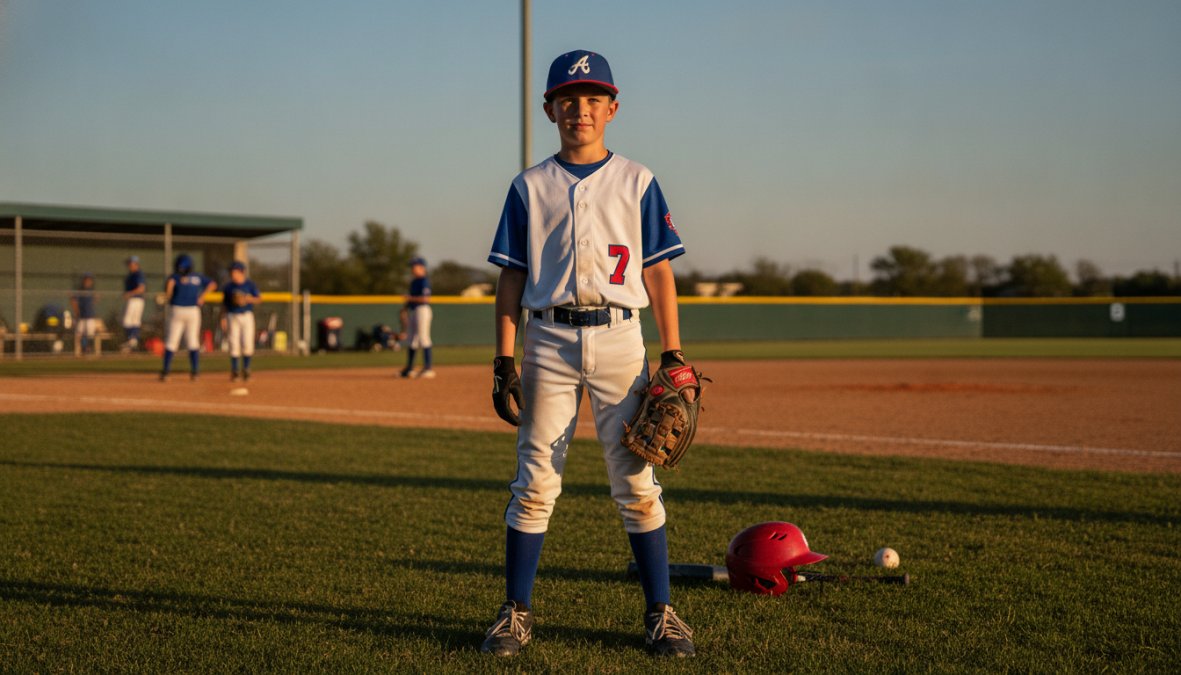
Building a complete youth baseball setup requires understanding which items are necessary and which enhance performance. Essential items include a jersey, pants, cap, socks, cleats or turf shoes, and a glove. From there, add performance gear like batting gloves, arm sleeves, and sliding mitts based on your child's needs.
Required vs. Recommended Items
Required items:
- Team jersey with number
- Baseball pants (belted or elastic waist)
- Baseball cap
- Socks (usually white or team colors)
- Baseball cleats or turf shoes
- Baseball glove
Recommended items:
- Batting gloves for better bat grip
- Arm sleeves for sun protection and compression
- Sliding mitts to protect hands during slides
- Moisture-wicking base layers
- Compression shorts
- Athletic supporter and protective cup for male players
Recommended gear becomes more important as players advance in competitive level. Recreational league players might skip arm sleeves and sliding mitts entirely, while travel team players typically use most items as standard practice.
Budget-Friendly vs. Premium Breakdown
A complete youth baseball outfit ranges from under $150 to over $500 depending on quality choices. Budget-friendly setups use basic synthetic materials, while premium options feature advanced moisture-wicking fabrics and specialized performance features.
| Gear Category | Budget Option | Premium Option | Difference |
|---|---|---|---|
| Baseball Pants | $25-35 | $60-85 | Fabric durability, fit precision |
| Jersey | $15-25 | $40-60 | Material quality, longevity |
| Cleats | $30-50 | $80-130 | Comfort, ankle support, materials |
| Batting Gloves | $10-15 | $25-40 | Grip technology, padding |
| Arm Sleeves | $8-12 | $20-35 | Compression level, UV protection |
| Cap | $8-12 | $20-30 | Fit, ventilation, durability |
Budget-friendly gear works well for recreational players. Mid-range gear ($250-350 total) offers the best value for durability without premium markup.
Choosing the Right Baseball Cleats and Footwear
Footwear is the single most important gear decision because it affects ankle stability, injury prevention, and comfort. Young players need shoes designed specifically for baseball, not general athletic sneakers.
Molded Cleats vs. Turf Shoes
Molded cleats feature rubber nubs providing traction on natural grass fields. They're the standard choice for baseball and don't require a break-in period. Turf shoes have a flat, rubber-studded sole designed for artificial surfaces and hard-packed dirt infields.
Check your field surface: natural grass requires molded cleats, while artificial turf or hard-packed dirt works better with turf shoes. Many families buy both and rotate based on field conditions.
Youth Sizing and Fit Tips
Youth baseball cleats run true to size in most brands. The shoe should feel snug around the heel with about a thumb's width of space at the toe. Have your child try cleats on in the afternoon when feet are slightly swollen, mimicking game-day conditions.
Expect to replace youth cleats annually as feet grow. Buy cleats that fit now rather than oversizing for growth, since poorly fitting shoes cause blisters and ankle instability.
Baseball Pants, Socks, and Base Layers
Baseball pants are the most visible part of the uniform and most prone to wear and staining. Choosing durable, well-fitting pants saves money over a season.
Fit, Durability, and Breathable Fabrics
Youth baseball pants should fit snugly through the thigh without restricting movement. The inseam should reach the top of the shoe, covering the ankle completely. Durable synthetic blends resist tearing and maintain shape better than 100% cotton. Synthetic fabrics also dry faster and resist staining.
Look for pants with moisture-wicking properties that pull sweat away from the body. The waistband matters significantly: belted pants fit securely but require adjustment throughout the game, while elastic waistbands provide comfort and stay in place during active play.
Belted vs. Elastic Waist Options
Belted pants offer a traditional baseball look and fit players with varying body shapes better. They're standard for competitive travel teams. Elastic waist pants provide consistent comfort and stay in place during intense activity, making them ideal for younger players.
Most recreational leagues accept both styles. Travel teams typically require belted pants for uniformity. Regardless of style, ensure pants are made from breathable fabrics that allow air circulation.
Baseball socks should extend mid-calf and be made from moisture-wicking synthetic blends. Avoid 100% cotton socks that absorb sweat and cause blistering. Most leagues require white socks, though some accept team colors.
Cold Weather Gear for Baseball Players
Spring and fall baseball often requires strategic layering. The key is using breathable layers that trap warmth without restricting movement.
Layering Strategy for Spring and Fall
Start with a moisture-wicking base layer, typically a synthetic or merino wool long-sleeve shirt worn under the team jersey. This base layer pulls sweat away from skin and maintains warmth even when damp. Avoid cotton base layers, which lose insulating properties when wet.
Add a mid-layer for additional insulation on cold days. A lightweight fleece or compression shirt works well because it traps warm air while remaining thin enough to wear under a uniform. In very cold conditions, some players wear a lightweight windbreaker over the jersey until warm-up ends, then remove it for the game.
Moisture-Wicking and Compression Gear
Moisture-wicking fabrics are essential for cold-weather baseball because they prevent the dangerous combination of sweat and cold. Synthetic materials like polyester and nylon wick moisture much faster than cotton. Merino wool is an excellent natural alternative, offering warmth even when damp.
Compression gear provides secondary benefits beyond warmth. Compression shorts and sleeves improve blood circulation and reduce muscle fatigue during extended games. Many young players report feeling more energetic in later innings when wearing compression gear.
Baseball Parent Sideline Essentials
Parents spend hours on the sideline during youth baseball season. Dress in layers you can adjust as temperature changes. Wear comfortable shoes that allow standing for extended periods. Bring a hat or visor for sun protection and sunglasses with UV protection to reduce eye strain.
Pack a small bag with essentials: water bottle, snacks, phone charger, and a basic first-aid kit. Bring a blanket or lawn chair if your field doesn't have bleachers.
Baseball Accessories That Matter
Beyond the core uniform, several accessories improve comfort, safety, and performance.
Batting Gloves, Arm Sleeves, and Sliding Mitts
Batting gloves improve grip on the bat, especially in humid conditions. Young players benefit because they reduce hand fatigue during extended batting practice. Arm sleeves protect skin from sun exposure, provide mild compression, and offer psychological confidence. Sliding mitts protect hands during slides into bases, particularly valuable for middle infielders and outfielders.
Safety Equipment and Protective Gear
A protective cup and athletic supporter are essential safety equipment for male youth baseball players. A batting helmet is absolutely mandatory for any player stepping into the batter's box.
Catchers require additional protective gear: a chest protector, catcher's mask, and shin guards. This gear is specialized and essential for player safety. Many young players benefit from padded sliding shorts or padded compression shirts that protect ribs and hips during slides.
Choosing what to wear to youth baseball involves balancing league requirements, weather conditions, and your budget. The essentials, uniform, cleats, and basic accessories, create a solid foundation for any young player. As your child advances in competitive level, adding performance gear like arm sleeves, batting gloves, and compression wear becomes more valuable. Merch by Mary Ellen specializes in youth baseball apparel and accessories designed to meet league standards while providing the comfort and durability young athletes need.
Frequently Asked Questions
What do kids need to wear for youth baseball practice?
For practice, youth baseball players need athletic fit pants or shorts, a breathable t-shirt or practice jersey, baseball cleats or turf shoes, and baseball socks. Batting gloves are optional but helpful. Practice gear doesn't need to match team colors, focus on comfort and mobility. Moisture-wicking fabrics help during warm weather practice sessions.
Are cleats required for youth baseball, or can kids wear turf shoes?
Requirements vary by league. Little League and most youth leagues allow molded cleats or turf shoes. Check your specific league's uniform requirements before purchasing. Molded cleats provide better traction on grass fields, while turf shoes work well for artificial surfaces and offer more comfort for younger players still developing their skills.
How should I dress for cold weather baseball games as a parent?
Wear layered clothing: a moisture-wicking base layer, a warm mid-layer like a fleece or hoodie, and a windproof jacket. Bring a blanket for the bleachers. Compression gear under your clothes adds warmth without bulk. Don't forget warm socks, a hat, and gloves. Many parents wear team colors or baseball-themed apparel to show support while staying comfortable.
What's the difference between game day and practice gear for youth baseball?
Game day requires a complete uniform: team jersey, belted baseball pants, uniform socks, and cleats. Practice gear is more flexible, athletic shorts or pants, any t-shirt, and cleats or turf shoes are fine. Game day emphasizes the baseball lifestyle and team identity, while practice prioritizes comfort and durability for repetitive movements and skill development.
This article was written using GrandRanker