

Table of Contents
- When to Let Your Child Quit a Sport: The Core Decision
- Signs of Sports Burnout in Children vs. a Bad Day
- The Sunk Cost Fallacy and Seasonal Commitment
- How to Talk to Your Child About Quitting
- Benefits of Finishing a Sports Season
- Age-Appropriate Autonomy in the Decision
- Teaching Resilience and Grit Without Forcing the Issue
- Conclusion
Last Updated: August 9, 2026
When to Let Your Child Quit a Sport: The Core Decision
When to let your child quit a sport is one of the toughest calls parents face. Your instinct might be to push them to stick it out, but sometimes quitting is the right choice. The difference between knowing when to persist and when to walk away matters enormously for your child's development, mental health, and long-term relationship with physical activity.
This guide covers the signs that matter, the conversations that work, and the framework for making this decision with your child, not for them. The ones who get it right share one thing: they listen first, decide second.
A child who quits when they should push learns the wrong lesson about resilience. A child forced to stay in a toxic situation learns to ignore their own instincts about safety and wellbeing. The goal isn't to maximize sports participation, it's to raise a person who knows when to persist and when to walk away.
Signs of Sports Burnout in Children vs. a Bad Day
Physical and emotional exhaustion that persists
The difference between a rough week and actual burnout comes down to duration and depth. A bad day means your child complains about practice or doesn't want to go for a single session. Burnout means they dread it consistently, their energy doesn't recover between sessions, and the fatigue follows them into other parts of life.
Real burnout shows up in the body. Your child might sleep more than usual but still seem exhausted. They lose interest in activities they used to enjoy outside of sports. Their mood shifts noticeably on practice days. One key signal: recovery time. After a tough practice, most kids bounce back within a day or two. A burned-out child stays flat.
Loss of enjoyment and the fun factor
Sports burnout almost always starts with the fun disappearing. Your child stops talking about their teammates, doesn't anticipate games, and treats practice as an obligation rather than a choice.
Ask yourself: does your child ever smile about this sport anymore? A child having a bad season might still laugh with teammates or feel proud after a good effort. A burned-out child finds no joy in any of it. The fun factor matters because intrinsic motivation is what sustains kids through challenges. Without it, every obstacle feels insurmountable.
Toxic coaching or bullying in the team environment
This one is non-negotiable. A coach who belittles, yells excessively, or creates an environment where mistakes are punished rather than learning opportunities is a legitimate reason to quit. So is bullying from teammates, exclusion, or deliberate undermining.
Toxic environments damage more than just sports performance. They affect how your child views themselves and their trust in authority figures. A child in this situation isn't failing at resilience by wanting to leave, they're protecting their mental health. The key distinction: a tough coach who demands high standards is different from a coach who uses shame as a tool. If your child is afraid of their coach or dreads being around certain teammates, that's your signal to act.
The Sunk Cost Fallacy and Seasonal Commitment
Parents often fall into a trap: because you've paid for the season or committed to a team, your child should finish. This is the sunk cost fallacy, letting past investments drive future decisions. Money already spent is gone. The only question that matters is: does continuing serve your child's best interests moving forward?
That said, seasonal commitment has real value. Learning to honor a commitment, even when motivation dips, teaches accountability. A child who quits mid-season every time things get hard doesn't develop the grit that matters in life. Finishing a season they committed to, especially if the issues are temporary, builds resilience.
The balance: if your child committed to a season and we're three weeks in with a rough patch, finishing makes sense. If we're halfway through and your child is showing signs of genuine burnout or the environment is toxic, the commitment argument weakens. Consider this too: what message does forcing them to stay send? If the underlying issue is that they're not enjoying it, forcing them to continue teaches them to ignore their own preferences. That's not resilience, that's learned helplessness.
How to Talk to Your Child About Quitting
Step 1: Listen without judgment
Start by creating space for your child to tell you what's really going on. Don't lead with your opinion or your hopes for them. Just listen.
Ask open questions: "What's been happening with [sport] lately?" or "How are you feeling about your season?" Then stay quiet. Let them fill the silence. Kids often test the waters with vague complaints before revealing the real issue. If you jump in with solutions, they'll stop talking.
Listen for what's underneath the surface complaint. "I don't like practice" might mean the coach is critical or teammates exclude them. "I'm tired" might mean physical exhaustion, emotional burnout, or anxiety about performance.

Step 2: Ask clarifying questions about the real issue
Once you understand the complaint, dig deeper. "When you say you don't like practice, what specifically bothers you?" or "Is it the sport itself, or something about the team?" These questions help you understand whether this is a fixable problem or a deeper issue. They also help your child clarify their own thinking.
Ask about specific triggers. Is it certain practices or all of them? Certain teammates or the whole team? Do they feel better after a few days off? These details reveal whether the issue is situational or systemic.
Step 3: Explore alternatives before quitting
Before accepting quitting as the answer, explore whether changes could make it work. Could they talk to the coach about playing time? Could they switch to a different team or league? Could they scale back to a less competitive level?
Sometimes the answer is yes to one of these. Sometimes your child realizes that the issue isn't the sport, it's a specific, changeable circumstance. Other times, they realize that even with changes, they're done. Be honest about what's changeable and what isn't. You can't change the coach, but you might be able to change teams. You can't make teammates like them, but you can help them build confidence.
Step 4: Discuss the decision and set expectations
If quitting is still the right choice, have a clear conversation about what that means. When will they quit? What will they do instead? What does finishing their commitment look like if they're mid-season?
Be explicit about your expectations for how they approach the transition. If they're quitting mid-season, they need to communicate with the coach respectfully. If they're finishing the season, they need to show up and give genuine effort. Also be clear about what comes next. Quitting one sport doesn't mean they stop being active. It might mean trying something different, but it should mean staying engaged in physical activity in some form.
Benefits of Finishing a Sports Season
There's real value in finishing what you start, even when it's hard. A child who pushes through a rough middle stretch learns that motivation fluctuates and that you can perform even when you don't feel like it. That's a life skill.
Finishing also gives perspective. A season that felt unbearable in week six often feels manageable by week twelve. Many kids who wanted to quit mid-season are glad they didn't. There's also the social piece. Leaving mid-season means missing end-of-season celebrations and closure with teammates.
The key word is "healthy." If your child is in a toxic environment, finishing doesn't teach resilience, it teaches them to tolerate mistreatment. If they're genuinely burned out, pushing through teaches them to ignore their body's signals. But for the kid who's frustrated or dealing with temporary motivation loss? Finishing teaches something crucial about pushing through discomfort.
Age-Appropriate Autonomy in the Decision
A five-year-old's preference to quit soccer should not drive the decision. A fifteen-year-old's preference should carry significant weight. Age changes everything about how much autonomy your child should have.
For young children (under 10), you're primarily deciding. They're still developing the ability to distinguish between discomfort and genuine problems. You listen to their input, but you're the one determining whether the issue is real.
For middle-school-age kids (10-13), they should have significant input. They're developing better self-awareness and can articulate real problems. But you're still the decision-maker, especially if the issue is temporary frustration.
For teenagers (14+), they should drive the decision, with your input. By this age, they know themselves well enough to understand what they need. Your job is to make sure they've thought it through and that they're not running from something fixable, but the ultimate choice should be theirs.
Teaching Resilience and Grit Without Forcing the Issue
Resilience doesn't come from forcing kids to stay in situations they hate. It comes from navigating challenges, recovering from setbacks, and learning that they can handle difficulty.
The real resilience lesson is this: sometimes you push through, and sometimes you make a change. Knowing the difference is more important than always pushing. A child who learns to recognize when something isn't working and makes a deliberate choice to change course is learning something valuable about agency and self-awareness.
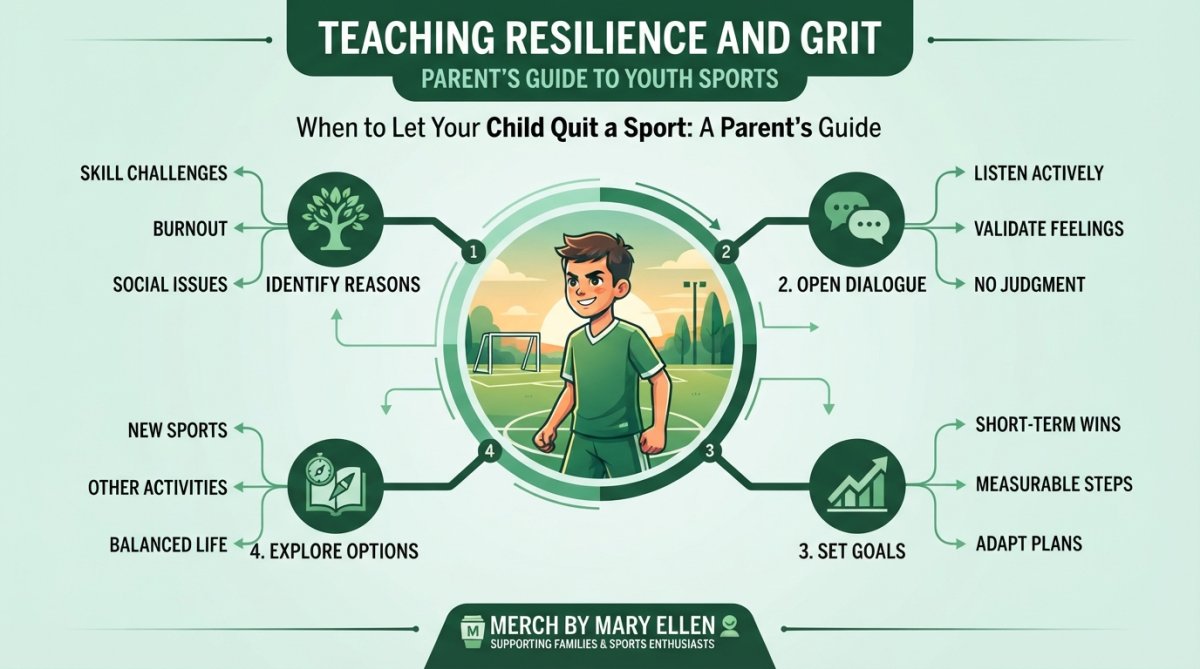
You can teach grit by helping your child set specific, achievable goals within their sport. "Let's work on your free throws" or "Let's focus on getting more playing time" gives them something to push toward. You can also teach it by acknowledging the difficulty. "This is hard. I see you struggling. And I also see you showing up." That recognition matters more than forced cheerleading.
The mistake parents often make is conflating "quitting a sport" with "not having resilience." A kid can quit soccer and still be learning resilience in other areas. The goal isn't maximum sports participation. The goal is raising a person who understands their own limits, makes intentional choices, and follows through on commitments that matter.
Deciding when to let your child quit a sport requires balancing your child's autonomy with your responsibility to guide them. The conversation matters more than the outcome. When you listen without judgment, explore alternatives, and make the decision together, your child learns that their voice matters and that life is full of choices about how they spend their time and energy.
If your child is quitting to avoid a challenge, help them push through. If they're quitting because the environment is toxic or they're genuinely burned out, support the change. And when they're back to being a sports fan, whether playing or cheering from the sidelines, celebrate with gear from Merch by Mary Ellen that lets them show their team spirit. Our personalized sports apparel and custom team gear make it easy to keep that connection alive, whatever form it takes. Subscribe to our newsletter for new collections that celebrate every season of your family's athletic journey.
Frequently Asked Questions
How do I know if my child is truly burned out or just having a bad day?
True burnout shows up over weeks or months: your child dreads practice, complains of constant fatigue, loses interest in a sport they once loved, or shows signs of anxiety before games. A bad day is isolated, frustration after one tough loss or a rough practice. Watch for persistent physical exhaustion, emotional withdrawal from teammates, or changes in sleep and appetite. If the dread returns the next week, it's likely burnout, not temporary frustration.
What are the main signs of sports burnout in children?
Signs of sports burnout in children include persistent fatigue despite adequate rest, loss of enthusiasm for the sport, avoidance of practice or games, complaints of physical pain without clear injury, withdrawal from teammates, irritability, and declining performance. Some children also experience sleep problems, loss of appetite, or anxiety about competition. These symptoms cluster together and last weeks or months, distinguishing burnout from a single bad performance or frustration.
Should I make my child finish the season if they want to quit?
The benefits of finishing a sports season include learning accountability, honoring commitments to teammates, and building resilience. However, if your child is experiencing genuine burnout, toxic coaching, or bullying, finishing the season may cause more harm than good. The decision depends on the reason for quitting. A temporary slump or performance anxiety often resolves with encouragement; a toxic environment or severe burnout warrants earlier exit. Discuss with your child whether the issue is fixable or if staying would damage their mental health.
At what age should I give my child more say in whether to quit a sport?
Age-appropriate autonomy grows gradually. Young children (under 8) need parental guidance on commitment and follow-through. Tweens (8-12) can express preferences and participate in the decision-making process, but parents should still emphasize accountability. Teens (13+) should have significant input, they understand their own motivation, social pressures, and mental health better. By mid-teens, the decision should be largely theirs, with parents offering perspective on consequences and alternatives rather than dictating the outcome.
This article was written using GrandRanker