

Table of Contents
- What Makes a Fabric Right for Outdoor Sports
- Moisture-Wicking Fabric Properties and How They Work
- Synthetic vs. Natural Fibers for Athletic Performance
- Durable Fabrics for Custom Screen Printing
- Key Performance Features: Breathability, Stretch, and Sun Protection
- How to Care for Athletic Performance Apparel
- Sustainability and Seasonal Selection
- Choosing the Right Fabric for Your Sport
Last Updated: August 26, 2026
What Makes a Fabric Right for Outdoor Sports
Performance fabrics manage moisture, regulate temperature, resist abrasion, and keep you comfortable in ways everyday cotton cannot. A fabric's moisture-wicking ability depends on its hydrophobic or hydrophilic properties, its durability on tensile strength and fiber denier, and its breathability on construction and material. These qualities directly affect how your gear performs and how long it lasts.
At Merch by Mary Ellen, we understand that families and sports enthusiasts need apparel that performs as hard as they do. Whether you're outfitting a youth athlete for game day or building a complete athletic wardrobe, the fabric choice determines whether your investment will hold up through multiple seasons or fall apart after a handful of washes. This guide breaks down the science behind performance fabrics so you can make informed decisions about what to buy and what to expect from your gear.
Moisture-Wicking Fabric Properties and How They Work
Moisture-wicking pulls sweat away from your skin and moves it to the surface where it can evaporate, keeping you dry and comfortable during intense activity. Without effective moisture management, sweat pools against your skin, making you feel cold, heavy, and uncomfortable while accelerating odor-causing bacteria growth.
Synthetic fibers like polyester and nylon are naturally hydrophobic, repelling water and forcing moisture to move along the fiber surface rather than absorbing into it. The fabric's weave pattern amplifies this effect, tight, smooth weaves move moisture faster than loose ones. Natural fibers like merino wool work differently; they're hydrophilic and can absorb up to 30 percent of their weight in moisture without feeling wet, then release it to the air (peer-reviewed research).
When evaluating moisture-wicking fabrics, look for fiber composition first. Polyester and nylon are the synthetic standards because their hydrophobic nature ensures consistent, rapid moisture transport. Merino wool performs exceptionally well for temperature regulation and odor management alongside moisture-wicking, making it ideal for cooler outdoor activities.
Synthetic vs. Natural Fibers for Athletic Performance
The choice between synthetic and natural fibers shapes how your apparel performs. Each category has distinct advantages, and the best choice depends on your sport, climate, and priorities.
Polyester and Nylon: The Synthetic Standards
Polyester dominates outdoor sports apparel because it excels at moisture-wicking, dries quickly, resists abrasion, and maintains its shape through repeated washing. Its hydrophobic nature means sweat moves through it rapidly rather than being absorbed. Polyester also has excellent tensile strength, making it resistant to tears and pilling, critical for apparel that endures friction from equipment, terrain, or contact with other athletes.
Nylon performs similarly but offers superior elasticity and abrasion resistance. Four-way stretch nylon, which stretches both lengthwise and widthwise, is common in athletic apparel because it provides unrestricted range of motion. Nylon dries slightly faster than polyester and handles repeated compression better, which is why it's often used in compression shorts and fitted base layers.
The main drawback of synthetic fibers is that they can trap heat in hot conditions and feel plasticky against the skin for some athletes. They also rely on antimicrobial treatments to manage odor, whereas natural fibers like merino wool have inherent odor-resistance.
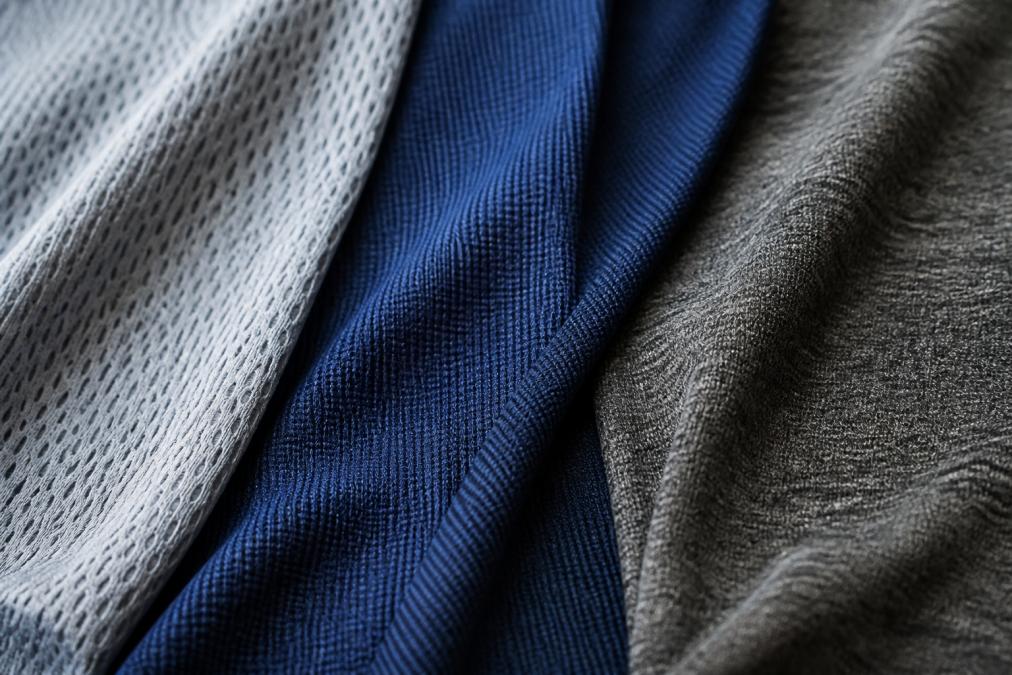
Merino Wool and Natural Alternatives
Merino wool is the premium natural fiber for outdoor sports apparel. Unlike standard wool, merino fibers are fine enough (typically 17-24 microns in diameter) to feel soft against the skin rather than itchy. Merino is naturally hydrophilic, absorbing moisture without feeling wet, it can hold up to 30 percent of its weight in water and still feel dry. This makes it exceptional for temperature regulation: it wicks moisture in hot conditions and insulates when damp in cold conditions.
Merino wool also has inherent antimicrobial properties that prevent odor buildup, allowing merino base layers to be worn for multiple days without washing. Its natural crimp gives it elasticity similar to synthetic stretch fabrics, and it's naturally UV-resistant.
Bamboo fiber is another natural alternative gaining traction in athletic apparel. It's soft, breathable, and has antimicrobial properties, but it doesn't have the same durability or moisture-management speed as merino wool or synthetics. Bamboo works well in blended fabrics for warm-weather activities where comfort is prioritized over extreme performance demands.
The trade-offs with natural fibers include higher cost, more delicate care requirements, and slower drying times compared to synthetics.
Durable Fabrics for Custom Screen Printing
When ordering custom apparel, the fabric must hold up to the printing process and maintain print quality through washing and wearing. Polyester is the industry standard for custom screen printing because it withstands the heat and pressure of the printing process without degrading. The ink bonds well to polyester fibers, and the fabric's inherent durability means the print resists cracking and peeling through repeated wear and washing.
Nylon also accepts screen printing well, though it requires slightly different ink formulations than polyester. Nylon's superior abrasion resistance means printed designs resist fading from friction, important for athletic wear that experiences constant movement and contact.
The durability of a printed design also depends on the fabric's weave density and weight. A tightly woven fabric with higher GSM (grams per square meter) resists ink penetration and wear better than a loosely woven lightweight fabric.
Key Performance Features: Breathability, Stretch, and Sun Protection
Beyond moisture-wicking, several other fabric properties determine whether apparel will perform well in outdoor sports conditions.
Breathability and Four-Way Stretch
Breathability is the fabric's ability to allow air circulation between your skin and the environment. A highly breathable fabric prevents heat buildup and allows sweat to evaporate quickly. Breathability depends on weave structure, looser weaves allow more airflow but may sacrifice durability or moisture-wicking speed.
Four-way stretch fabric stretches in all directions: lengthwise, widthwise, and diagonally. This unrestricted range of motion is essential for sports requiring explosive movements, bending, or dynamic positioning. Four-way stretch typically combines nylon or polyester with elastane (spandex), usually in a 5-10 percent elastane blend. Elastane degrades over time, especially with frequent washing and exposure to chlorine or salt water (peer-reviewed research). A higher-quality elastane blend maintains stretch longer, but even premium apparel will lose some elasticity after 50-100 washes.
UV Protection and Water Resistance
Many outdoor sports apparel fabrics include UV protection through either the fiber composition or a finish treatment. UPF (Ultraviolet Protection Factor) ratings indicate how much UV radiation the fabric blocks. A UPF 50+ fabric blocks 98 percent of UV rays, making it suitable for sports played in direct sunlight for extended periods (the FDA).
A durable water repellent (DWR) finish applied to the fabric surface causes water to bead and roll off, keeping you dry in light rain or spray. However, DWR finishes degrade with washing and sun exposure, typically lasting 20-50 washes before requiring reapplication.
For outdoor sports in wet conditions, look for fabrics with both moisture-wicking properties and DWR treatment.
How to Care for Athletic Performance Apparel
The durability of performance fabrics depends heavily on how you care for them. Most athletic apparel should be washed in cold water with a mild detergent designed for performance fabrics. Hot water can damage elastane fibers and cause synthetic fabrics to lose their shape. Avoid fabric softeners, which coat the fabric and reduce moisture-wicking effectiveness.
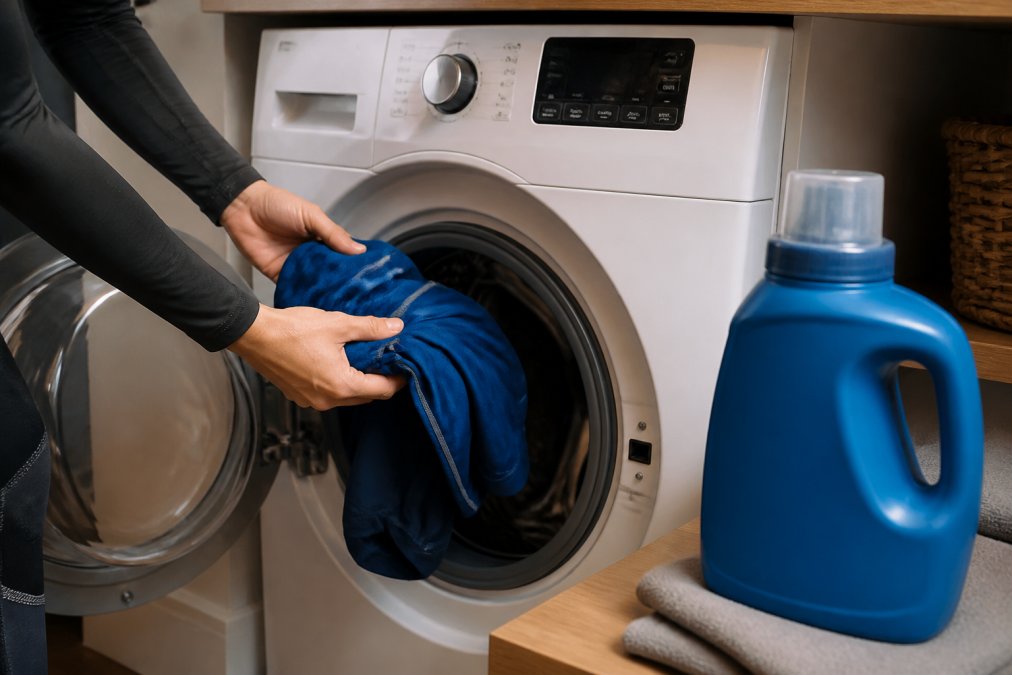
Machine drying on high heat accelerates elastane degradation and can cause synthetic fabrics to melt slightly, losing their shape and stretch. Air-drying preserves elastane longevity and maintains fabric integrity. If you must use a dryer, use low heat and remove apparel while still slightly damp.
For merino wool apparel, hand-washing or using a gentle machine cycle in cool water is recommended. Merino wool can be washed less frequently than synthetics because of its natural odor-resistance. Lay merino wool flat to dry rather than hanging, as the weight of water can stretch the fibers.
Sustainability and Seasonal Selection
The environmental impact of fabric production is increasingly important for athletes and families making purchasing decisions. Synthetic fibers are petroleum-based and non-biodegradable, but they last longer than many natural alternatives, meaning fewer replacements over time. Merino wool is renewable and biodegradable, but producing it requires significant water and land resources.
The most sustainable choice is often to buy durable apparel you'll wear for years rather than cheaper options you'll replace frequently. A mid-range polyester base layer that lasts 100+ washes is more sustainable than a budget alternative that falls apart after 20 washes.
Seasonal selection also affects how long apparel lasts and how well it performs. Lightweight, breathable fabrics with minimal insulation work best for spring and summer outdoor sports. Mid-weight fabrics suit fall conditions. Heavy-weight fabrics with thermal insulation are necessary for winter sports. Layering systems, combining a moisture-wicking base layer, an insulating mid-layer, and a protective outer shell, allow you to adapt to changing conditions throughout the day.
Choosing the Right Fabric for Your Sport
Different sports have different fabric requirements based on intensity, environment, and movement patterns.
For high-intensity sports like running, basketball, or soccer, synthetic moisture-wicking fabrics with four-way stretch and antimicrobial treatments are ideal. For water sports like swimming, surfing, or water polo, quick-dry synthetics are essential. For cooler-weather outdoor sports like hiking, trail running, or skiing, merino wool base layers combined with synthetic mid and outer layers provide superior temperature regulation.
For team sports where custom apparel is important, polyester is the standard because it accepts screen printing well and maintains durability through repeated washing. At Merch by Mary Ellen, our collections across Baseball, Basketball, Football, and Volleyball feature apparel specifically selected for durability and print quality, so custom team designs hold up through seasons of wear.
For casual sports fan apparel worn for game days or events, comfort and style matter as much as performance. Blended fabrics that combine synthetic durability with natural fiber comfort work well.
| Sport Type | Best Fabric | Key Properties | Why It Works |
|---|---|---|---|
| High-intensity (running, basketball) | Polyester or nylon blend | Moisture-wicking, four-way stretch, antimicrobial | Handles heavy sweat and unrestricted movement |
| Water sports (swimming, surfing) | Quick-dry nylon | Fast-drying, chlorine-resistant, compression | Rapid moisture removal, durability in harsh environments |
| Cool-weather outdoor (hiking, skiing) | Merino wool base + synthetic layers | Temperature regulation, insulation when damp | Adapts to variable conditions and sweat management |
| Team sports with custom printing | Polyester | Print durability, color retention, abrasion resistance | Accepts screen printing well, maintains design quality |
| Casual fan apparel | Cotton-poly blend or synthetic | Comfort, breathability, style | Balance between performance and everyday wearability |
Understanding what each fabric does, how it manages moisture, resists abrasion, regulates temperature, and accepts printing, gives you the knowledge to choose apparel that will perform the way you need it to.
Choosing the right fabric for outdoor sports apparel means understanding the trade-offs between moisture management, durability, stretch, and comfort. The best fabrics for your needs depend on your sport, climate, and how you plan to use the apparel. Whether you're outfitting a youth athlete in custom team gear or building a complete athletic wardrobe, investing in quality fabrics that match your activity ensures your gear performs when it matters most. Merch by Mary Ellen's curated collections across sports and seasons are built on this principle, selecting fabrics that balance performance, durability, and style so your apparel supports your passion for the game.
Frequently Asked Questions
What are the most breathable fabrics for high-intensity outdoor sports?
Polyester blends with four-way stretch and nylon offer superior breathability for high-intensity activities. These synthetic fibers feature properties that pull moisture away from skin while allowing air to circulate. Merino wool is also highly breathable and naturally regulates temperature. Look for fabrics labeled with breathability ratings or mesh panels that increase airflow. For custom team apparel, polyester-based blends maintain breathability even after screen printing.
How do moisture-wicking fabric properties work in sports apparel?
Moisture-wicking fabrics use fibers that absorb sweat from your skin and transport it to the fabric's outer surface, where it evaporates quickly. Synthetic fibers like polyester and nylon excel at this process because they don't absorb water the way cotton does. The fiber structure creates capillary channels that move moisture outward through evaporative cooling. This keeps you dry and prevents the heavy, cold feeling of sweat-soaked cotton, which is why moisture-wicking is essential for outdoor sports performance.
How many washes does screen print last on athletic apparel?
Quality screen-printed apparel typically lasts 50-100+ washes when cared for properly. Durability depends on fabric choice, print technique, and washing habits. Polyester and nylon blends hold screen prints better than pure cotton because they're more abrasion-resistant. Washing inside-out in cold water with mild detergent, avoiding the dryer, and skipping fabric softener extend print life significantly. Durable fabrics for custom screen printing should have high tensile strength and tight weaves that grip the ink without cracking or peeling.
Is polyester or nylon better for outdoor athletic gear?
Both are excellent, but polyester is generally a strong choice for outdoor sports apparel. Polyester offers superior moisture-wicking, better color retention, and often a lower cost. Nylon provides exceptional durability and abrasion resistance, making it ideal for high-contact sports or gear that experiences heavy wear. Many performance fabrics blend both fibers, polyester for moisture management and nylon for tensile strength. Your choice depends on the sport: polyester excels for running and high-intensity activities, while nylon shines in contact sports or when maximum durability is critical.
This article was written using GrandRanker