

Table of Contents
- What Makes Durable T-Shirts for Active Kids Different
- Best Fabrics for Outdoor Sports Apparel
- Key Features That Define Quality in Kids' Activewear
- Top Durable T-Shirts for Active Kids
- How to Wash Custom Printed Apparel for Longevity
- Preventing Cracking on Screen Printed Shirts
- Sizing and Fit for Growing Athletes
- Conclusion
Last Updated: August 26, 2026
What Makes Durable T-Shirts for Active Kids Different
When your child slides into home plate, crashes through a soccer goal celebration, or launches into a full-court sprint, their t-shirt needs to survive more than just a washing machine. Durable t-shirts for active kids are engineered differently than casual wear, built to handle sweat, dirt, grass stains, and the movement that turns ordinary fabric into a performance necessity.
High-quality activewear combines fiber selection with specific weaving techniques that create shape retention and breathability. Unlike standard cotton tees that lose their fit after a few washes, durable options use reinforced seams, double-needle construction, and blended fabrics designed to withstand repeated stretching and stress. At Merch by Mary Ellen, the best youth activewear combines durability with comfort, kids won't wear something that feels stiff or restrictive, no matter how tough it is.
A truly durable t-shirt maintains its shape after 50+ washes, resists fading even with chlorine exposure, and doesn't develop holes at the seams where stress concentrates. Lighter fabrics feel better during intense activity, but they need intelligent construction to avoid tearing. This is where reinforced seams, shoulder-to-shoulder taping, and side-seam construction become critical.
Best Fabrics for Outdoor Sports Apparel
The fabric you choose determines everything: how the shirt feels, how long it lasts, and how well it performs during activity. Two main categories dominate youth activewear: pure cotton and cotton-polyester blends, each with distinct advantages.
Cotton vs. Cotton-Polyester Blends
Pure cotton offers unmatched softness and breathability. It's naturally moisture-absorbing, making it comfortable for kids who sweat heavily. However, pure cotton shrinks unpredictably (typically 3-5% after the first wash), loses its shape faster than blends, and takes longer to dry.
Cotton-polyester blends solve the shrinkage problem while maintaining breathability. A 50/50 or 60/40 cotton-polyester blend delivers shape retention that pure cotton can't match, the polyester fibers resist stretching and maintain their original dimensions through dozens of wash cycles. Blends also dry faster, which matters for families doing laundry multiple times per week during sports season.
For active kids, cotton-polyester blends are the practical choice. They handle the punishment of sports, maintain their fit through an entire season, and survive custom printing without cracking or fading as quickly as pure cotton alternatives.
Moisture-Wicking and Performance Features
Moisture-wicking refers to the fabric's ability to move sweat away from the skin to the outer surface, where it evaporates faster. True dry-fit technology uses synthetic fibers (polyester, nylon) that naturally repel moisture, making them essential for high-performance activewear.
Cotton-blend fabrics with polyester content offer moderate moisture-wicking, not as aggressive as pure synthetic performance wear, but significantly better than 100% cotton. Breathable fabric construction also depends on weave density. Quality manufacturers balance durability with breathability through intelligent fabric engineering.
American Society for Testing and Materials fabric performance standards define moisture-wicking and breathability metrics. Look for apparel that meets ASTM D6775 (moisture management) standards, it's a reliable indicator of performance.
Key Features That Define Quality in Kids' Activewear
Beyond fabric choice, specific construction details separate durable activewear from shirts that fall apart after a season.
Reinforced Seams and Construction
Seams are the first place shirts fail. When kids move hard, diving for a ball, sprinting, jumping, stress concentrates at seams. Double-needle stitching uses two parallel threads instead of one, doubling the thread count and distributing stress across a wider area.
Side-seam construction is equally important. Quality construction splits the side seam into multiple reinforced sections, spreading stress across the garment. Shoulder-to-shoulder taping (reinforcement tape sewn into the shoulder seams) prevents neck stretching and maintains fit through hundreds of washes. Ribbed collars with reinforced stitching resist fraying and maintain their shape. Tear-away labels (or no labels) eliminate scratchy irritation that bothers active kids.
Shape Retention and Shrinkage Prevention
Shape retention is the garment's ability to return to its original size and fit after washing. This depends on fiber composition and how the fabric is finished. Cotton-polyester blends with proper heat-setting during manufacturing maintain their dimensions much better than untreated cotton.
Quality manufacturers pre-shrink fabric before cutting and sewing, accounting for cotton's natural shrinkage. The result is a shirt that fits the same after 50 washes as it did on day one. Garments designed for active kids should be engineered to survive warm-water washing and low-heat drying, the conditions most families actually use.
Top Durable T-Shirts for Active Kids
These four options from Merch by Mary Ellen represent the best choices for kids who live in their activewear.
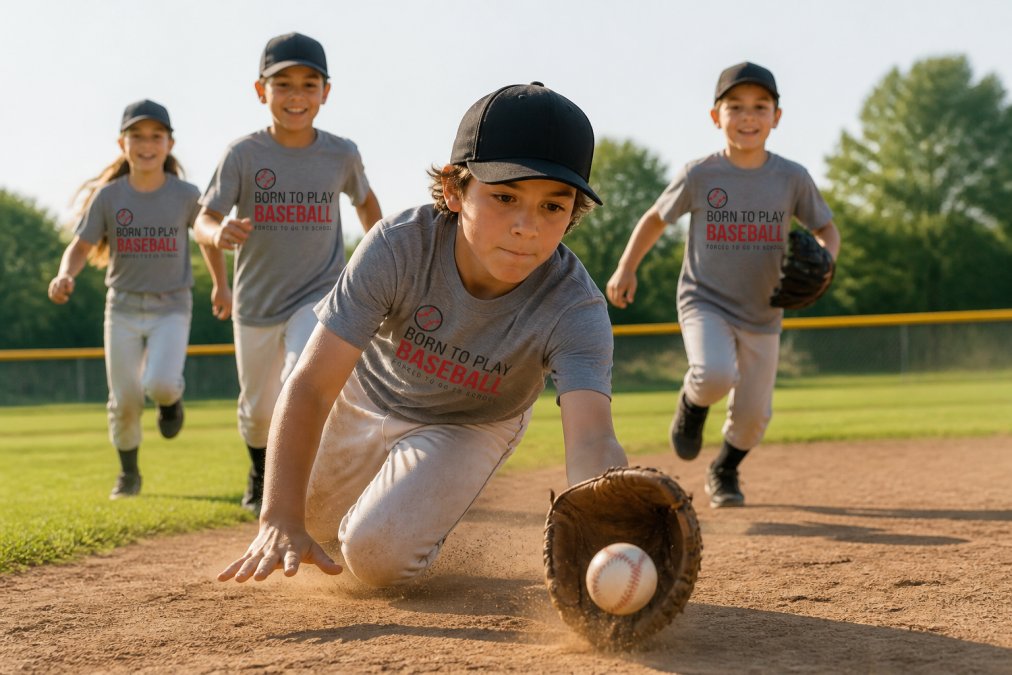
Born to Play Baseball Youth T-Shirt
This shirt captures the essential philosophy of youth sports with practical durability that backs up the attitude. Priced at $19.99, it delivers serious value for families buying multiple shirts across a season.
Double-needle sleeves and bottom hem create durability at the stress points where seams typically fail. Side-seam construction prevents the single-line tearing that ends cheaper shirts early. The ribbed collar resists stretching and fraying, maintaining its shape through dozens of wash cycles. Shoulder-to-shoulder taping keeps the neckline stable even when kids pull the shirt over their heads in a hurry.
The fabric is soft, high-quality cotton that breathes well for outdoor play and handles grass stains better than synthetic-heavy blends. The tear-away label eliminates neck irritation during active play. Best for the kid who lives and breathes baseball, from spring training through fall ball.
Hit Happens Baseball Youth T-Shirt
This shirt embraces the reality of youth sports with a design that captures this philosophy while the construction handles the inevitable dirt that comes with it.
Made from a premium soft-blend fabric, it resists grass stains and dugout dust better than pure cotton alternatives. The blend provides moisture-wicking that matters during double-headers when kids are sweating through multiple games. Machine-wash-warm care instructions acknowledge how families actually do laundry.
The fit is generous without being baggy, allowing full range of motion for batting practice, fielding, and running. Sizing runs true, so a size medium fits a typical 10-year-old consistently. At $19.99, it's affordable to buy multiple colors or designs.
I Hit Stuff Youth Graphic T-Shirt
The bold, comic-book-inspired design makes this shirt stand out, but the durability is what keeps it in rotation. The premium soft-spun blend combines comfort with serious durability, tough enough to survive a head-first slide into second base and soft enough for comfort.
The print uses high-energy vintage comic styling in sophisticated colors (deep royal, vintage red, and slate grey) that resist fading through repeated washing. Double-needle stitching, reinforced seams, and shape retention ensure this shirt maintains its fit and print quality through an entire season of active play.
Best for the power hitter or the kid who isn't afraid to make noise on the diamond.
You're Killin' Me Smalls Youth T-Shirt
This shirt is for the kid using their baseball glove as a hat, sliding into home plate when the ball is still in the outfield. The fit is specifically designed for maximum comfort during high-stakes snack negotiations and professional-grade dugout lounging.
The fabric handles dirt with ease and looks great after being properly "broken in" by a slide through infield dust. The construction maintains shape through dozens of washes, and the design doesn't crack or fade like lower-quality prints. Available in modern intentional tones. At $19.99, it's affordable to buy multiple colors.
How to Wash Custom Printed Apparel for Longevity
Custom printed shirts require specific care to prevent the print from cracking, fading, or peeling. The process is simple and doesn't demand special equipment.
Washing Temperature and Cycle Settings
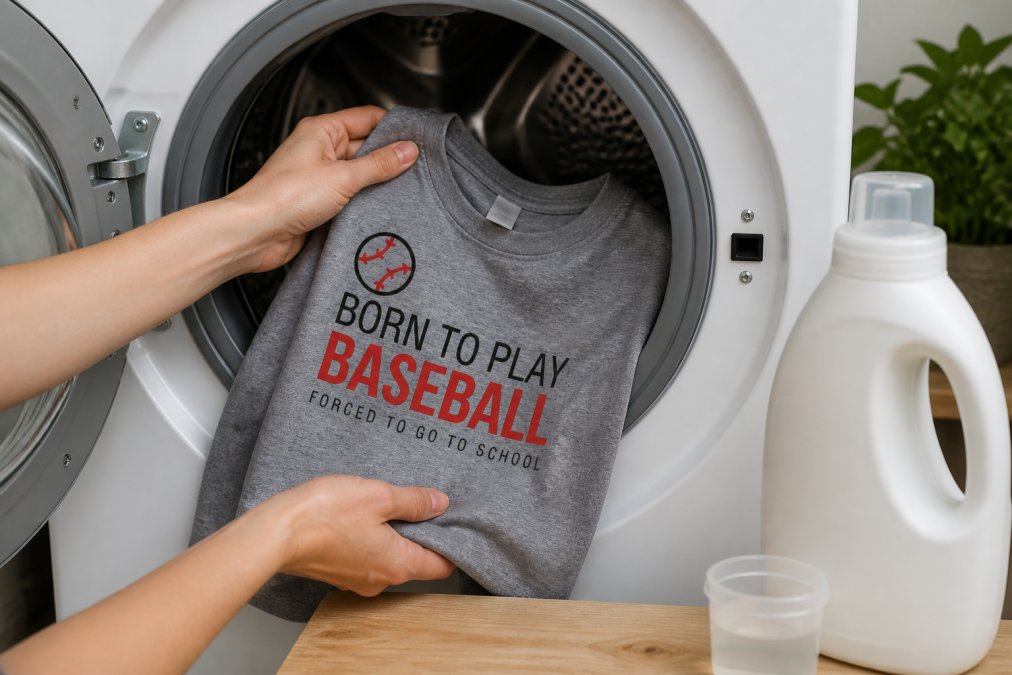
Turn the shirt inside-out before washing. This single step protects the print from direct friction and water exposure. Wash in warm water (not hot) on a gentle or delicate cycle. Hot water can cause the print adhesive to break down, leading to cracking and peeling.
Use cold water for the rinse cycle to set the print and prevent dye bleeding. Add mild detergent and avoid bleach, which fades colors and can damage the print. Machine wash warm (maximum 105°F or 40°C) is the standard recommendation for custom printed apparel.
Drying and Storage Best Practices
Air-dry whenever possible. Tumble drying generates heat that can warp the print and shrink the garment. Hang the shirt on a clothesline or lay it flat to dry. If machine drying is necessary, use the lowest heat setting and remove the shirt while slightly damp.
Never iron directly over the print. If ironing is necessary, iron the back of the shirt only, or use a thin cloth barrier between the iron and the print. Store in a cool, dry place away from direct sunlight. Fold rather than hang to prevent stretching at the shoulders.
Preventing Cracking on Screen Printed Shirts
Screen printing is the most common method for custom apparel, and it's durable when cared for properly. Cracking happens when the print adhesive becomes brittle and breaks under stress, usually from heat, friction, or repeated washing.
Quality screen printing uses flexible ink that moves with the fabric, not rigid ink that cracks when the shirt stretches. Merch by Mary Ellen uses premium inks specifically formulated for youth activewear, ensuring the print stays intact through hundreds of washes.
Follow these practices: wash inside-out, use warm (not hot) water, avoid bleach, and air-dry when possible. Tumble drying on high heat is the fastest way to crack a print. Avoid excessive friction during washing and store printed shirts flat or folded, not in tight rolls that create creases in the print.
Federal Trade Commission guidance on product care labeling requires manufacturers to provide accurate care instructions. Follow the label on your shirt, it's specific to that garment's construction and print method.
Sizing and Fit for Growing Athletes
Kids grow unpredictably, and buying activewear that fits properly is more complex than grabbing the next size up. Proper fit affects comfort, performance, and durability.
Measure your child's chest, shoulder width, and sleeve length. Compare these measurements to the size chart provided with each shirt. Don't rely on age or grade, a 10-year-old can range from size XS to size L depending on their build.
Proper fit means the shirt sits comfortably at the shoulders, with sleeves ending at the wrist when arms are relaxed. The chest should have about 2 inches of ease (room to move) without the shirt being baggy. Better to buy the correct size now and replace it next year when they've grown, rather than buy oversized and waste a season of wear.
Quality manufacturers provide detailed size guides with actual measurements in both inches and centimeters. If your child falls between sizes, consider the activity: for sports with sliding or diving, size up slightly for comfort; for everyday wear, size down to avoid excess fabric.
American Society for Testing and Materials youth apparel sizing standards defines how children's clothing should be sized and labeled. Reputable manufacturers follow these standards, ensuring consistency across brands.
Durable t-shirts for active kids are an investment that pays dividends through an entire season of practice, games, and growth. The right combination of fabric, construction, and care keeps these shirts looking sharp and performing well through countless washes. At Merch by Mary Ellen, we've built our youth activewear collection around the understanding that kids don't slow down, their clothes shouldn't either. Browse our Baseball Collection and Shop for Kids to find durable options designed for the athletes in your family. Subscribe to our newsletter for seasonal updates and new designs that celebrate your child's athletic spirit.
Frequently Asked Questions
What fabric is best for active kids' t-shirts?
Cotton-polyester blends are ideal for active kids because they combine softness with moisture-wicking and durability. Pure cotton offers comfort but absorbs sweat; blends dry faster and resist wrinkles better. Look for fabrics with reinforced seams, breathable construction, and tear-resistant properties. Most quality youth sports tees use 60% cotton / 40% polyester or similar ratios for optimal performance during gym class and outdoor activities.
How can I keep screen-printed designs on kids' shirts from cracking?
Wash printed shirts inside out in warm water (max 105°F) with similar colors to prevent friction damage. Avoid chlorine bleach and never iron directly over the print. Use low-heat tumble drying and remove from the dryer promptly. Wash less frequently by spot-cleaning stains when possible. Quality screen-printed apparel with proper curing resists cracking better, but gentle care extends print life significantly through repeated wear and washing cycles.
How do I wash kids' activewear to prevent wear and tear?
Turn garments inside out before washing to protect printed designs and reduce pilling. Use warm water (not hot) with a gentle cycle, wash with similar colors, and avoid bleach. Tumble dry on low heat, and remove promptly to prevent wrinkles and fabric stress. Skip the iron entirely on printed areas. Washing inside out is the single most effective step for preserving durability in custom printed youth sports apparel over many seasons.
Are cotton-polyester blends more durable than 100% cotton for kids?
Yes, cotton-polyester blends are more durable for active kids. Blends resist shrinkage better, dry faster, and retain shape through repeated washing and athletic use. They offer improved tear resistance and moisture-wicking compared to pure cotton. However, 100% cotton feels softer and breathes better. Many quality kids' activewear uses blends (typically 60% cotton / 40% polyester) as a compromise that maximizes durability without sacrificing comfort for everyday wear and sports.
What features should I look for in high-quality kids' apparel?
Prioritize reinforced seams (double-needle stitching on sleeves and hems), shoulder-to-shoulder taping for structure, and side-seam construction for shape retention. Check for breathable, soft-touch fabric with colorfast dyes that resist fading. Look for tear-resistant materials, smooth inner tags to prevent scratching, and proper weight fabric (not too thin). Quality construction features like these ensure the shirt survives frequent washing, active play, and multiple seasons of wear.
This article was written using GrandRanker