

Table of Contents
- What You'll Need Before Washing Custom Printed Sports Gear
- Pre-Wash Care: Immediate Post-Wear Steps
- Step-by-Step: How to Wash Custom Printed Sports Gear Properly
- How to Prevent Screen Print Cracking and Peeling
- Washing Instructions for Sublimation Jerseys and Custom Ink
- Removing Odors from Synthetic Sports Fabrics
- Drying and Storage Best Practices for Garment Longevity
- Common Mistakes to Avoid When Caring for Printed Apparel
How to Wash Custom Printed Sports Gear: Complete Care Guide
Last Updated: July 11, 2026
Learning how to wash custom printed sports gear properly is the difference between apparel that looks brand new after 50 wears and gear that fades, cracks, and peels after a handful of uses. Custom printed sports apparel represents more than just clothing, it's a statement of team loyalty, personal identity, or organizational pride. Whether you're wearing screen-printed team jerseys, sublimation athletic wear, or custom ink designs, the printing process creates a fragile bond between fabric and ink that requires proper care. Heat, harsh chemicals, friction, and aggressive drying methods are the primary culprits behind premature fading and print degradation.
Below, we'll show you exactly how to wash custom printed sports gear to extend its lifespan significantly. By the end of this guide, you'll understand why some approaches work and others don't, knowledge that applies whether you own one custom jersey or an entire team's worth of personalized apparel.
What You'll Need Before Washing Custom Printed Sports Gear
Before you run your first wash cycle, gather the right supplies and assess your garment's fabric composition.
Essential supplies for washing custom printed apparel:
- Mild detergent (liquid formula preferred, powder can leave residue on prints)
- Cold water (never hot for printed gear)
- A mesh laundry bag or pillowcase (protects prints from friction)
- Soft-bristled brush or sponge (for spot cleaning only)
- White vinegar (optional, for odor removal)
- Air-drying rack or clothesline (never machine drying for prints)
The mesh bag is non-negotiable. It creates a barrier between your custom printed sports gear and the agitation of the wash cycle, reducing contact between the print and other garments.
Fabric assessment checklist:
Check your garment's care label for fiber content: is it cotton, polyester, a blend, or moisture-wicking synthetic? Synthetic fibers require different care than natural cotton. Moisture-wicking athletic wear demands gentler handling because the finish that makes it breathable can be compromised by harsh detergents and high heat.
Pre-Wash Care: Immediate Post-Wear Steps
What you do immediately after wearing your custom printed sports gear matters as much as the actual wash cycle.
Handle sweat and moisture immediately:
If your custom printed sports gear is damp with sweat after activity, rinse it under cold water as soon as possible. Sweat contains salt, urea, and bacteria that set into fabric fibers over time. A quick cold-water rinse removes surface sweat and prevents it from oxidizing on the fabric.
For moisture-wicking athletic wear, this step is critical. The synthetic fibers trap sweat more effectively than cotton, which means sweat lingers longer without immediate rinsing.
Air dry between wears when possible:
If you're wearing the same custom printed sports jersey multiple days in a row, hang it to air dry between wears rather than throwing it in the hamper. This gives the fabric time to breathe and reduces bacterial growth that causes odors. A simple hanger in a well-ventilated space works perfectly.
Step-by-Step: How to Wash Custom Printed Sports Gear Properly
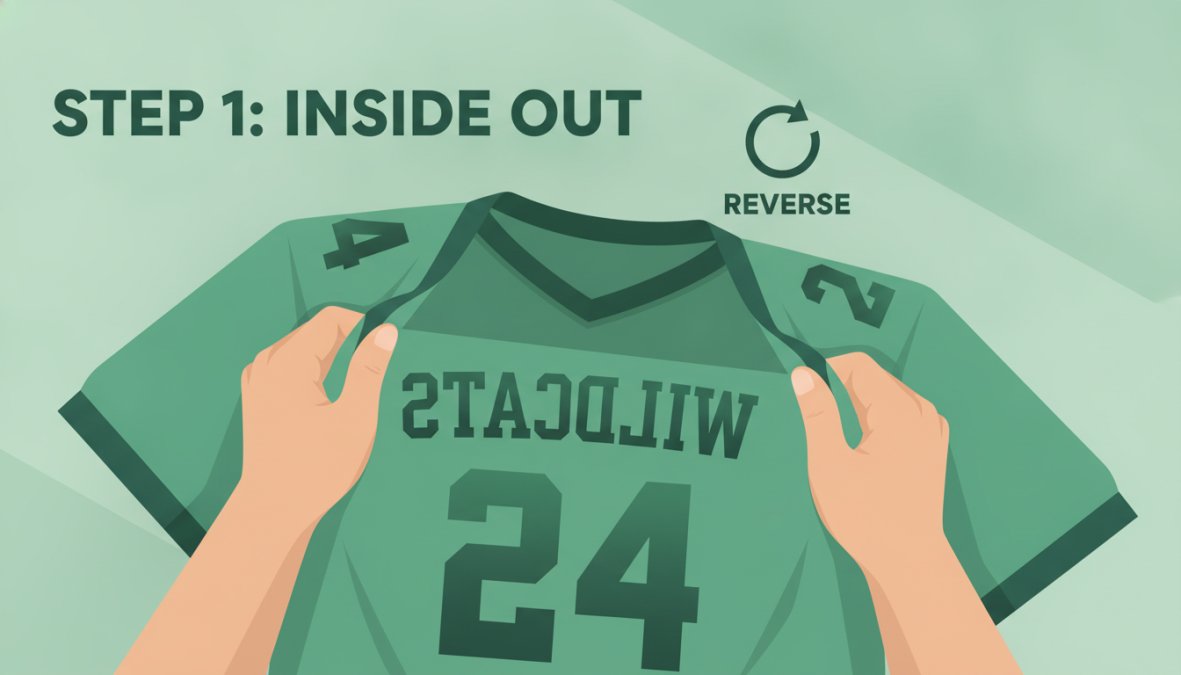
Step 1: Turn the garment inside out
This is the single most important step in protecting custom apparel. When you turn the garment inside out, the print faces inward, away from direct contact with water, detergent, and the abrasive friction of the wash cycle. This simple step reduces print stress by an estimated 70-80% during the wash cycle.
Step 2: Place in a mesh laundry bag
Even with the garment turned inside out, add an extra layer of protection by placing it in a mesh laundry bag. This prevents the print from rubbing against other garments and reduces overall agitation. If you don't have a mesh bag, use a clean pillowcase tied loosely.
Step 3: Select a gentle or delicate wash cycle
For custom printed sports gear, never use the normal or heavy cycle. Use the gentle, delicate, or hand-wash cycle instead. These cycles use slower drum rotation and less aggressive movement, protecting the print while still cleaning effectively.
Step 4: Use cold water
Heat damages custom ink and causes synthetic fibers to weaken. Cold water is non-negotiable for printed apparel. It protects the ink's integrity and prevents color bleeding and fading.
Step 5: Add mild detergent
Use a liquid detergent rather than powder. Powder particles don't dissolve completely in cold water and can leave residue on prints. Use half the recommended dose for a normal load, your custom printed sports gear doesn't need aggressive cleaning.
Avoid detergents with bleach, optical brighteners, or heavy perfumes. Look for "gentle" or "delicate" formulations, or use a specialized sports fabric detergent.
Step 6: Run the wash cycle
Load the mesh bag with your custom printed sports gear and start the cycle. Don't add other items, washing the garment alone prevents friction with other clothes and gives it space to move freely without stress.
Hand washing option for valuable pieces:
For expensive custom jerseys or particularly delicate prints, hand washing provides maximum protection. Fill a sink with cold water, add mild detergent, and submerge the garment. Gently agitate the water for 3-5 minutes, then drain and rinse thoroughly under cold running water until the water runs clear.
How to Prevent Screen Print Cracking and Peeling
Screen print cracking and peeling happens when the bond between ink and fabric weakens. Heat is the primary culprit, high temperatures cause the ink to expand and contract at a different rate than the fabric beneath it, creating tiny cracks that eventually peel away.
Machine drying is heat damage waiting to happen. A typical dryer reaches temperatures of 130-160°F, far too hot for custom printed apparel. The safest approach is to avoid machine drying entirely.
Air drying vs. tumble dry low:
Air drying is the gold standard for custom printed sports gear. Hang the garment on a clothesline, drying rack, or regular hanger in a well-ventilated space. This takes 4-8 hours depending on fabric weight and humidity, but there's zero risk of heat damage.
If you absolutely must use a machine dryer, use tumble dry low with the shortest available cycle (20-30 minutes). Remove the garment immediately and finish air drying.
Temperature guidelines for fabric safety:
Optimal drying temperature for custom printed apparel is below 105°F. Room temperature (68-72°F) is ideal. If using a dryer, keep it below 130°F and use time as your guide: 20 minutes on low heat is safer than 45 minutes on medium heat.
Washing Instructions for Sublimation Jerseys and Custom Ink
Sublimation printing uses heat to fuse dye directly into synthetic fibers. Once complete, the dye becomes part of the fabric itself, making sublimation jerseys more durable in some ways but more vulnerable to heat damage in others. The ink won't crack or peel like screen printing, but it can fade if exposed to excessive heat or harsh chemicals.
Wash sublimation jerseys inside out, in cold water, on a gentle cycle, just like screen-printed apparel. The inside-out approach protects the surface from friction, which can cause pilling or fading.
Fabric-specific care for athletic wear:
Athletic wear with custom ink often uses performance fabrics: polyester, nylon, spandex blends, or moisture-wicking synthetics. These fabrics have special finishes that allow them to dry quickly and wick sweat away from the body.
Avoid fabric softener entirely, it coats the fibers and reduces moisture-wicking properties. Use the same mild detergent you'd use for any custom printed sports gear. Never machine dry; these fabrics are designed to air dry quickly.
Removing Odors from Synthetic Sports Fabrics
Synthetic sports fabrics trap odors more effectively than natural fibers because of their tight weave. Sweat-based bacteria colonize the fabric rather than washing away easily.
Most people make their biggest mistake here: they use hot water and heavy detergent to fight odors. This damages custom prints and actually makes odor problems worse by breaking down the fabric's water-repellent finish.
Stain removal for specific print types:
For sweat stains on custom printed apparel, avoid aggressive scrubbing or pre-soaking in bleach. Instead, create a paste of mild detergent and cold water. Apply it gently to the stain with a soft-bristled brush, working from the outside toward the center. Let it sit for 10-15 minutes, then rinse thoroughly under cold water.
For blood or protein-based stains, cold water is essential, hot water sets protein stains permanently. For oil-based stains, apply liquid detergent directly to the stain and gently rub it in. Wait 5 minutes, then rinse under cold water.
Moisture control and odor prevention:
The real solution to odor problems is preventing them through proper moisture management. After wearing custom printed sports gear, hang it to air dry immediately. Don't let it sit damp in a gym bag or hamper.
For persistent odors in synthetic fabrics, add white vinegar to the rinse cycle (quarter cup for a standard load). Vinegar neutralizes odor-causing bacteria without damaging custom ink. Never use fabric fresheners or odor-eliminating sprays on custom printed apparel.
Drying and Storage Best Practices for Garment Longevity
Air drying is the only safe method:
Hang your custom printed sports gear on a clothesline, drying rack, or regular hanger in a well-ventilated area. Avoid direct sunlight for extended periods, as UV exposure fades custom ink over time.
The drying process takes 4-8 hours depending on fabric weight and humidity. Hang garments vertically rather than laying them flat to promote even drying.
If you must use a dryer, use tumble dry low for no more than 20 minutes. Remove the garment immediately and finish drying on a hanger.
Long-term storage strategies:
Store garments in a cool, dry place away from direct sunlight. A closet or dresser drawer is ideal. Avoid basements or attics where humidity fluctuates.
Fold custom printed apparel carefully, or hang it on padded hangers to prevent creasing. Use cedar blocks or lavender sachets for odor prevention rather than mothballs or chemical fresheners.
Ensure the garment is completely clean and dry before storing long-term. For valuable team jerseys, consider acid-free tissue paper between folds to prevent creasing and color transfer.
Common Mistakes to Avoid When Caring for Printed Apparel
Mistake 1: Using hot water
Hot water causes ink to fade, synthetic fibers to weaken, and moisture-wicking finishes to deteriorate. Always use cold water, there's no exception for custom printed sports gear.
Mistake 2: Washing with heavy items
Throwing your custom printed jersey in the wash with jeans, towels, or other heavy fabrics creates friction that damages the print. Wash custom printed apparel alone or with other delicate items only.
Mistake 3: Machine drying
This is the most common cause of print cracking and peeling. Machine dryers reach temperatures that damage custom ink. Air drying takes longer but eliminates heat damage entirely.
Mistake 4: Using fabric softener
Fabric softener coats synthetic fibers with a waxy residue that reduces moisture-wicking performance and can interact with custom ink. Skip it entirely.
Mistake 5: Aggressive stain removal
Scrubbing hard at stains, soaking in bleach, or using harsh chemicals damages custom ink. Use gentle methods: mild detergent paste, soft-bristled brushes, and cold water.
Mistake 6: Ignoring the care label
Your custom printed sports gear came with a care label for a reason. If you've lost it, assume cold water, gentle cycle, inside-out washing, and air drying.
Custom printed sports gear represents more than just clothing, it's a reflection of team pride, personal identity, and often a significant investment. The care you provide determines whether that investment pays dividends for years or depreciates within months.
Proper care isn't complicated. Cold water, gentle cycles, inside-out washing, and air drying are the foundation. Everything else builds on these fundamentals to provide maximum protection. By following this approach, you'll keep your custom printed sports gear looking sharp through hundreds of wears.
Frequently Asked Questions
Can you put custom printed jerseys in the dryer?
Avoid machine drying custom printed jerseys whenever possible. Heat from tumble drying can cause print cracking, peeling, and fading. Instead, air dry your custom printed sports gear by laying it flat or hanging it in a well-ventilated area. If you must use a dryer, select tumble dry low on the lowest heat setting and remove the garment immediately when the cycle ends to minimize heat damage to the custom ink.
How do you wash custom sports uniforms so they don't crack?
To prevent screen print cracking, wash custom sports uniforms inside out using cold water and a gentle cycle with mild detergent. Avoid bleach and fabric softener, which can weaken the print adhesion. Select a wash temperature of 30-40°C maximum, and never use hot water. Air dry completely rather than using heat, and store the garment flat or on a hanger to prevent stress on the printed areas during storage.
How do you get sweat smells out of custom sports gear?
For synthetic sports fabrics and moisture-wicking athletic wear, soak the garment in cold water with a mild detergent for 15-30 minutes before washing. For stubborn odors, add white vinegar to the rinse cycle or soak. Wash in cold water on a gentle cycle, then air dry completely, moisture trapped in synthetic fibers can trap odors. Ensure the garment is fully dry before storage to prevent mildew and odor buildup in team jerseys and custom apparel.
Should you turn custom printed gear inside out before washing?
Yes, always turn custom printed apparel inside out before washing. This protects the print from direct friction with detergent, water, and other garments in the wash cycle. Turning garments inside out reduces fading and wear on the custom ink, screen printed designs, and sublimation jerseys. This simple step is one of the most effective ways to extend the life of your custom printed sports gear and maintain vibrant colors.
This article was written using GrandRanker