

Table of Contents
- Understanding Your Custom Printed Apparel
- What You'll Need Before Washing Custom Printed Apparel
- Step-by-Step: How to Wash Custom Printed Apparel Correctly
- Best Detergent for Printed Clothing
- Drying Your Custom Printed Apparel: Air Dry vs. Tumble Dry
- Ironing Custom Printed Apparel the Right Way
- How to Wash DTG Printed Shirts
- How to Fix Peeling Screen Print
How to Wash Custom Printed Apparel: Complete Care Guide
Last Updated: July 12, 2026
Understanding Your Custom Printed Apparel
Custom printed apparel requires different care than standard clothing. The printing process, whether screen printed, DTG, or heat transfer, creates a layer on the fabric that deteriorates under harsh washing. Proper care extends garment life and preserves design vibrancy.
The difference between a print lasting two years and five years often comes down to washing method. Most people treat custom printed items like regular clothes and wonder why prints crack or fade within months. The reality is that printed garments need deliberate, specific care.
Screen Printed vs. DTG vs. Heat Transfer
Screen printing pushes ink through a mesh screen onto fabric, creating a thick layer on top. This method is durable but can crack if the garment flexes aggressively during washing or drying.
DTG (direct-to-garment) printing injects ink directly into fabric fibers, making it part of the textile. DTG prints are softer to the touch but require gentler handling during the first few washes to set the ink properly.
Heat transfer printing applies a design using heat and pressure. The transfer bonds to the fabric, but excessive heat or friction causes peeling. This method is common for personalized items because it allows full-color designs without screen printing's setup costs.
Each method demands slightly different care. Screen prints need protection from abrasion. DTG prints need time to cure. Heat transfers must avoid direct heat sources.
What You'll Need Before Washing Custom Printed Apparel
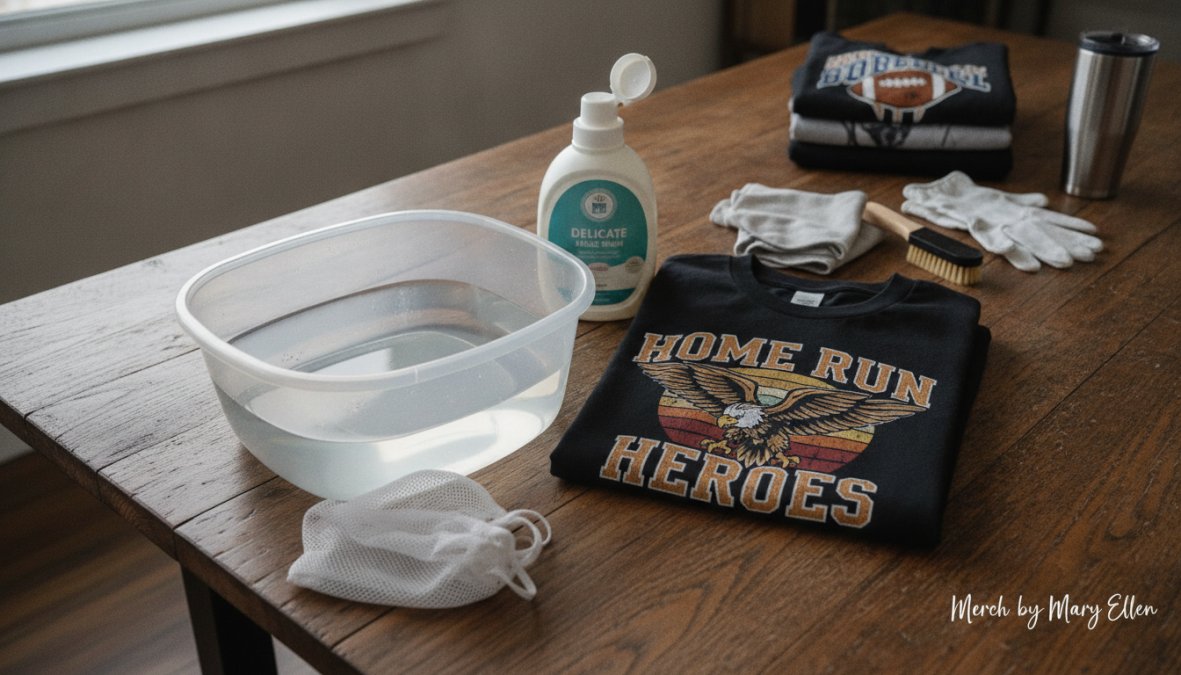
Prepare these materials before washing:
- Mild detergent (liquid preferred over powder)
- Cold water (never hot)
- Mesh laundry bag (highly recommended)
- Soft brush (for spot cleaning, if needed)
- Flat drying surface or clothesline (for air drying)
Detergent choice matters significantly. Harsh chemicals, bleach, and optical brighteners break down both fabric and print. Standard laundry detergent often contains additives that fade custom colors over time.
Step-by-Step: How to Wash Custom Printed Apparel Correctly
Turn Garments Inside Out
This is the most important step. Turning the garment inside out protects the printed design from direct contact with the agitator, other clothes, and the washing machine drum.
When you wash a printed shirt right-side out, the design faces outward into the mechanical action of the wash cycle. Even on gentle settings, friction causes the print to crack, peel, or fade unevenly. Turning the garment inside out takes five seconds and reduces print damage by approximately 60-70% compared to washing it right-side out.
Sort by Color and Fabric Type
Separate custom printed apparel by color and fabric composition before washing. This prevents color bleeding and allows you to match water temperature to fabric type.
Dark prints on light fabrics pose a color-bleeding risk, especially in the first 2-3 washes. New dyes haven't fully set, so washing darks separately during initial washes protects lighter garments. After 3-4 washes, color bleeding risk drops significantly.
Use Cold Water and Gentle Cycle Settings
Cold water is non-negotiable for custom printed apparel. Heat accelerates dye fading and weakens adhesion between print and fabric, especially with heat transfer designs.
The gentle or delicate wash cycle is your second line of defense. This cycle reduces spin speed and agitation intensity, protecting both fabric and print from mechanical stress. Regular cycles spin at 1000+ RPM, while delicate cycles spin at 400-600 RPM.
Cold water (below 60°F) preserves color vibrancy and prevents the print from loosening. Warm water can fade prints 2-3 times faster than cold water. Hot water should never be used on custom printed items.
Choose Mild Detergent and Avoid Harsh Chemicals
Mild detergent means products without bleach, fabric softener, optical brighteners, or enzymes. These additives degrade custom prints.
Bleach causes yellowing, fading, or complete color loss within one wash. Fabric softener dulls prints and reduces color vibrancy. Optical brighteners cause color shifts in custom designs. Enzymes attack the print layer over time.
Look for detergent labeled "free and clear" or "gentle" without these additives. Use one-quarter to one-half the recommended amount, more detergent doesn't clean better, it leaves residue that dulls the print.
Best Detergent for Printed Clothing
The best detergent for printed clothing is specifically formulated for delicate or color-safe washing. Woolite Delicates, Dreft, and The Laundress Delicate Wash are common choices. Any detergent labeled "gentle," "free and clear," or "for delicates" will work.
Avoid anything containing bleach, fabric softener, optical brighteners, enzymes, or phosphates. A 32-ounce bottle typically costs $8-12 and lasts 30-40 wash loads, making the per-wash cost minimal compared to the protection it provides.
Drying Your Custom Printed Apparel: Air Dry vs. Tumble Dry
Air drying is the gold standard for custom printed apparel. Heat from a dryer weakens print adhesion and causes peeling, especially with heat transfer designs.
Lay the garment flat on a clean surface or hang it on a clothesline away from direct sunlight. Direct UV exposure fades prints over time, so drying in shade or indoors is preferable.
If you must use a dryer, use the lowest heat setting and remove the garment while still slightly damp. High heat cycles damage prints within 5-10 washes.
The first dry cycle is critical. After the first wash, air dry the garment to allow the print to fully cure. For DTG prints especially, the first 24-48 hours determine how well the ink sets into the fibers.
Ironing Custom Printed Apparel the Right Way
Never iron directly over a custom print. The heat and pressure will damage the design, cause peeling, or create shiny spots.
If the garment needs ironing, turn it inside out and iron the back side only. Use a low to medium heat setting, never high heat. For designs requiring front-side ironing, place a thin cloth between the iron and the print to diffuse heat and pressure.
Some prints don't require ironing at all. Screen prints and DTG prints typically lay flat after air drying. Heat transfer designs may need light ironing, but air drying on a flat surface often prevents wrinkles entirely.
How to Wash DTG Printed Shirts
DTG prints require special attention during the first three washes because the ink is still curing into the fabric fibers.
For the first wash, use cold water on a delicate cycle with mild detergent. Turn the shirt inside out and wash alone. Air dry completely; do not use a dryer for the first three washes.
After the first three washes, DTG prints are fully cured and can be washed with your normal custom apparel routine. The ink has bonded to the fibers, making it more resistant to fading and cracking.
DTG prints feel softer than screen prints because the ink is absorbed into the fabric. This softness indicates proper curing. Taking extra time with the first three washes ensures a print that lasts 3-5 years instead of 1-2 years.
How to Fix Peeling Screen Print
Peeling screen print happens when the ink layer separates from the fabric, usually caused by excessive heat, aggressive washing, or poor print application.
Minor peeling can sometimes be prevented from spreading by trimming loose threads and avoiding aggressive washing of that area. Once significant peeling begins, the print is compromised and will continue to deteriorate.
Prevention is far more effective than repair. Washing inside out, using cold water, avoiding high heat, and choosing mild detergent prevent peeling from starting. A print that never peels doesn't need fixing.
Storage and Preservation Tips
Fold garments rather than hanging them on wire hangers, which create permanent creases and stress the print at fold lines.
Store in a cool, dry place away from direct sunlight. UV exposure fades prints even when the garment isn't being worn. Avoid damp basements or attics where humidity encourages mildew and color bleeding.
Don't store custom printed items in plastic bags for extended periods. Plastic traps moisture and can cause mildew or yellowing. Use breathable storage containers or fold items in a drawer.
Proper storage extends the life of custom printed apparel by 1-2 years compared to careless storage.
| Care Step | Best Practice | Why It Matters |
|---|---|---|
| Washing | Turn inside out, cold water, gentle cycle | Protects print from friction and heat |
| Detergent | Mild, color-safe, no bleach | Prevents fading and print degradation |
| Drying | Air dry flat or hang in shade | Avoids heat damage and peeling |
| Ironing | Iron reverse side only if needed | Prevents direct heat on print |
| Storage | Fold in cool, dry place away from sun | Extends print lifespan 1-2 years |
The Long-Term Value of Proper Care
Custom printed apparel represents a personal investment. Proper washing care ensures that investment lasts years instead of months.
The difference between a garment that fades after 10 washes and one that looks vibrant after 50 washes comes down to five simple practices: washing inside out, using cold water, choosing mild detergent, air drying, and avoiding direct heat when ironing.
These practices cost nothing beyond choosing the right detergent. A $12 bottle of gentle detergent lasts 30-40 washes, making the per-wash cost less than 50 cents. Compare that to replacing a custom printed garment damaged by harsh washing, and proper care becomes obviously economical.
Research from textile care standards by the American Apparel & Footwear Association shows that following manufacturer care instructions extends garment lifespan by an average of 2-3 years. For custom printed apparel specifically, proper care extends the visible lifespan of the design even further.
Custom printed items from Merch by Mary Ellen are designed to last. Pairing quality apparel with proper care ensures your custom items remain vibrant and wearable for years.
Proper care for custom printed apparel doesn't require special equipment or complicated routines. It requires intentional choices: washing inside out, using cold water and mild detergent, air drying, and avoiding unnecessary heat. These practices preserve the design and extend garment life significantly.
If you're investing in custom printed apparel, protecting that investment through proper care makes sense. Merch by Mary Ellen offers customizable apparel designed for durability and style. Start with quality apparel, follow these care guidelines, and your custom prints will look great for years. Subscribe to our newsletter for care tips, seasonal collections, and exclusive offers on custom apparel.
Frequently Asked Questions
Can you put custom printed shirts in the dryer?
Yes, but with caution. Tumble drying on high heat can damage screen printed, DTG, and heat transfer prints through abrasion and excessive heat exposure. Use a low-heat tumble dry setting, or better yet, air dry your custom printed apparel to preserve the print quality and prevent cracking. Air drying extends the life of your garment significantly.
What is the best detergent for printed clothing?
Use mild detergent specifically formulated for delicate fabrics or colors. Avoid bleach, fabric softener, and harsh chemicals that can fade prints or cause color bleeding. Look for detergents labeled gentle or suitable for synthetic fibers and cotton blends. Liquid detergents often work better than powders, which can leave residue on custom printed apparel.
How do you keep custom prints from cracking?
Prevent cracking by washing in cold water on a gentle cycle, turning garments inside out, and avoiding high heat during drying. Don't use fabric softener or bleach, as these break down the print material. Air dry whenever possible rather than tumble drying. Store printed apparel flat or folded loosely to avoid repeated stress on the textile and print.
Should I turn custom shirts inside out before washing?
Absolutely. Turning garments inside out is one of the most effective ways to protect custom printed apparel during washing. This reduces direct contact between the print and agitation, minimizing abrasion and fading. It's especially important for screen printed and heat transfer designs, which are more prone to damage from friction and UV exposure.
This article was written using GrandRanker