

Table of Contents
- Cotton vs Polyester Shirts: Key Differences at a Glance
- What is Cotton and What is Polyester?
- Cotton vs Polyester Breathability: Which Keeps You Cooler?
- Durability, Softness, and Comfort Benefits
- Moisture-Wicking and Odor Retention: Performance Wear Comparison
- How to Care for Cotton vs Polyester Shirts
- Benefits of Cotton Polyester Blend Shirts
- Skin Sensitivity, Allergies, and Environmental Impact
Last Updated: July 14, 2026
Cotton vs Polyester Shirts: Key Differences at a Glance
Understanding the benefits of cotton vs polyester shirts is essential for making the right choice for your lifestyle. Cotton and polyester each offer distinct advantages depending on your climate, activity level, and personal preferences. This guide compares breathability, durability, comfort, moisture-wicking, care requirements, and environmental impact to help you choose the best fabric for your needs.
Cotton dominates in comfort and breathability for everyday wear, while polyester leads in durability and moisture management for athletic use. Many people find that a blend of both offers the best compromise, combining cotton's softness with polyester's performance benefits.
| Feature | Cotton | Polyester | Cotton-Polyester Blend |
|---|---|---|---|
| Breathability | Excellent | Good | Very Good |
| Durability | Moderate | Excellent | Excellent |
| Softness | Superior | Lower | High |
| Moisture-Wicking | Poor | Excellent | Good |
| Shrinkage Risk | High | Low | Low |
| Environmental Impact | Better | Concerning | Moderate |
| Best For | Everyday comfort | Performance wear | Versatile use |
What is Cotton and What is Polyester?
Cotton is a natural fiber harvested from the cotton plant's seed pod. It's composed of cellulose, making it biodegradable and breathable. Cotton fibers are hydrophilic, meaning they absorb moisture readily, making cotton comfortable in warm climates but problematic when you need quick-drying fabric.
Polyester is a synthetic fiber created through chemical processes using petroleum-based materials. It's hydrophobic, repelling moisture rather than absorbing it. Polyester fibers are engineered for durability and wrinkle resistance. Unlike natural fibers, polyester doesn't biodegrade, raising environmental concerns about microplastic shedding when laundered.
The fundamental difference shapes everything else: cotton prioritizes comfort and breathability, while polyester prioritizes performance and longevity.
Cotton vs Polyester Breathability: Which Keeps You Cooler?
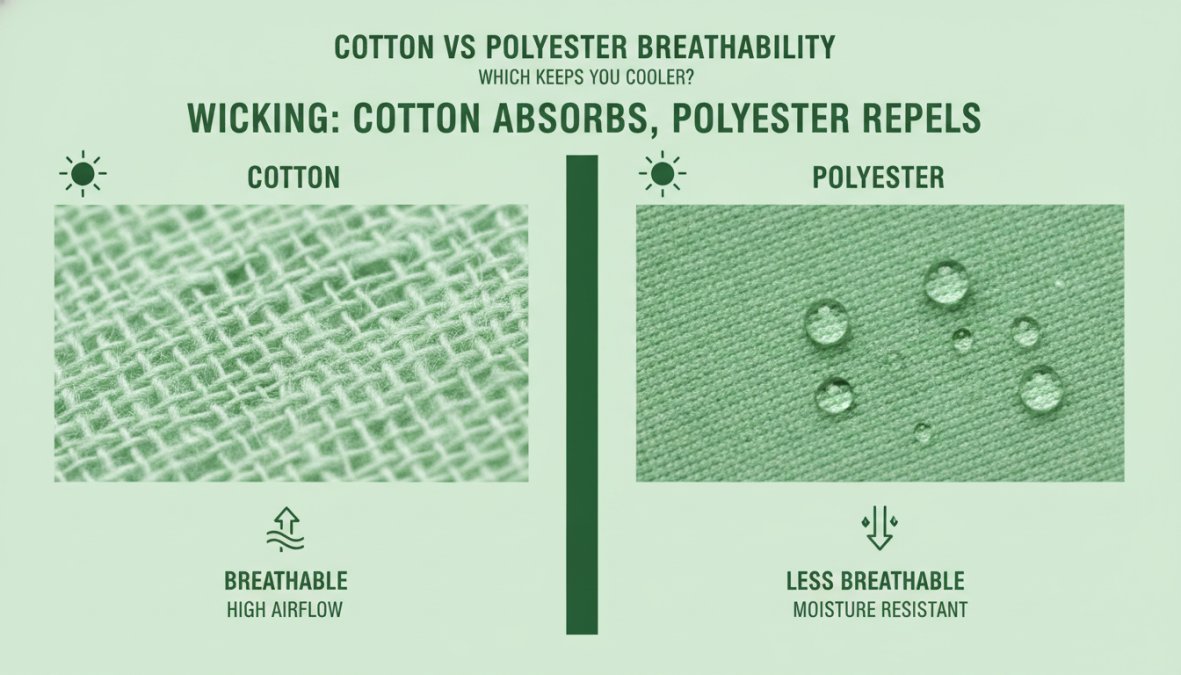
Cotton wins decisively in breathability for everyday wear. Its porous structure allows air to circulate freely, helping your body release heat naturally. The hydrophilic nature of cotton pulls moisture away from your skin, creating a cooling effect even as it absorbs sweat.
Polyester breathes adequately but less efficiently than cotton. However, modern polyester blends and performance fabrics like Nike's Dri-FIT technology use specialized weaves and moisture-wicking treatments that improve breathability significantly.
Climate-Specific Fabric Recommendations
Hot and Humid Climates In tropical or subtropical environments, cotton or high-cotton blends (70% cotton minimum) provide superior comfort. Cotton's breathability allows sweat to evaporate efficiently, preventing the clammy feeling that polyester creates when saturated.
Hot and Dry Climates In low-humidity environments, both fabrics perform well. Cotton's breathability excels, and rapid evaporation means sweat dries quickly. Polyester's moisture-wicking becomes less critical since humidity isn't trapping moisture against your skin.
Warm and Temperate Climates Cotton-polyester blends (65% cotton / 35% polyester) offer the best balance, providing cotton's comfort without durability penalties and polyester's wrinkle resistance.
Cool and Cold Climates In cooler environments, breathability becomes less relevant. Polyester's superior durability and lower maintenance make it practical for layering and frequent washing.
High-Activity Scenarios Regardless of climate, activities requiring serious sweat management favor polyester or polyester-dominant blends. Polyester's quick-drying properties reduce the clammy feeling associated with cotton when saturated with sweat.
The key insight: breathability and moisture-wicking are not the same thing. Cotton breathes better. Polyester wicks moisture faster. Choose based on whether you prioritize comfort in your climate (cotton) or performance during activity (polyester).
Durability, Softness, and Comfort Benefits
Cotton delivers unmatched softness and immediate comfort against the skin. This tactile quality is why premium brands command loyalty, the fabric simply feels better. Cotton's natural fibers create a gentler surface, making it ideal for sensitive skin and people with dermatological concerns.
However, cotton's durability weakens over time. The fabric weakens with repeated washing, colors fade faster, and the material becomes thinner with age. Pilling occurs more readily with cotton, especially in lower-quality garments.
Polyester's durability is exceptional. Synthetic fibers resist breaking down, colors remain vibrant through dozens of washes, and the fabric maintains its shape. For longevity combined with lasting comfort, cotton-polyester blends (typically 65% cotton / 35% polyester) offer the best balance.
Moisture-Wicking and Odor Retention: Performance Wear Comparison
Polyester dominates in moisture-wicking, the ability to pull sweat away from skin and dry quickly. Sport-Tek and Nike's Dri-FIT Training T-Shirt both use polyester-based systems engineered specifically for athletic performance.
Cotton absorbs moisture rather than wicking it. When you sweat in a cotton shirt, the fabric becomes saturated and stays wet, creating the clammy feeling athletes hate. Cotton takes significantly longer to dry than polyester.
Odor retention is polyester's weakness. Synthetic fibers trap bacteria and odor-causing compounds more readily than natural fibers. Cotton's breathability allows odors to dissipate more easily. For athletic wear, this means washing polyester more frequently or using antimicrobial treatments.
For everyday wear, cotton's odor management advantage is minimal. For performance wear involving serious sweat, polyester's moisture-wicking far outweighs its odor retention drawback.
How to Care for Cotton vs Polyester Shirts
Cotton care requires attention to prevent damage. Wash in cold water to minimize shrinkage and color fading. Air drying preserves the fabric better than machine drying. If you must use a dryer, use low heat. Store cotton away from direct sunlight to prevent yellowing.
Polyester is remarkably low-maintenance. Wash in warm or cold water; polyester tolerates temperature variation better than cotton. Machine drying on medium heat is fine. The fabric rarely needs ironing due to its wrinkle-resistant properties.
For blended fabrics, follow the more delicate material's requirements. A 65/35 cotton-polyester blend should be treated like cotton to protect the cotton component while benefiting from polyester's durability.
Benefits of Cotton Polyester Blend Shirts
Cotton-polyester blends represent the practical middle ground that most people actually wear. A typical blend combines 60-70% cotton with 30-40% polyester, capturing cotton's comfort while adding polyester's durability and performance benefits.
Blends deliver improved wrinkle resistance, reduced shrinkage risk, faster drying than pure cotton, better moisture-wicking, and longer garment lifespan. The softness remains closer to pure cotton than pure polyester. Colors fade slightly less than pure cotton but more than pure polyester.
The polyester component reinforces cotton fibers, preventing the thinning that occurs with pure cotton over time. The cotton component provides the comfort that makes polyester feel stiff initially. The result is a shirt that feels good, lasts longer, and requires less fussy care than pure cotton.
The trade-off: blends don't excel at any single property the way pure fabrics do. They're good at everything, great at nothing. For everyday wear, work, or casual use, this is perfect.
Skin Sensitivity, Allergies, and Environmental Impact
Cotton is hypoallergenic and skin-friendly for most people. Its natural composition means no synthetic chemicals irritate sensitive skin. People with dermatitis, eczema, or general skin sensitivity typically tolerate cotton better than polyester.
Polyester can irritate sensitive skin through the synthetic fibers themselves or chemical treatments applied during manufacturing. Most people tolerate polyester fine, but those with chemical sensitivities should test blended fabrics carefully.
Dye Retention and Colorfastness: Long-Term Appearance
Cotton is prone to color fading. The fabric's hydrophilic nature means it absorbs water readily during washing, carrying dyes out of the fiber structure. Dark colors fade noticeably within 10-15 washes, especially in warm or hot water. This is why vintage cotton t-shirts often look pale compared to their original color.
Polyester retains color dramatically better. The synthetic fiber's tightly woven structure resists dye migration. Colors remain vibrant through 30+ washes with minimal visible fading. This is why athletic wear manufacturers prefer polyester, the garment maintains its appearance through extended use.
Cotton-polyester blends offer a middle ground. A 65/35 blend fades more slowly than pure cotton but not as slowly as pure polyester. You'll notice color change after 15-20 washes rather than 10-15.
If you're buying a shirt you plan to wear for years, polyester or polyester-dominant blends preserve appearance better. If you're buying cotton, expect visible color fading within 6-12 months of regular wear.
Environmental Impact
Cotton is biodegradable and doesn't shed microplastics. However, cotton farming uses significant water resources and pesticides. Polyester never biodegrades and sheds microplastics with every wash, a concern increasingly documented as a water contamination problem.
Each polyester wash releases thousands of microplastic fibers that enter waterways and eventually oceans. These particles accumulate in aquatic ecosystems and food chains. Cotton's environmental advantage lies in its biodegradability, though pesticide and water use during cultivation remain concerns.
Neither fabric is environmentally perfect. Sustainable choices involve choosing high-quality garments you'll wear for years, washing less frequently, and using cold water and air drying. From a microplastic perspective, cotton is the better choice. From a resource perspective, both have significant environmental trade-offs.
Frequently Asked Questions
Is cotton or polyester better for hot weather?
Cotton generally performs better in hot weather because it's a porous, hydrophilic natural fiber that absorbs moisture and allows air circulation through the fabric. Polyester, being hydrophobic, repels moisture and can trap heat against your skin. However, polyester's moisture-wicking technology moves sweat away from the body quickly, which some find preferable for intense activity. For everyday summer wear, cotton offers superior breathability and comfort.
Does polyester shrink more than cotton?
Polyester is generally more shrink-resistant than cotton. Cotton can shrink 5-10% in hot water, especially if not pre-shrunk during manufacturing. Polyester maintains its shape better across wash cycles and is resistant to stretching. However, low-quality polyester blends may shrink if the cotton content is high. Always check care labels and wash in cold water to minimize shrinkage in cotton garments.
What are the benefits of a cotton polyester blend shirt?
Cotton-polyester blends combine the comfort and breathability of natural fiber with the durability and wrinkle-resistance of synthetic fiber. Blends typically offer improved colorfastness, reduced shrinkage, easier care, and better shape retention than 100% cotton. A 50/50 or 60/40 cotton-poly blend provides an excellent balance for everyday wear, sports, and custom apparel applications where both comfort and performance matter.
Why does polyester retain odors more than cotton?
Polyester's hydrophobic nature repels water and sweat, which means bacteria thrive on the fabric surface rather than being absorbed and washed away. Cotton, being hydrophilic, absorbs moisture and allows better ventilation, reducing bacterial growth. Polyester's synthetic structure also provides more surface area for odor-causing bacteria to cling. For active wear or performance situations, moisture-wicking polyester still outperforms cotton, but cotton excels for everyday wear where odor control matters.
Is cotton or polyester better for sensitive skin?
Cotton is generally better for sensitive skin because it's a natural, hypoallergenic fiber that's less likely to cause irritation. Polyester, being synthetic, can trigger reactions in people with sensitivities and may cause static electricity that irritates skin. However, polyester is often used in performance wear because it doesn't retain moisture as much. If you have sensitive skin, look for 100% cotton or high-cotton-content blends, and avoid heavily dyed polyester items that may contain chemical residues.
This article was written using GrandRanker