

Table of Contents
- Custom Jersey Design Ideas That Stand Out
- Choosing Team Colors and Palettes
- Best Fonts for Sports Jerseys
- How to Apply Iron-On Patches to Jerseys
- Jersey Materials and Fabric Selection
- Personalization Techniques That Last
- Sustainable and Eco-Friendly Jersey Options
- Conclusion
- Frequently Asked Questions
Last Updated: September 2, 2026
Custom Jersey Design Ideas That Stand Out
The best jersey designs tell a story and capture team identity. The difference between a forgettable jersey and one people actually want to wear comes down to intentional design choices. Start with a clear vision: Are you designing for a youth league, a family game-day uniform, or a commemorative piece?
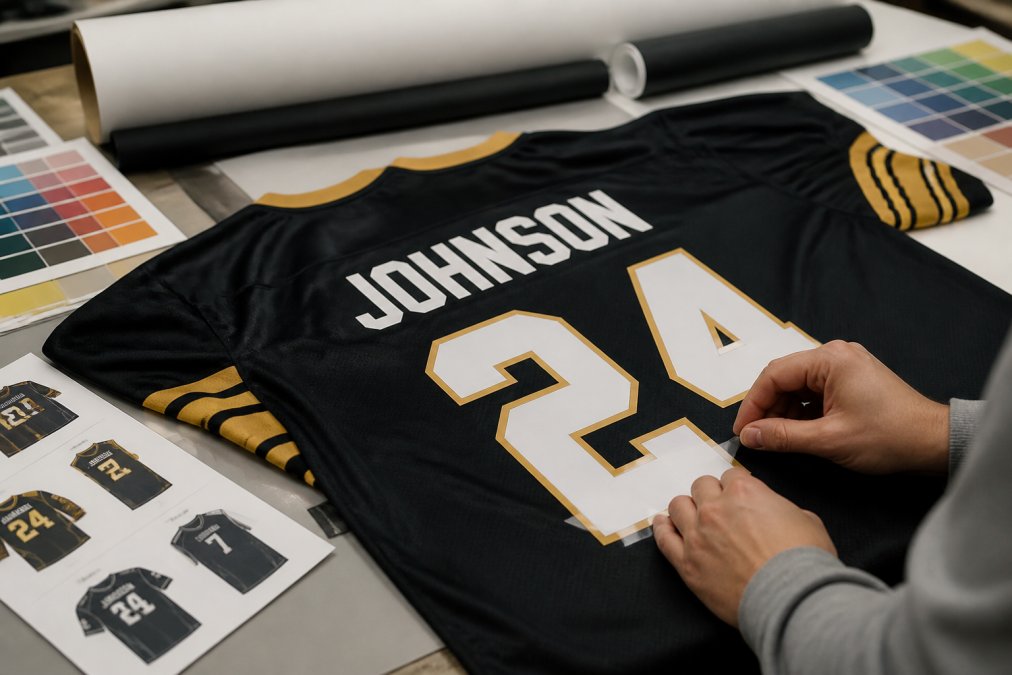
Consider these creative approaches that go beyond standard personalization:
- Player silhouettes or action poses: Add a small graphic of a batter mid-swing or pitcher in their stance for visual interest.
- Custom team logos or crests: Design a unique emblem that represents your team's identity.
- Layered typography: Mix fonts strategically, bold, blocky fonts for numbers and elegant script for names.
- Accent colors and trim: Add piping, shoulder panels, or sleeve stripes in complementary colors.
- Inspirational quotes or team mottos: Place a small motto on the inside collar or sleeve.
- Graduation years or milestone dates: Include the year or season for commemorative jerseys.
The key is restraint. One or two strong creative choices, executed cleanly, outperform a cluttered design.
Choosing Team Colors and Palettes
Your color choice sets the emotional tone for the entire jersey. Bright, saturated colors like electric blue, vibrant red, and bold yellow command attention and convey energy. Darker palettes like navy, forest green, and charcoal read as more traditional and serious.
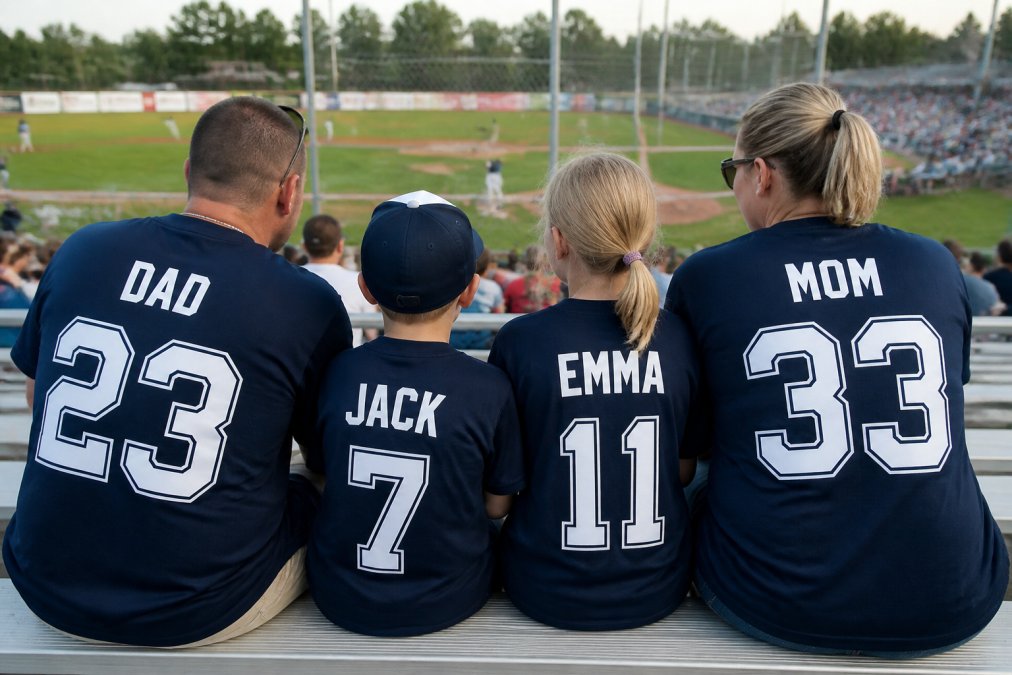
Consider your lighting environment. If your team plays mostly night games under stadium lights, colors with high contrast perform better. For game-day family wear that will appear in photos, think about how colors render in natural sunlight and camera flash.
Choose a primary color that represents your team, then add one accent color maximum. The primary color should dominate at 60-70% of the jersey. Test your palette against the jersey material itself, a color that looks perfect on screen may shift when printed on cotton versus polyester.
Best Fonts for Sports Jerseys
Typography on a jersey must be readable from a distance, withstand washing and wear, and reinforce your team's identity. The best fonts are bold, have good letter spacing, and maintain clarity when scaled down. Serif fonts often fail on jerseys because thin strokes break apart during screen printing. Sans-serif fonts with solid, chunky letterforms perform better.
Consider these font categories:
- Block or slab fonts: Thick, geometric letterforms like Bebas Neue or Rockwell. Bold, readable, timeless.
- Varsity or athletic fonts: Designed specifically for sports apparel with a classic letterman jacket aesthetic.
- Custom or hand-drawn fonts: Commission a custom font that reflects your team's personality.
- Modified standard fonts: Adjust letter spacing and weight of a solid sans-serif to create something unique.
The number on a jersey should use a simpler, bolder font than the player name. Use one primary font for numbers and one for names. If you add a team name or slogan, that's a third font maximum.
How to Apply Iron-On Patches to Jerseys
Iron-on patches offer a practical alternative to screen printing for small runs or custom additions to existing jerseys.
What you'll need:
- Iron-on patches (pre-made or custom-printed on transfer paper)
- A household iron or heat press
- A pressing surface (thick cotton towel or pressing mat)
- Parchment paper or a pressing cloth
Step-by-step application:
-
Prepare the jersey: Wash and dry it first. Lay the jersey flat on your pressing surface.
-
Position the patch: Place the patch exactly where you want it. Use a ruler if precision matters.
-
Cover and press: Lay parchment paper over the patch to protect it from direct iron contact. Set your iron to medium-high heat (around 350-375 degrees Fahrenheit).
-
Apply steady pressure: Press the iron firmly onto the patch for 15-20 seconds. Don't slide the iron, press straight down.
-
Cool completely: Let the patch cool for at least 2-3 minutes before moving the jersey.
-
Test the bond: Once cooled, gently try to lift a corner of the patch. If it lifts easily, repeat pressing for another 10-15 seconds.
-
Final wash test: After 24 hours, wash the jersey in cold water and tumble dry on low.
Troubleshooting: If the patch isn't sticking, your iron may not be hot enough or you didn't press long enough. For moisture-wicking fabrics like polyester, reduce heat slightly to prevent melting. Test on a scrap of the same fabric first.
Jersey Materials and Fabric Selection
The fabric you choose determines comfort, durability, and how well your design holds up over time.
Cotton blends (50/50 or 60/40 cotton-polyester) are the traditional choice. They're soft, breathable, and print beautifully. These work well for casual game-day wear and family jerseys.
Polyester mesh is engineered for athletic performance. It's moisture-wicking, durable, and resists fading better than cotton. For active players or hot-weather games, polyester is the better choice.
Performance fabrics with technical features like UV protection or anti-microbial treatment add functionality. A jersey with UV 40+ protection is valuable for extended outdoor games (the CDC).
The weight of the fabric matters too. Lighter fabrics (around 5-6 ounces) feel airy but wear faster. Heavier fabrics (7-8 ounces) last longer but feel warmer. For most team jerseys, 6-7 ounces is the sweet spot.
Consider the printing method when selecting fabric. Screen-printed designs bond best to cotton and cotton-blend fabrics. Heat transfer and sublimation work on polyester and synthetic blends.
Personalization Techniques That Last
Durability determines how long your personalization survives regular wear and washing.
Screen printing is the gold standard. The ink is pushed through a mesh screen directly onto the fabric, creating a permanent bond. Screen-printed designs last for years with proper care (peer-reviewed research). The downside: higher minimum order quantities and setup costs.
Heat transfer printing uses heat and pressure to apply pre-printed designs. It's flexible for custom orders and small quantities. Quality varies significantly, cheap transfers peel after a few washes, while high-quality transfers last as long as screen printing.
Sublimation printing dyes the fabric directly, creating designs that are part of the material itself. This technique doesn't create a raised layer that can peel. Sublimation works only on polyester and synthetic fabrics, not cotton.
Embroidery adds a premium feel and exceptional durability. Embroidered names and numbers withstand hundreds of washes. The trade-off: embroidery is more expensive and has limitations on design complexity.
Vinyl lettering is durable for simple designs like player numbers and names. Quality vinyl lasts well, but it can crack at edges if the jersey is stretched aggressively.
When choosing a personalization service, ask about their durability guarantee. Merch by Mary Ellen offers personalization on select items with the expectation that designs will hold up through a full season of regular wear and washing.
Sustainable and Eco-Friendly Jersey Options
If your team values environmental responsibility, sustainable options are available without compromising quality.
Organic cotton is grown without synthetic pesticides or fertilizers. It's softer than conventional cotton and better for sensitive skin. Durability is comparable to standard cotton.
Recycled polyester is made from reclaimed plastic bottles and post-consumer waste. It performs identically to virgin polyester but reduces environmental footprint.
Sustainable blends combine organic cotton with recycled polyester, balancing comfort with performance while minimizing environmental impact.
Low-impact dyes reduce water consumption and chemical pollution during fabric coloring. Jerseys dyed with these methods are just as vibrant as conventionally dyed options.
Sustainable options cost more upfront. If your team plans to keep jerseys for multiple seasons or donate them after use, the cost-per-wear becomes reasonable.
Conclusion
Creating personalized team jerseys that stand out requires intentional choices across design, materials, and execution. The best jerseys balance aesthetics with practicality: they look great on game day, survive regular washing, and become pieces people want to keep.

Start with a clear design vision, choose materials suited to your climate and activity level, and invest in personalization techniques that hold up. At Merch by Mary Ellen, we offer personalization on select items specifically designed for teams and families who want custom jerseys that last. Our Baseball Heart DAD Hoodie with Custom Name and Number and Baseball Game Day Unisex Hoodie are built from durable cotton-blend fabrics with personalization that withstands a full season of wear.

Subscribe to stay updated on new personalization options and seasonal collections designed for teams and sports enthusiasts.
Frequently Asked Questions
Q: How can I create custom team jerseys that won't fade after washing?
A: Screen printing and heat transfer methods bond directly to the fabric, offering durability through multiple wash cycles. Machine wash cold, dry on low heat, and avoid ironing the design area. Quality personalization using sublimation or professional embroidery creates longer-lasting results than basic iron-on transfers. Check product care instructions, many premium jerseys are designed to withstand regular washes without fading when handled correctly.
Q: What are the best fonts for sports jerseys?
A: Choose bold, sans-serif fonts like Arial, Helvetica, or custom varsity-style typefaces for maximum readability from a distance. Avoid thin or script fonts that become illegible on fabric. Player numbers should be large and high-contrast against the jersey color. Consider the team's branding guidelines and ensure the font complements your color palette. Vector graphics work best for crisp, clean edges during printing or embroidery.
Q: Can I add personalization to jerseys without professional equipment?
A: Iron-on transfers and heat transfer vinyl are accessible DIY options, though they require a heat press or household iron for best results. Fabric paint and embroidery patches offer creative alternatives. However, professional screen printing, sublimation, and embroidery produce superior durability and appearance. If you need jerseys for a full team, ordering through a personalization service ensures consistent quality.
Q: What's the difference between screen printing and sublimation for jersey personalization?
A: Screen printing applies ink layers to the fabric surface, ideal for bold designs and solid colors, with excellent durability. Sublimation uses heat to infuse dye directly into synthetic fabrics, creating vibrant, all-over designs with no peeling. Sublimation works best on polyester and moisture-wicking materials, while screen printing suits cotton blends. For team jerseys, screen printing offers cost efficiency for bulk orders, while sublimation excels at detailed, multi-color personalization.
This article was written using GrandRanker