

Table of Contents
- Why Getting Team Sizing Right Matters
- How to Measure for Custom Jerseys and Apparel
- Understanding Manufacturer Size Variations
- Creating a Team Uniform Size Chart Template
- Managing Bulk Apparel Orders for Teams
- Common Sizing Mistakes to Avoid
- Fabric-Specific Sizing and Fit Preferences
- Conclusion
Last Updated: August 21, 2026
Why Getting Team Sizing Right Matters
Getting team sizing right is the difference between custom apparel that looks sharp on game day and gear that sits in a closet because nothing fits. One athlete's measurements off by an inch, and suddenly you've got a jersey that's either tent-like or uncomfortably tight. That's not just a fit problem; it's money wasted and disappointed athletes.
This guide walks you through the exact process: measuring accurately, understanding why manufacturers size differently, organizing your data, and handling growth spurts and fit preferences. By the end, you'll have a repeatable process that makes ordering custom team apparel straightforward.
How to Measure for Custom Jerseys and Apparel
Accurate measurements are the foundation of everything that follows. Guessing or using old measurements is how teams end up with gear that doesn't fit.
Essential measurements: chest circumference, inseam, and sleeve length
Chest circumference is your starting point. Have the athlete stand relaxed with arms at their sides. Wrap a measurement tape snugly around the fullest part of the chest, keeping the tape parallel to the ground. Don't pull tight; you want a comfortable fit, not a compression measurement.
Inseam matters for shorts and pants. Measure from the inside of the thigh down to the ankle bone. This determines whether shorts hit at the knee or somewhere awkward. For youth athletes, inseam can vary wildly even among kids the same height.
Sleeve length ensures jerseys fit properly at the wrist. Measure from the center back of the neck, across the shoulder, down to the wrist with the arm relaxed at the side.
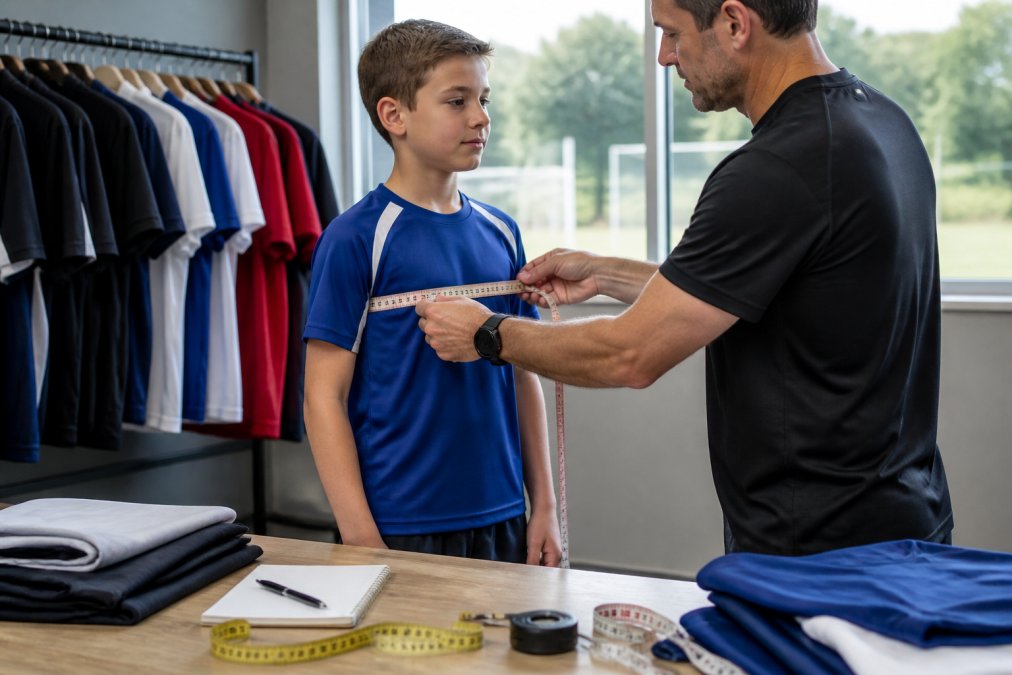
For fitted jerseys or compression wear, also measure torso length from the base of the neck down to the waist. This prevents jerseys from being too short or too long.
Write measurements down immediately in a central spreadsheet. Don't rely on memory or estimates.
Using a sizing kit for accuracy
A sizing kit, a physical set of sample garments in various sizes, is your insurance policy. Order samples from your apparel vendor before committing to a full team order. Having actual samples lets athletes try on jerseys, shorts, and shirts to see how they fit in reality.
When samples arrive, have each athlete try on the sizes closest to their measurements. This confirms your measurements are accurate and reveals individual fit preferences. Some athletes prefer snug athletic cut, while others want more room to move. Document fit feedback and note which sizes worked best for each athlete's measurements.
Understanding Manufacturer Size Variations
Not all manufacturers size the same way. A medium from one vendor might fit like a small from another. A compression fit jersey runs smaller than a standard athletic cut. Moisture-wicking fabrics sometimes shrink slightly after washing.
Always request the manufacturer's specific size chart before ordering. Match your athletes' measurements to that vendor's chart, not to generic sizing guides. If you're ordering jerseys from one vendor and shorts from another, get both size charts and cross-reference them.
When evaluating vendors, ask for detailed sizing specifications including chest width, sleeve length, and torso length for every size. If a vendor won't provide this detail, that's a red flag.
Creating a Team Uniform Size Chart Template
Organization prevents problems before you order. A team uniform size chart template keeps all measurements in one place and prevents duplicate entries.
Organizing athlete data and fit preferences
Start with a spreadsheet with these columns:
| Athlete Name | Chest | Inseam | Sleeve | Size Assigned | Fit Preference | Notes |
|---|---|---|---|---|---|---|
| Jordan M. | 34" | 28" | 30" | Medium | Athletic cut | Prefers snug |
| Alex T. | 36" | 30" | 31" | Large | Standard fit | Room to move |
| Casey L. | 32" | 26" | 28" | Small | Athletic cut | Growth expected |
This centralizes all measurements so nothing gets lost, documents fit preferences, and captures special circumstances like expected growth or previous fit issues.
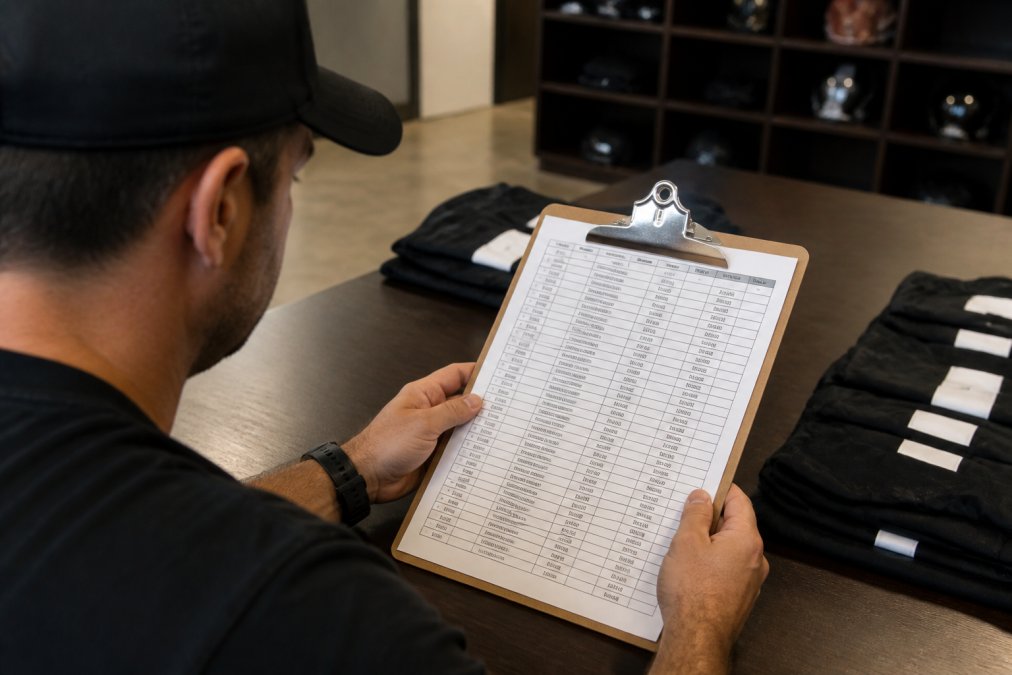
Update this template every season. Measure everyone again at the start of the season, even returning athletes. Youth athletes can grow several inches in a year (the CDC).
Youth sizing versus adult sizing considerations
Youth and adult sizing follow different proportions. Youth apparel is typically cut with shorter torsos, narrower shoulders, and adjusted sleeve lengths relative to chest size (peer-reviewed research).
When you have mixed-age teams, a 17-year-old who's full adult size needs adult apparel, while a 14-year-old of similar height might fit better in youth large. Measurements tell you the answer; assumptions don't.
Always specify youth sizing unless athletes genuinely fit adult proportions. For mixed-age teams, separate your sizing template into youth and adult sections.
Managing Bulk Apparel Orders for Teams
Bulk orders require planning beyond just sizes.
Planning for athlete growth and fit tolerance
Athletes grow. For jerseys, a half-inch to one inch of extra room in the chest is normal. For shorts and pants, account for potential growth by ordering a size that fits now with room to grow.
Use your sizing kit data to decide whether to order true-to-measurement or with a half-size bump for growth. Document these decisions in your template.
Handling returns and exchanges
Even with perfect measurements, something won't fit. Ask your vendor about their return window and process. Most custom apparel vendors allow returns within 30 days (the FTC).
When you receive your bulk order, do a spot-check. Open several boxes and have a few athletes try on samples. Catching a systematic problem immediately lets you contact the vendor while still within the return window.
Establish a clear process with your team. Athletes should try on gear within a few days of receiving it and report fit issues immediately so you can pursue exchanges before the return window closes.
Common Sizing Mistakes to Avoid
Measuring over clothing throws off every measurement. Always measure on bare skin or over a thin base layer.
Using old measurements is a close second. Measure fresh every season, especially for youth teams where growth happens fast.
Skipping the sizing kit feels like a money-saving move until you're stuck with jerseys that don't fit. A sizing kit costs a fraction of a full order and catches problems before they're expensive.
Ordering all one size never works. Even a team of six athletes will have different measurements.
Not documenting fit preferences leads to ordering decisions based on guessing instead of systematically.
Ignoring manufacturer size charts is perhaps the most common mistake. Measurements and size charts must align.
Fabric-Specific Sizing and Fit Preferences
Different fabrics behave differently. Moisture-wicking synthetic fabrics often fit snugger than cotton and are engineered for athletic performance. Cotton and cotton blends tend to run looser and soften with washing.
Compression fit garments should match measurements closely without extra room. Oversizing compression wear defeats its purpose.
When ordering multiple garment types, jerseys, shorts, warm-up gear, casual apparel, consider that each might need different sizing approaches. A fitted jersey might be true-to-measurement, while a team hoodie might be intentionally oversized. Your sizing template should reflect these differences.
Getting sizes right for custom team gear comes down to measuring accurately, understanding how your specific vendor sizes their apparel, organizing your data, and building in room for growth and individual preferences. Merch by Mary Ellen offers custom team apparel with personalization options that let you create gear that fits your athletes and represents your team identity. With a solid sizing process and the right vendor partnership, your team's custom gear becomes something athletes actually want to wear.
Frequently Asked Questions
Q: How do you collect uniform sizes from a team?
A: Use a standardized team uniform size chart template to gather measurements from each athlete. Have parents or coaches measure chest circumference, inseam, and sleeve length using a measurement tape. Record fit preferences and any special considerations. Collect this data at least 2-3 weeks before your ordering deadline to allow time for verification and reordering if needed. Digital collection tools or simple spreadsheets make tracking easier for larger teams.
Q: How do you measure for custom jerseys accurately?
A: Measure chest circumference by wrapping a tape measure snugly around the widest part of the chest. For inseam, measure from the inner thigh to the ankle while standing. Sleeve length runs from the shoulder seam to the wrist. Use a sizing kit for consistency across your team. Always measure over light clothing, not heavy layers. Compare measurements against the specific manufacturer's size chart, as athletic cut and compression fit vary between brands.
Q: Should I order team uniforms a size larger to account for growth?
A: Consider fit tolerance and athlete age when deciding. Youth athletes often grow quickly, so ordering one size up may help if the season lasts several months. However, oversized gear affects performance and comfort. Instead, plan a reorder window mid-season or use adjustable features like drawstrings. Track which athletes showed significant growth spurts in prior seasons and adjust accordingly. Always verify the ordering deadline with your supplier to allow time for exchanges if sizing proves incorrect.
Q: What's the best way to organize a team apparel order?
A: Create a team roster with each athlete's name, measurements, size, and fit preference. Use inventory management tracking to monitor quantities by size and garment type. Set a firm ordering deadline and communicate it clearly to parents. Build in time for returns and exchange logistics before the event. Consider fabric-specific sizing if ordering different garment types (jerseys versus shorts often fit differently). Verify all measurements against the manufacturer's specifications before finalizing bulk orders to minimize errors.
This article was written using GrandRanker