

Table of Contents
- Plan Your Order Before You Contact Anyone
- The Bulk Apparel Sizing Guide Every Team Parent Needs
- Best Fabrics for Sports Team Apparel: What to Look For
- Customization Methods: Screen Printing, Embroidery, and DTG
- Bulk Order Turnaround Times and Shipping Expectations
- How to Save Money on Bulk Team Apparel Without Cutting Quality
- Order a Sample First: Why Smart Buyers Test Before They Commit
- Frequently Asked Questions
Last Updated: September 26, 2026
Plan Your Order Before You Contact Anyone
Ordering bulk team apparel goes wrong the same way almost every time: someone collects a rough headcount, guesses at sizes, and orders before confirming details. A week of patience fixes it.
Start here:
- Confirm the final roster count, including coaches and alternates
- Set a realistic per-item budget before you see any quotes
- Decide on a hard in-hands date, then work backward
- Assign one person to own the order, not a committee
Collect Sizes and Counts First
Gather sizes before you shop, in writing. A shared spreadsheet with name, size, and quantity columns beats a group chat.
The Bulk Apparel Sizing Guide Every Team Parent Needs
Sizing is where most bulk orders fall apart. Youth and adult sizing follow different scales, and a "medium" in one brand's youth line is not a medium in another's.
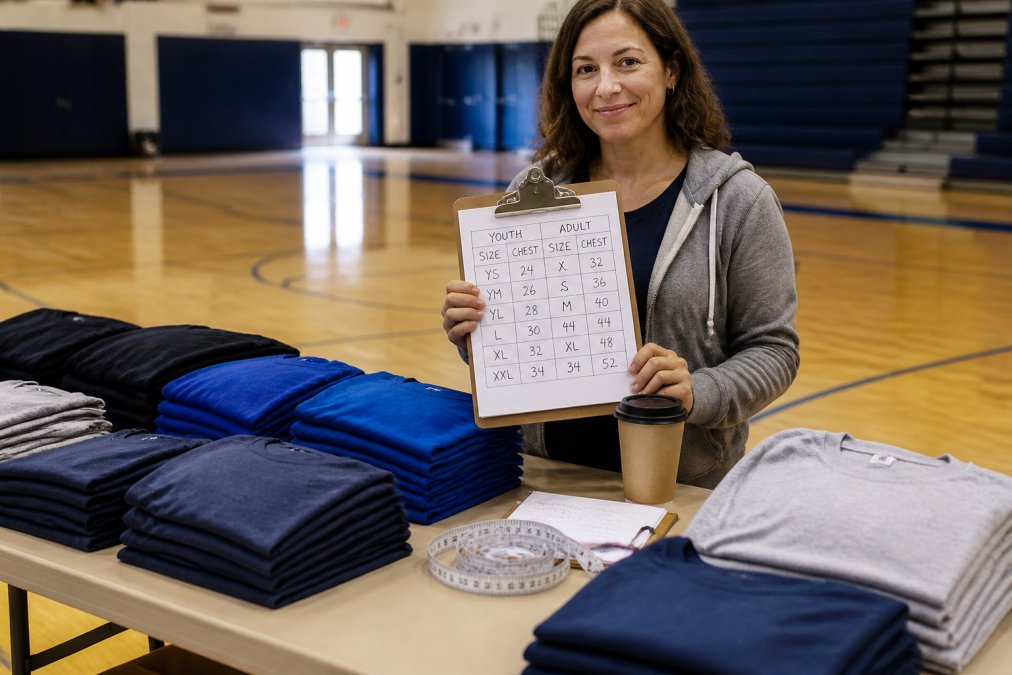
Pull actual measurements rather than trust letter sizes:
- Chest width measured flat, armpit to armpit
- Body length from shoulder seam to hem
- Sleeve length for long-sleeve items
- Compare each measurement against the supplier's own size chart
How to Handle Kids vs. Adult Sizing
Youth sizing runs on a separate scale from adult, and the crossover point varies by brand. A youth extra-large may sit near an adult small, but the cut is narrower through the shoulders.
Best Fabrics for Sports Team Apparel: What to Look For
Fabric choice determines how gear feels in week one and looks in week twenty.
| Fabric | Feel | Best For | Watch Out For |
|---|---|---|---|
| 100% cotton | Soft, heavy | Casual fan gear, sidelines | Shrinking, holds sweat |
| Cotton-poly blend | Soft, structured | Everyday team wear | Slight color shift over time |
| Performance polyester | Light, smooth | Active play, hot weather | Can snag on rough surfaces |
Cotton vs. Blends vs. Performance Materials
Match the fabric to how the garment will be used, not how it looks in a photo. Players who sweat need performance material; parents in the bleachers are fine in cotton or a blend.
Customization Methods: Screen Printing, Embroidery, and DTG
Decoration method changes your cost, timeline, and durability.
Two file details trip people up: vector files keep logos crisp at any size. Ask your supplier which they need before sending artwork.
Bulk Order Turnaround Times and Shipping Expectations
Turnaround time is not one number but the sum of four clocks, and only one is under your supplier's control.
- Artwork prep, converting your logo to a vector file or digitizing it for embroidery
- Proofing and approval, the back-and-forth until you sign off
- Production, printing, pressing, and finishing the full run
- Shipping, transit from the decorator to your door
How Decoration Method Changes the Timeline
Treat any quoted timeline as starting from proof approval, not payment.
Build in a Buffer and Get the In-Hands Date in Writing
Work backward from your event date and add a cushion for misprints, backordered sizes, or carrier delays. If your first game is on a fixed date, tell your supplier and ask for written confirmation they can hit it. A verbal 'should be fine' is not a commitment.
Custom One Team. One Heart. One Goal →
The Approval Step Is Where Orders Actually Go Wrong
This is the part most bulk-buying guides skip, and the biggest source of costly reprints. Once you approve a proof, that approval is the contract: if shirts come back with the spelling you approved, the supplier has done their job and a reprint is on your dime.
Run a disciplined approval workflow:
- Assign one approver. A committee cannot approve anything. One named person signs off, in writing.
- Check the proof against a written spec. Team name spelling, season year, player names and numbers, logo placement (left chest vs. full front), and color codes. Compare line by line, not by glancing at the image.
- Confirm the garment, not just the graphic. The proof shows the design; it may not show the exact style number, color, or fabric you ordered. Verify those separately.
- Get approval in writing. An email reply or a signed proof sheet. A thumbs-up in a group chat is not an approval.
- Freeze the order. Once approved, no more 'actually, can we add one more?' Changes after approval restart the clock and often trigger new setup fees.
How to Save Money on Bulk Team Apparel Without Cutting Quality
Bulk pricing is not a single discount but a set of tiers; understanding how they stack is the difference between saving real money and just feeling like you did.
How Bulk Pricing Actually Works
Most decorators price in quantity tiers. The drop between tiers can be meaningful, which is why 50 shirts sometimes costs barely more than 40, you cross into the next tier and the per-unit price falls.
On top of garment price sit setup charges.
Where to Save Without Regretting It
- Consolidate into one order and one design. One shared design across the whole group spreads setup fees the widest.
- Reduce colors, not quality. Each additional screen color adds a setup fee and a per-unit charge. A two-color design can cost noticeably less than a four-color one on the same garment.
- Skip individual names if the budget is tight. Personalization adds a step and often a per-unit charge; a shared number or no number keeps costs down.
- Order slightly into the next tier. If you are at 46 pieces and the next price break is 48, two extra shirts may cost less than the per-unit savings they unlock, and give you spares for late additions.
- Reuse artwork next season. Keeping the same vector file and digitized logo avoids new setup charges on the reorder.
- Choose the right decoration for the quantity. Screen printing for large runs, DTG for small or highly detailed runs, embroidery for logos that need to look premium.
Where Not to Save
Do not cut corners on the garment itself. A cheaper fabric that pills, fades, or shrinks costs more over a season than the upgrade, because you replace it. Fabric weight and blend matter most for anything worn repeatedly, practice gear, uniforms, and anything athletes sweat in.
The Angle Most Guides Miss: Sustainability and Total Cost
Cheap apparel is rarely cheap once you account for replacements. Garments made with recycled polyester, organic cotton, or bluesign-approved fabrics cost a little more up front but hold up longer and align with the values many schools, clubs, and sponsors now ask about. If your team has a sustainability requirement or a sponsor with an environmental policy, ask your supplier for fabrics with documented recycled content or recognized certifications, and factor durability into the math, not just the sticker price.
Extend the Life of What You Buy
Saving money is also about how long gear lasts. Printed apparel lasts longer with basic care:
- Wash inside out in cold water. Heat and abrasion are what break down prints and embroidery thread.
- Skip the dryer or use low heat. High heat is the fastest way to crack a screen print or shrink a cotton blend.
- Do not iron directly on the print or embroidery. Use a pressing cloth or iron around the decoration.
- Store clean and dry. Damp storage encourages mildew in cotton and can discolor performance fabrics.
Order a Sample First: Why Smart Buyers Test Before They Commit
A sample order is the cheapest insurance in bulk buying: check the actual fabric, confirm fit against your size chart, and see how the decoration looks on the finished garment.
Frequently Asked Questions
How far in advance should you place a bulk order for team apparel?
Most custom apparel shops need 2-4 weeks from artwork approval to delivery, and that window stretches during peak seasons like back-to-school or spring sports. If your tournament is in 10 days, call the shop directly before ordering online. Ask whether rush production is available and confirm the ship date in writing. Build in a buffer week for shipping delays, especially for large orders going to multiple addresses.
How do I determine the right sizes for a bulk team apparel order?
Collect sizes from every player, parent, or fan before you order, and add 10-15% extra in the most common sizes (adult medium and large) to cover swaps. For kids' gear, size up if the child is between sizes or still growing. Ask the shop for a size chart with chest width and body length in inches, then compare it to a shirt your team member already owns and likes. A bulk apparel sizing guide from the shop saves guesswork.
What information do I need to provide to a custom apparel shop?
Have your team name, season year, player names, jersey numbers, size breakdown, and color preferences ready. If you have a logo, send a vector file so it prints cleanly. Mention the quantity per size, and your in-hands date. Confirm the turnaround time. A quick proof approval before production prevents costly reprints.
How can I save money when ordering apparel for a large group?
Order everything in one batch rather than splitting into multiple orders, because most shops offer bulk discounts at higher quantities. Choose a classic tee or hoodie style instead of premium performance fabrics. Confirm the unit cost at each price break before you commit.